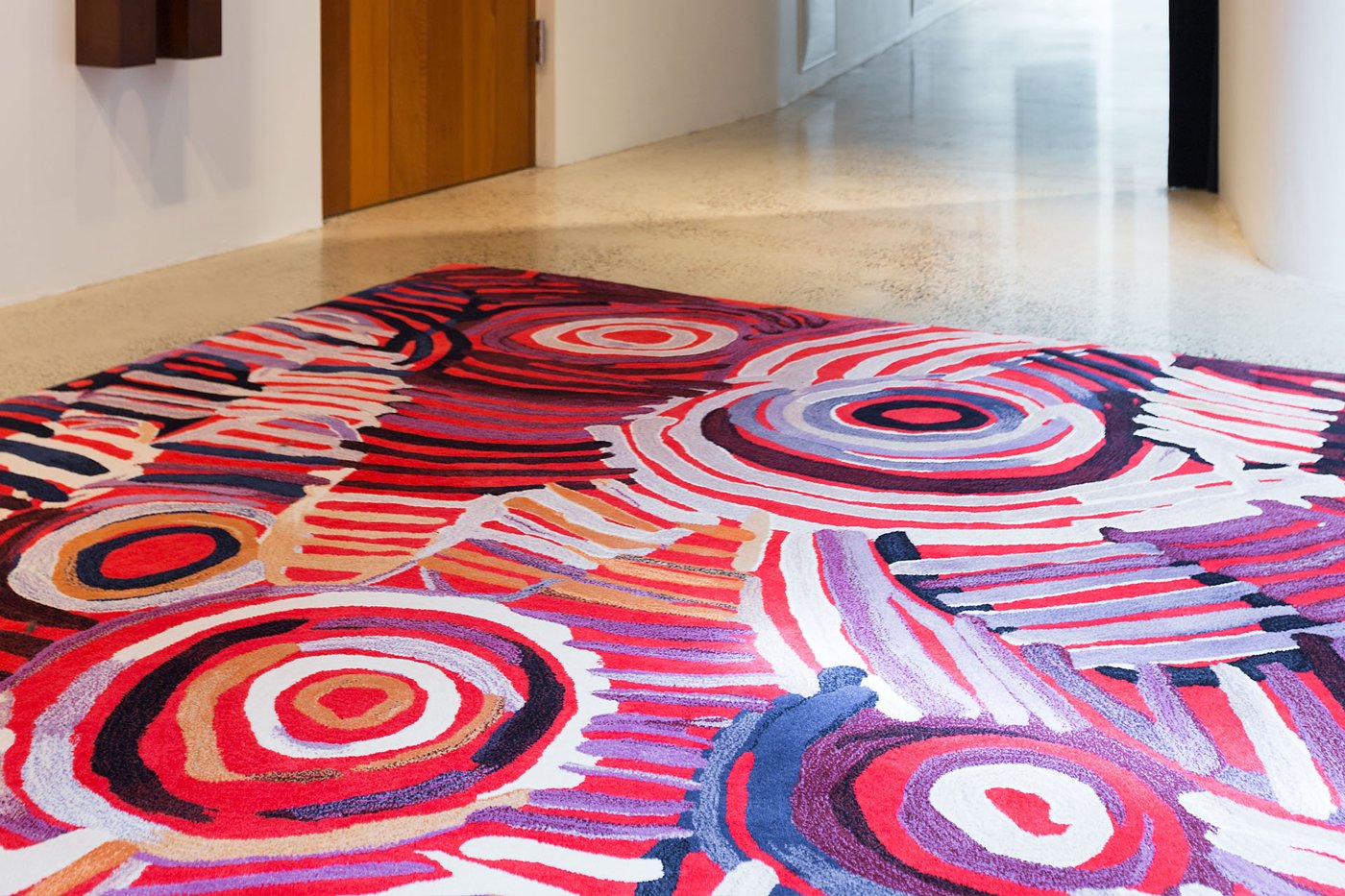
An Indigenous rug brings colour, comfort and a real story into a room, but knowing where to buy one (and how to be sure it is genuine) is not always obvious. The good news is that Australia has a growing number of sellers working directly with First Nations artists. This guide covers where to buy indigenous rugs, how to tell an authentic piece from a knock-off, and what you can expect to pay.
Where to buy indigenous rugs in Australia
There is no single best place to shop. The right one depends on your budget and the kind of rug you want, so it helps to know the main types of sellers and what each is known for.
| Type of seller | Example and what they offer | Good for |
|---|---|---|
| First Nations owned shops | Emro Designs, a 100% Aboriginal owned and operated business selling rugs, cushions, picnic rugs and wallpaper | Buying directly from a First Nations business |
| Designer rug houses | Designer Rugs, premium hand-made wool rugs translating named artists’ work into floor pieces | Statement, high-end and customisable rugs |
| Fair-trade craft projects | Better World Arts chainstitch rugs, Aboriginal artwork hand-stitched onto canvas with hand-dyed wool | Handmade pieces that double as wall art |
How to tell an indigenous rug is authentic
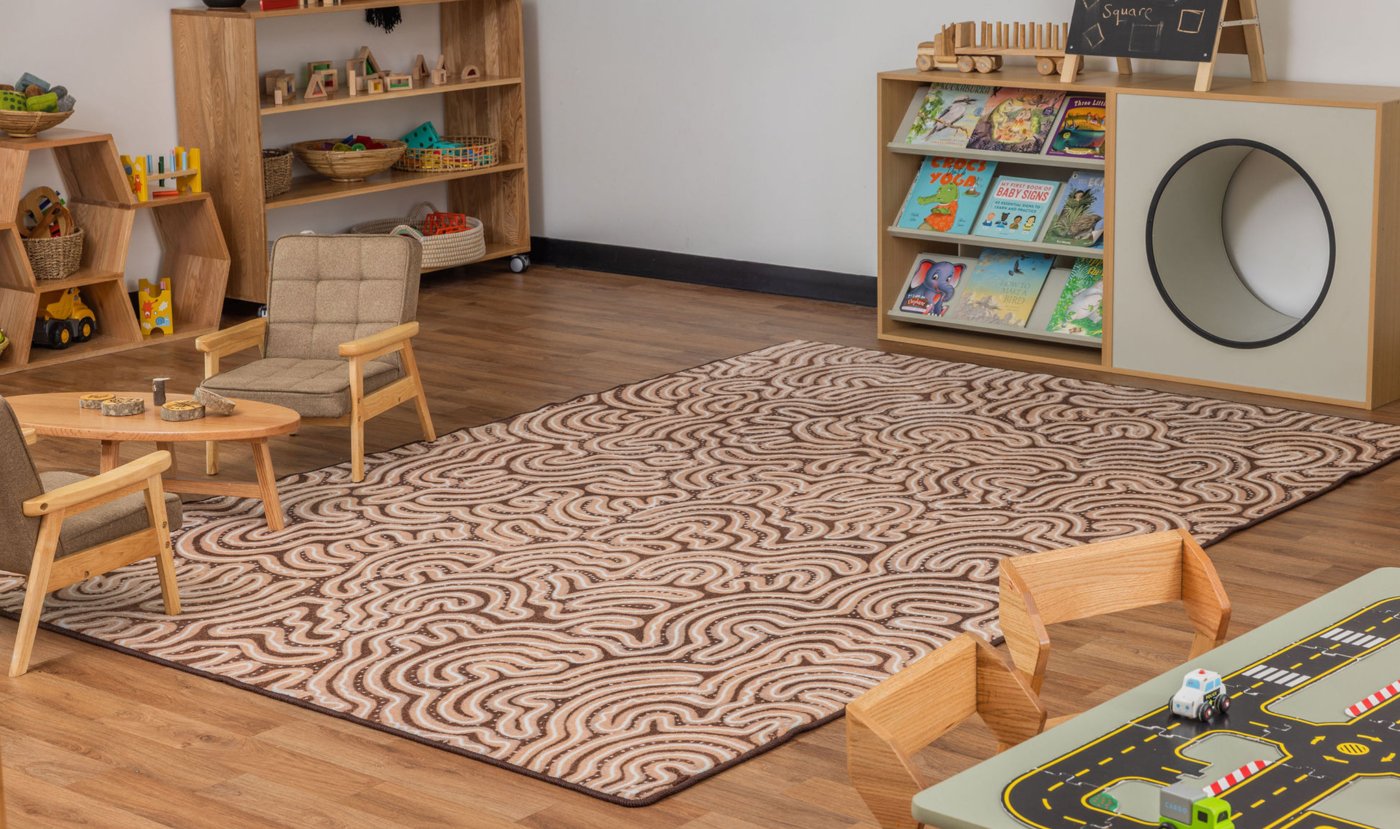
Authenticity is the part worth slowing down for. A genuine Indigenous rug should be transparent about who designed it and how the artist benefits:
- Named artist: the rug should credit a specific First Nations artist or art centre, the way Designer Rugs lists makers like Minnie Pwerle and Tamika Grant Iramu.
- Certificate of authenticity: some suppliers include the Aboriginal artist’s certificate of authenticity with the rug, which is also what makes a classroom rug acceptable for accreditation.
- Money reaches the artist: the most ethical sellers pay the artist, whether that is commission from the profit of each item, as Emro Designs does, or fair-trade royalties.
- Honest about how it is made: trustworthy brands explain their process and even flag where lower-skill copies exist, as Better World Arts does with its chainstitch gabba craft.
When in doubt, the simplest shortcut is to buy from a First Nations owned business or a seller that names its artists, the same principle the Indigenous Art Code promotes across the wider Indigenous art market.
What indigenous rugs cost and what sizes to expect
Prices vary widely with how the rug is made. Premium designer wool rugs sit at the top of the market, roughly $4,990 to $13,990, and usually come in large room sizes such as 200 by 300 cm or a 250 cm round. Handmade chainstitch rugs come in a wider spread of sizes, from small pieces around 91 by 60 cm through to extra large at about 152 by 244 cm, plus runners for hallways. Many also carry a non-slip backing and a hanging sleeve, so a rug can work on the floor or on the wall as artwork.
Styles and materials to choose from
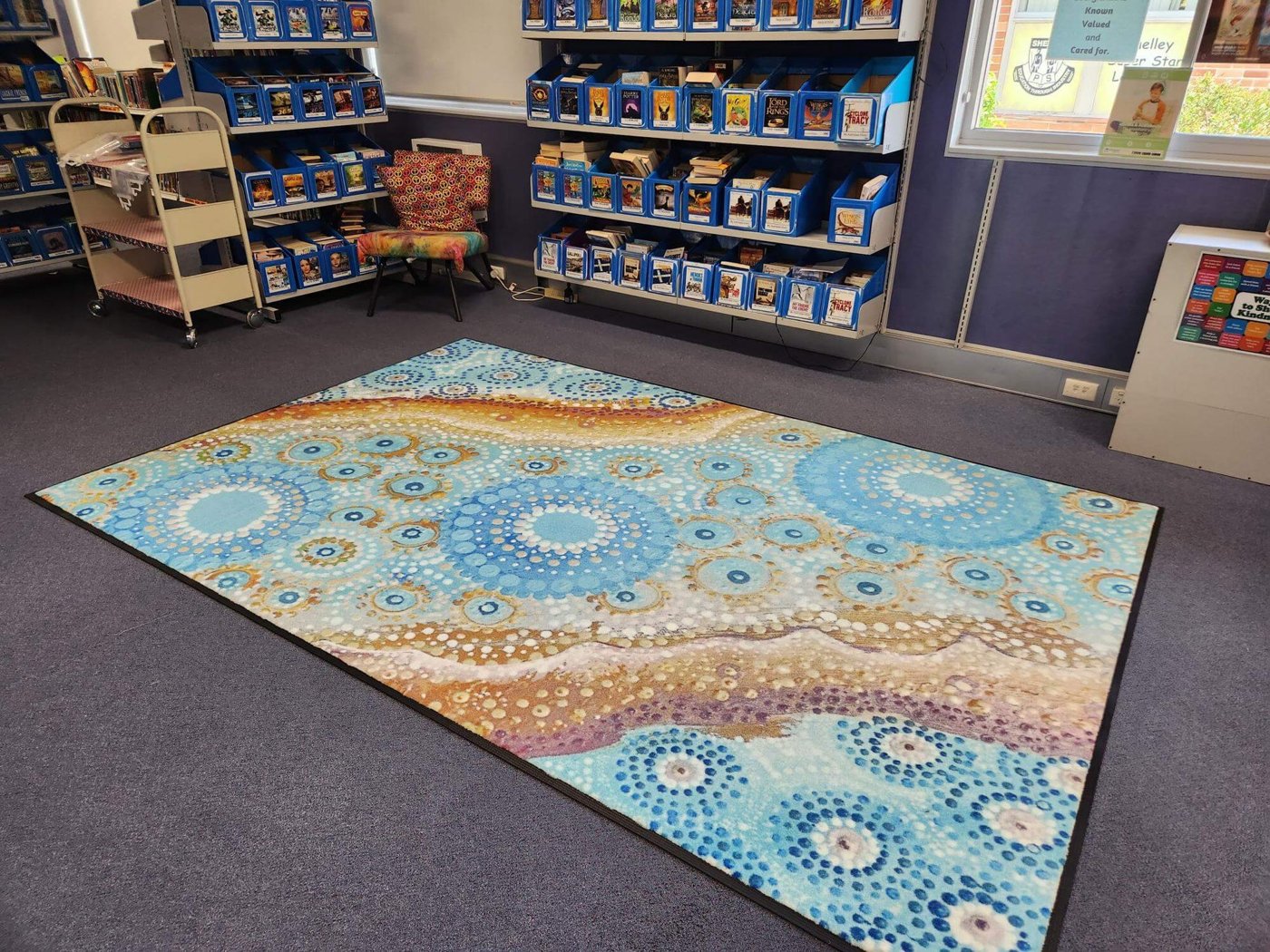
The look you get depends largely on the material. Designer houses translate paintings into luxurious wool rugs in bold, gallery-scale designs. Chainstitch rugs are faithfully hand-stitched from hand-dyed wool, a craft honed over hundreds of years. First Nations owned ranges like Emro tend to be softer everyday furnishings, the kind chosen by educators, interior designers and parents for libraries, day cares and nurseries, where each design still carries the story of the artist who made it.
Buying in a way that supports artists
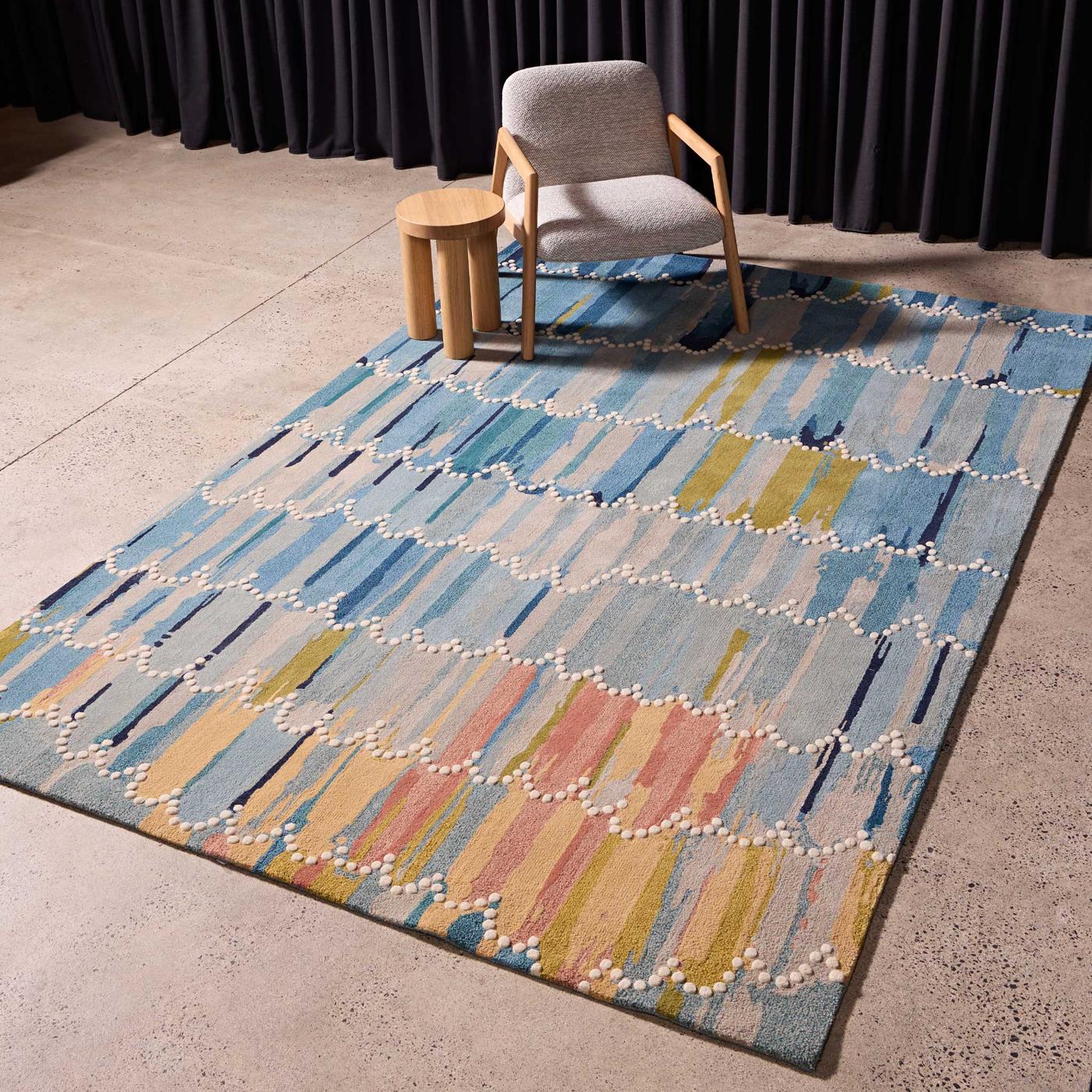
Where you spend your money matters as much as what you buy. Choosing a First Nations owned brand, or a seller that pays artists a commission or fair-trade royalty, means your purchase supports the people whose culture it celebrates. Many of these rugs are also ally-friendly, designed to be enjoyed by anyone who wants to bring Indigenous storytelling into their home. If you would rather browse a curated set of pieces in one place, our Aboriginal area rugs collection is a good starting point. Buying this way is also the surest path to a genuine product, and verified directories like Supply Nation can help you confirm a business is Indigenous owned.
Before You Buy
Where can I buy authentic Indigenous rugs in Australia?
You can buy from First Nations owned shops such as Emro Designs, designer rug houses like Designer Rugs, and fair-trade craft projects like Better World Arts. Each works with First Nations artists, so the choice comes down to budget and style.
How do I know an Indigenous rug is authentic?
Look for a named First Nations artist or art centre, a certificate of authenticity where offered, and a clear statement that the artist is paid through commission or royalties. Buying from a First Nations owned business is the simplest way to be sure.
How much do Indigenous rugs cost?
It depends on how they are made. Premium designer wool rugs run roughly $4,990 to $13,990, while handmade chainstitch rugs come in a wider range of sizes and price points, making them a more accessible entry point.
Can non-Indigenous people buy Indigenous rugs?
Yes. Many ranges are ally-friendly and designed to be enjoyed by everyone, as long as you buy authentic pieces that credit and pay the First Nations artists behind the designs.