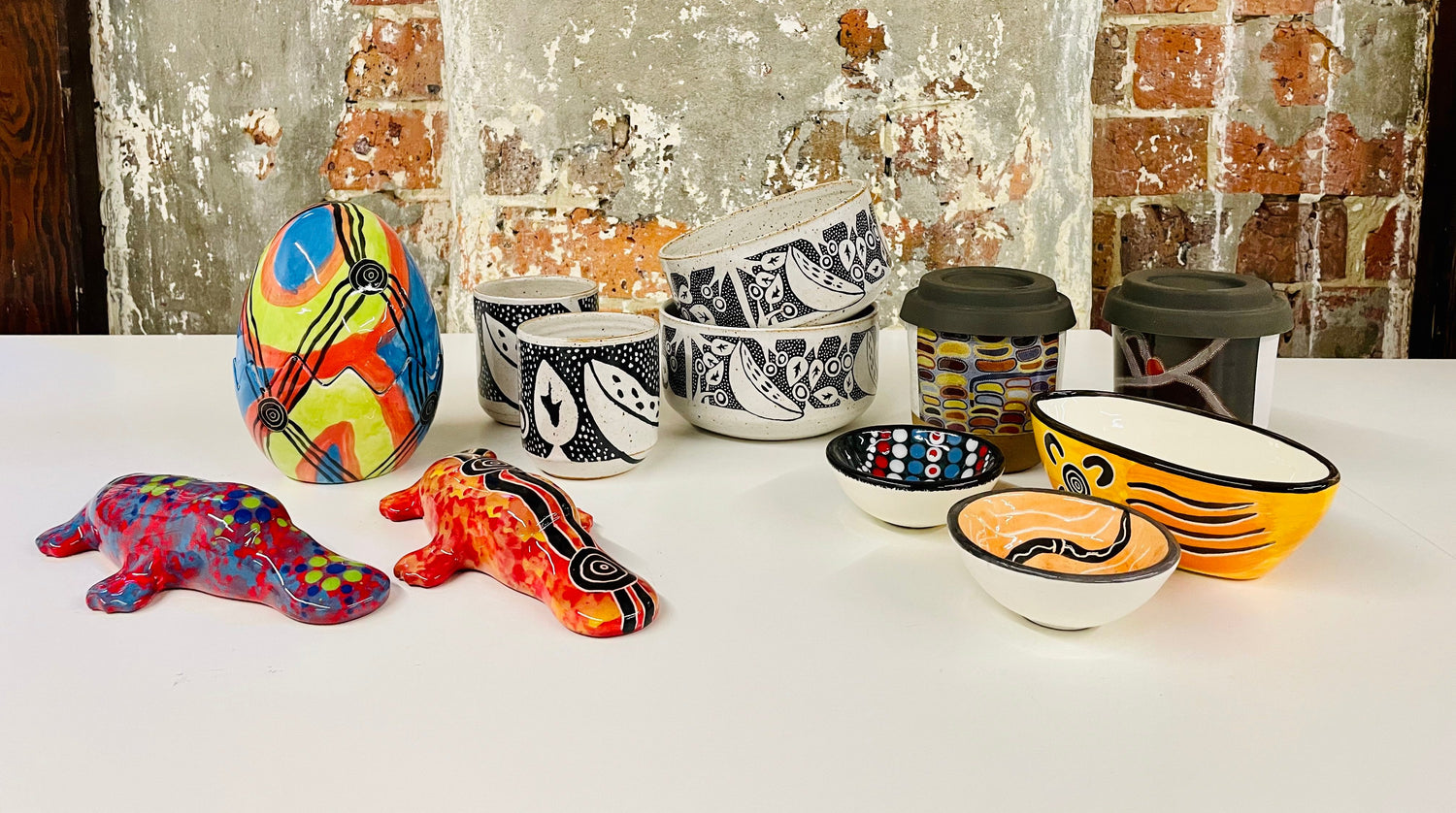
Walk into any Australian home today and the homewares carry a different conversation than they did a decade ago. The cushions, the lamp shades, the kitchen appliances tell stories of country, family and 65,000 years of culture, and a growing wave of buyers wants pieces that route money back to the artists and art centres whose designs they live with every day.
This guide pulls together the Indigenous designed homewares brands worth knowing in Australia, what makes a product genuinely Indigenous designed rather than Indigenous inspired, and how to read the small print on royalties before you add anything to cart.
What “Indigenous designed” Actually Means
Indigenous designed homewares are products whose visual design is authored by an Aboriginal or Torres Strait Islander artist, with the artist named on the product, licensed through a written agreement, and paid royalties on every sale. Indigenous inspired is the opposite end of the spectrum, where the patterns were drawn by an in-house designer who studied desert dot work and made something close to it.
The line is policed in Australia by the Indigenous Art Code, a voluntary scheme that holds signatories to fair dealing. Members source directly from artists or art centres, pay agreed royalties, and disclose who made what. You can verify any seller’s status on the Indigenous Art Code register before buying.
Brands Collaborating With First Nations Artists
The Australian homewares scene is no longer one or two boutique labels. It now stretches from major appliance manufacturers to museum shops to specialist textile houses, all working with named artists.
Koskela
Koskela has been collaborating with First Nations artists since 2009, when founder Sasha Titchkosky launched the business with a lighting range woven with Arnhem Land weavers. The current dali dyalgala collection (Darug for “to embrace”) features fabrics by Penny Evans, Jacinta Lorenzo, Raylene Miller, Lucy Simpson, Regina Wilson and members of Jilamara Arts. Artworks are licensed directly from artists and art centres, with a unique colourway created for every piece. The fabrics are printed in Australia by Think Positive in Sydney and Frankie and Swiss in Melbourne, then made into cushions, chairs and beanbags.
Breville
Home appliance giant Breville released a limited-edition First Nations series curated by Aboriginal interior designer Alison Page, founder of the National Aboriginal Design Agency. The series features artwork by Lucy Simpson, Yalti Napangati, Yukultji Napangati and Warlimpirrnga Tjapaltjarri, three of whom are from the Pintupi Nine who first met white Australians in 1984. Production runs at roughly 1,000 items per line and profits from the limited run go to the artists.
Koh Living
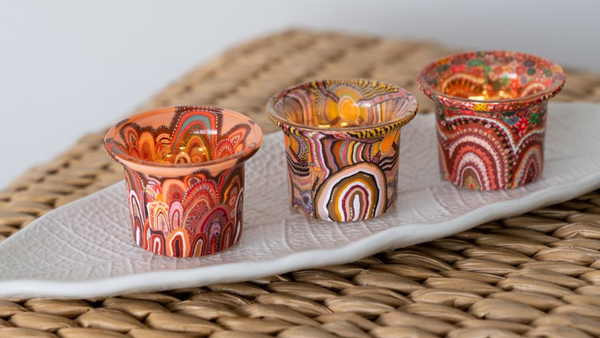
Koh Living is a signatory to the Indigenous Art Code and a long-running Australian gift label. The home decor range covers 82 products spanning tealights, candle holders, minikins (small candle lanterns), candle lamp sets, scented candles, coasters and tea towels. The brand collaborates with named artists including Jacinta-rai Ridgeway-Maahs across collections such as Beautiful Journey and Sacred Country, and pays royalties on every product sold.
Australian Museum Shop
The Australian Museum Shop’s First Nations homewares line spans handcrafted ceramics, candles, tealight holders and textiles. Every piece is sourced directly from makers, artist-owned art centres, or suppliers who are signatories to the Indigenous Art Code. The institutional sourcing makes it one of the safest entry points if you are new to buying Indigenous designed homewares and want a third-party gatekeeper on provenance.
Magpie Goose
Magpie Goose works with Aboriginal artists across the Northern Territory and Queensland, drawing on Ikuntji Artists near Alice Springs, the Minyerri community near Darwin, and Hope Vale near Cairns. The label runs on a social enterprise model and is stocked at independent boutiques in Brisbane, Darwin and Newcastle. While the original output is fashion, much of the same printed cloth ends up as cushions and table linens in collaborations with home brands.
Homewares Categories Worth Looking For
Once you start hunting for Indigenous designed pieces, you will notice the same product categories surface again and again. They suit different rooms and price points:
- Textiles: cushions, throws, table runners, tea towels, quilts and printed fabric by the metre.
- Lighting: woven pendant lamps, candle lamps and tealight holders.
- Ceramics: mugs, plates, vases and serving bowls in artist-printed designs.
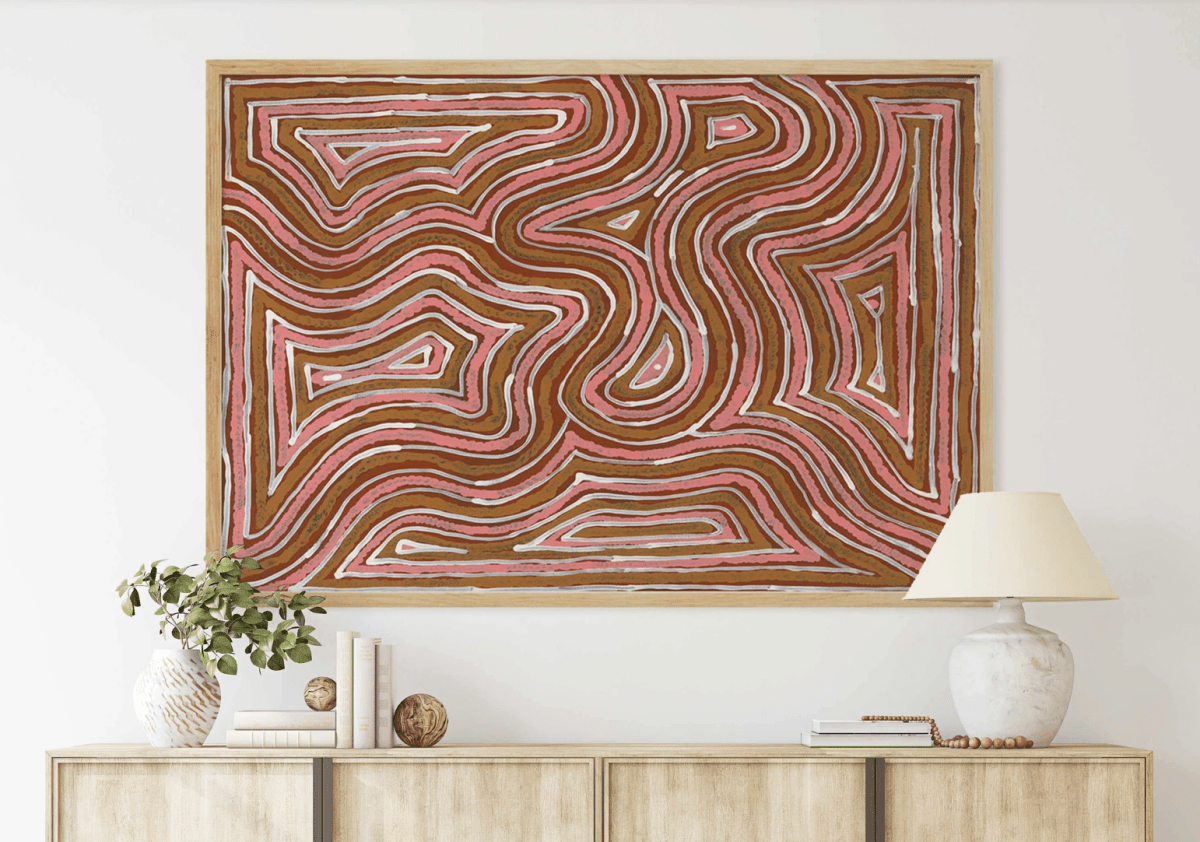
- Wall decor: prints, framed canvases and rugs that double as artworks.
- Kitchen: kettles, toasters, chopping boards and coasters with licensed patterns.
For broader styling ideas, our note on home styling with Aboriginal art covers how to combine these categories without overcrowding a room. Koarooginal carries some of these formats too, including a curated home and living range of bedding, rugs and accessories featuring licensed artist designs.
How Royalties and Licensing Actually Work
The difference between a respectful product and a stolen one usually sits in the contract you cannot see. With Koskela, Sasha Titchkosky describes the model as direct purchases from artists and art centres, with unique colourways negotiated piece by piece. With Breville, profits from the 1,000-item runs are channelled to the four featured artists. With Koh Living, the artist receives royalties for every product that ships, not a one-off licence fee.
Alison Page, who curated the Breville series, frames the goal as putting “65,000 years of continuous Australian culture into home design products” while keeping the process culturally respectful at every step, from brush stroke to colour calibration. The result is products that pay the artists while the work ships, not after a single advance has been spent.
Spotting Ethical Sourcing Before You Buy
A short checklist saves a lot of second-guessing at the till:
- Is the seller a signatory to the Indigenous Art Code? Check the register.
- Is the artist named on the product page, with their language group or community?
- Does the brand describe how artists are paid (royalty per unit, percentage of revenue, or upfront licence)?
- Is the art purchased directly from the artist or an artist-owned art centre?
- Does the brand publish images of the artists, the studio, or the art centre, or only the product?
A “yes” to most of the above is the practical version of ethical sourcing. If a product cites “inspired by Aboriginal art” with no artist named, treat it as decoration only.
Bringing Country Into Your Home
The brands above all describe the same end goal in slightly different language. Alison Page calls it “a kettle that welcomes you to country.” Sasha Titchkosky calls it “an awakening to the culture that exists among us.” Every Indigenous designed homeware in your house is a small act of acknowledgement, and the choice of brand decides whether that gesture also reaches the artist. If you want to extend the same thinking into wardrobe choices, our roundup of Aboriginal art clothing covers labels working to the same standard, and the guide to supporting Indigenous communities through gifting carries the principle into birthdays, weddings and corporate orders.
Quick Answers For Ethical Shoppers
What is the difference between Indigenous designed and Indigenous inspired homewares?
Indigenous designed means the artwork is authored by a named Aboriginal or Torres Strait Islander artist, licensed in writing and paid for every unit sold. Indigenous inspired usually means a non-Indigenous designer drew patterns in the style of Aboriginal art, with no artist credit and no royalty.
How do I know if a homewares brand is paying artists fairly?
Look for the Indigenous Art Code signatory mark, an artist name on the product page, and a stated royalty or revenue-share model. Brands that buy directly from artist-owned art centres are the strongest signal, because the art centre itself is set up to return funds to the community.
Where is the safest place to buy Indigenous designed homewares online in Australia?
Museum shops, art-centre online stores, and Indigenous Art Code signatory brands such as Koh Living and Koskela all hold up to scrutiny. Mainstream marketplaces are the riskiest because listings rarely carry artist information.