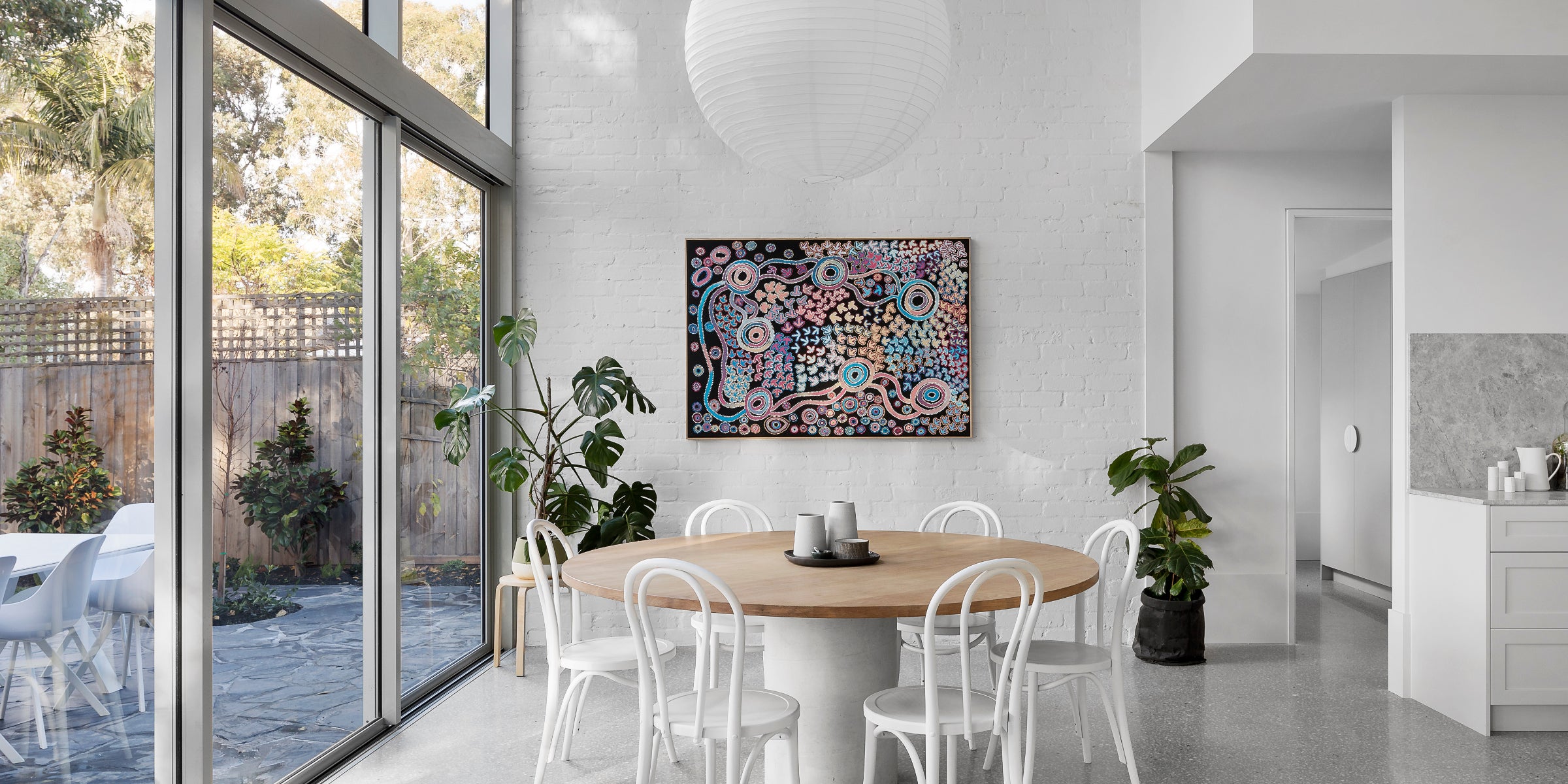
Aboriginal art has moved well beyond gallery walls and into the rooms where Australians actually live. From dot paintings hung over modern sofas to bark paintings grounding minimalist hallways, Indigenous design now sits at the heart of how Australian homes feel, look, and tell their own story. Used well, a single piece can warm and ground an entire space.
Why Aboriginal Art Works in Modern Interiors
Aboriginal art brings something most other genres do not: warmth combined with depth. Alana Willis, an Interior Design Consultant at Innerspace in Perth, puts it directly. “I think Aboriginal art can warm a space so well, unlike any other art. There are qualities of warmth and earthiness in the tones that they use, the hues. There is always a story behind the art.”
That warmth makes Indigenous pieces unusually flexible. They sit well next to contemporary Italian furniture, mid-century pieces, and beachside neutrals alike. “Indigenous art grounds an interior space, adding another talking point. Immediately it can bring a space together like no other art genre, creating texture and warmth and depth to a space,” Willis says. Even a small or sculptural piece warms an entire interior scheme straight away. This is part of a broader shift in how Aboriginal design is reshaping Australian fashion and homes alike.
How to Display Aboriginal Art at Home
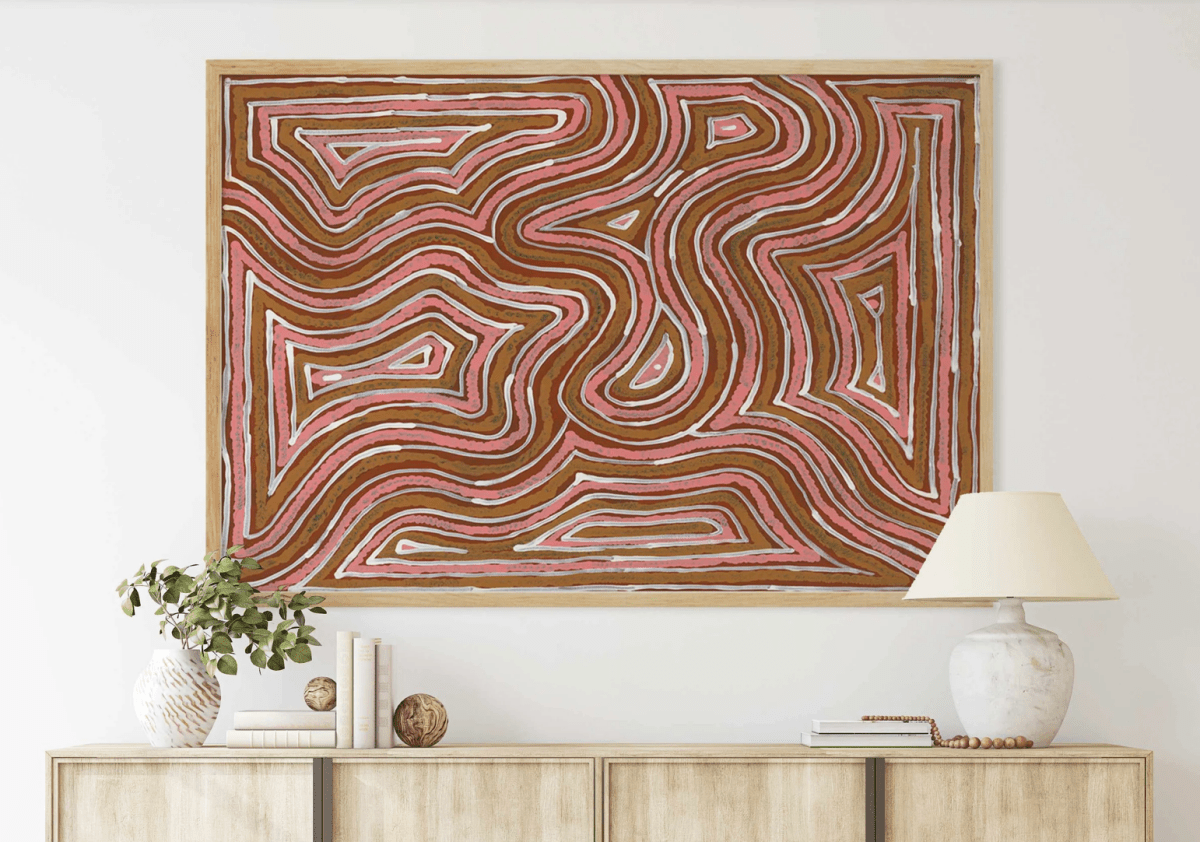
The display starts with the space, not the artwork. Look at wall sizes, dominant furniture, and the interplay of natural and artificial light. Light shapes how colours and textures read once the work is hung. Some of the strongest examples of Australian interior styling involving Aboriginal art have been documented by The Design Files over the years.
Three approaches work for most homes. A gallery wall lets you combine an array of pieces, either symmetrical or asymmetrical, and it forgives mixing a vibrant warm desert dot painting with a contemporary abstract piece. Thematic grouping pairs Aboriginal bark paintings, with their natural tones, alongside classical works or contemporary furniture for dialogue between old and new. A single standout piece, like a large-scale dot painting or a commanding hollow log sculpture, can carry a wall on its own as the focal point.
For art hung over a sofa or buffet, match the orientation to the furniture and aim for a landscape proportion. For tall blank walls, portrait orientation works. For multiple small pieces, group in odd numbers (3, 5, or 7) for visual rhythm.
Colour, Texture, and Atmosphere
Colour does the heavy lifting in how a room feels after the art goes up. A warm desert dot painting with earthy reds and oranges adds warmth and energy. The natural hues of a bark painting create calm. The principle is simple: a monochromatic room can be enlivened with the vibrant hues of a dot painting, and a colourful space can be balanced by the earthy tones of a bark painting.
Beyond canvases, Aboriginal-inspired textiles, rugs, throws, cushions, and ceramics let the same design language reach the rest of the room without crowding the walls. Vogue’s 2024 design trend report frames the broader shift as “character over cookie-cutter”, which is exactly what these pieces deliver in spaces otherwise full of mass-produced furniture.
Mixing 2D and 3D Pieces
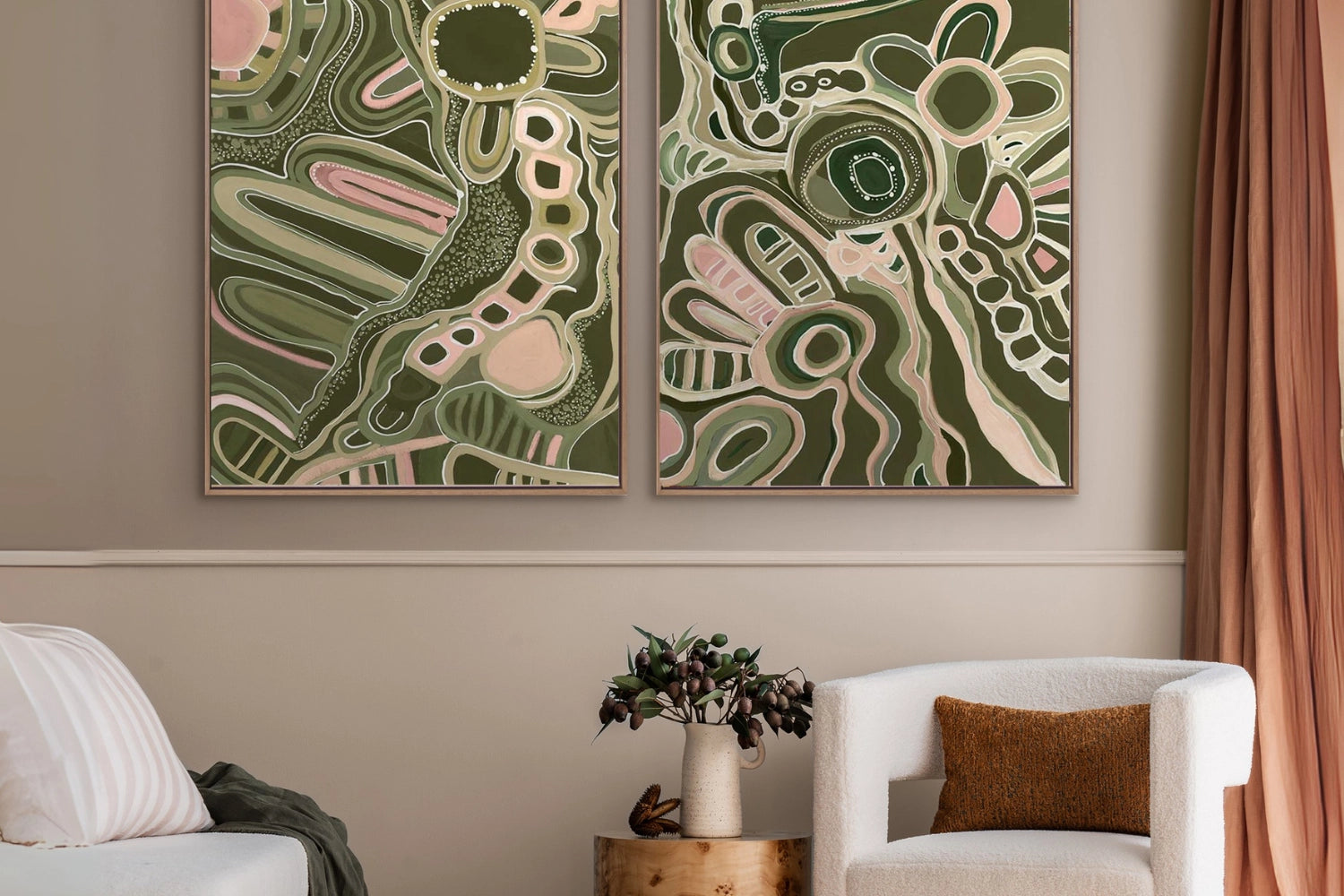
Two-dimensional Aboriginal works, dot paintings and bark paintings, anchor walls and tell visual stories. Three-dimensional objects like hollow log sculptures, didgeridoos, and boomerangs bring tactile, physical presence into a room. Combined, they create a richer environment than paintings alone.
A hollow log sculpture, for instance, sits beautifully against contemporary geometric furniture. A didgeridoo or boomerang, typically crafted from wood, complements earthy and natural palettes and works either as a centrepiece or as part of a curated display on a wall mount or bracket. The point is to let the 3D object earn its own breathing room rather than crowd it into a busy shelf.
Buying Ethically and Choosing What Speaks to You
How you buy matters as much as what you buy. Source Aboriginal art directly from artists, through reputable galleries, or from Indigenous-owned cooperatives. That ensures the artist is paid fairly, the work is authentic, and the cultural story behind the piece is preserved.
Willis’s advice for homeowners is short and useful. “Art needs to not only work as part of an interior scheme but it also needs to speak to you. It needs to be something that you are drawn to personally.” She also notes that art is an investment, and worth getting curatorial advice before a major purchase.
Take the time to understand the cultural context behind the artwork you choose. A piece that carries a Dreamtime story you know will speak louder, last longer, and bring more meaning to the room it lives in.