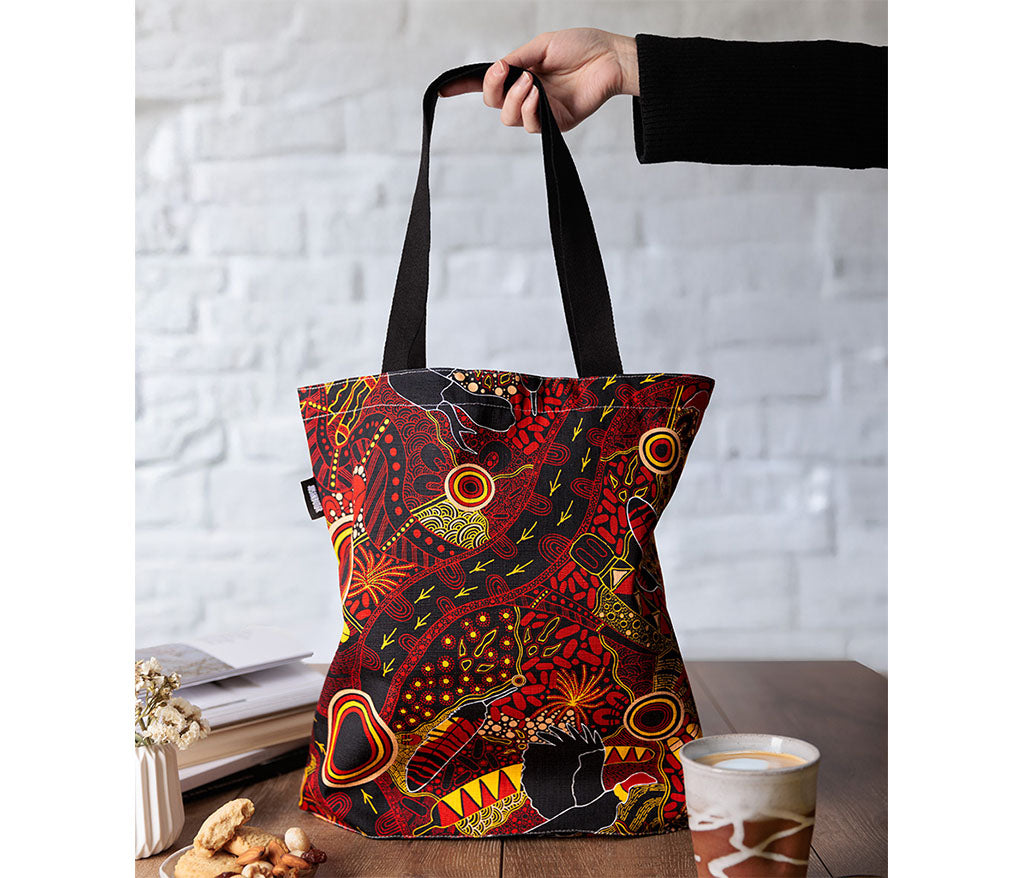
An Aboriginal art bag puts an artist’s work into something you carry every day. Across Australia these bags range from cotton totes printed with desert designs to hand finished leather cross body bags, and the design on each one is the work of an Aboriginal or Torres Strait Islander artist. This guide explains the main types you will see, the materials they are made from, what the artwork carries, and how to tell an authentic bag from a generic souvenir.
What Makes a Bag an Aboriginal Art Bag
The product is a bag. The value is the artwork on it and the agreement behind that artwork. A genuine Aboriginal art bag features a design created by an Aboriginal or Torres Strait Islander artist, reproduced under a licence agreement so the artist is named and paid. Sellers who do this properly source from artists, art centres and manufacturers who hold licence agreements with the artists, rather than copying a style. That distinction matters more than the shape of the bag, because a tote, a backpack and a clutch can all be authentic or not depending on who made the design and whether they agreed to it.
It helps to know who is behind the bags you see. Many of the genuine pieces sold in Australia come through Aboriginal owned labels and art centres such as Bunabiri, Hogarth Arts, Jijaka and Outstations Australia, or carry the work of named artists like Justin Butler and May Wokka Chapman. When a bag is tied to a recognised label or art centre, the licensing and royalty side has usually been handled properly, which is why those names are worth looking for on the swing tag.
Types of Aboriginal Art Bags Sold in Australia
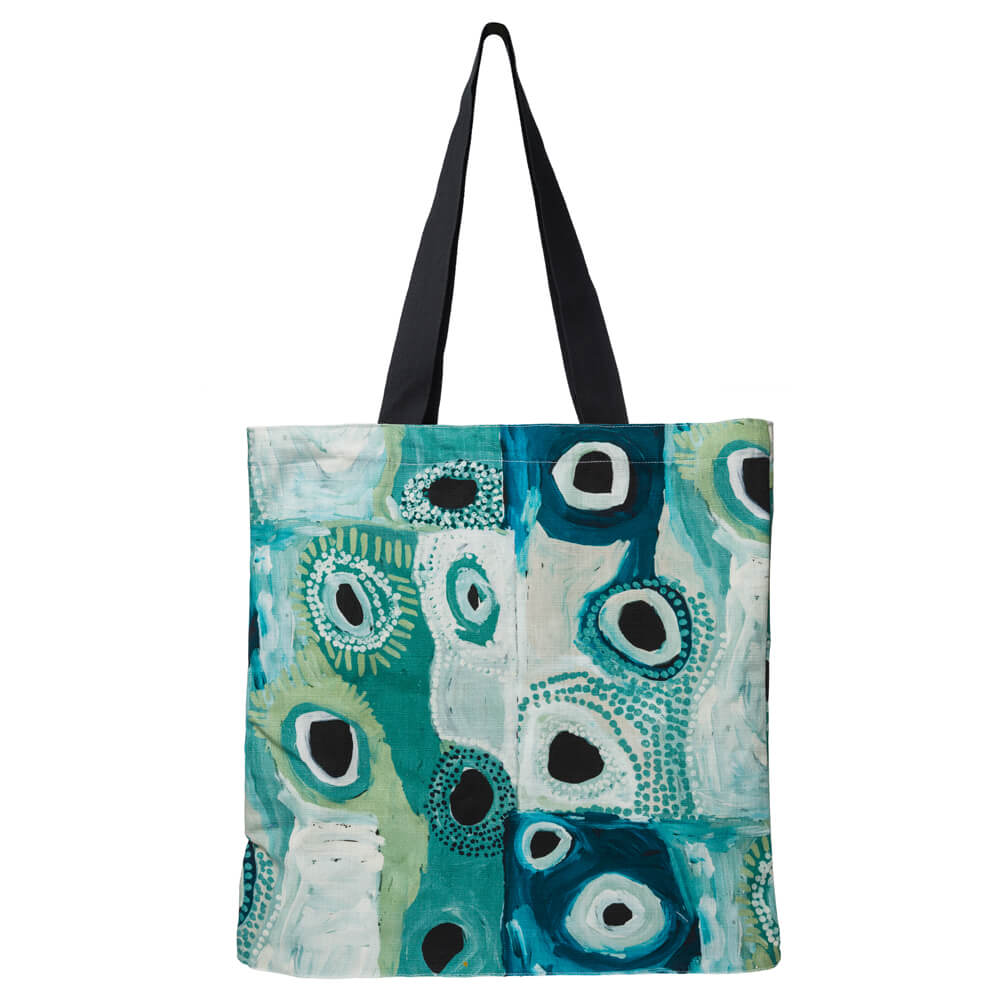
Australian stores carry a wide spread of styles, from everyday carry bags to smaller accessories. The table below sorts the common ones by what they are made from and what they suit best.
| Bag type | Typical material | Best for |
|---|---|---|
| Tote bag | Cotton canvas or calico | Shopping, beach, everyday carry |
| Cross body or sling bag | Hand embroidered leather | Hands free days out, travel |
| Shoulder handbag | Neoprene or printed canvas | Work and everyday use |
| Drawstring backpack | Cotton or recycled cotton | School, gym, light travel |
| Dilly or coolamon style bag | Woven or printed fabric | A nod to traditional carry forms |
| Toiletry pouch or clutch | Upcycled cotton or velvet | Travel, gifting, small accessories |
Materials and How the Designs Are Applied
Most everyday bags use cotton canvas or cotton calico, which takes a digital print well and holds the colour of a desert or saltwater design. Heavier bags and structured handbags often use neoprene, which gives the bag shape and a soft feel. Leather appears on the more premium pieces, where the artwork is digitally printed on canvas panels or hand embroidered straight onto the leather. Some makers go further on sustainability, building pouches from upcycled organic cotton misprints with recycled padding inside. Practical details vary by style, with magnetic closures and zip pockets common on the larger totes and handbags.
The Story a Design Carries
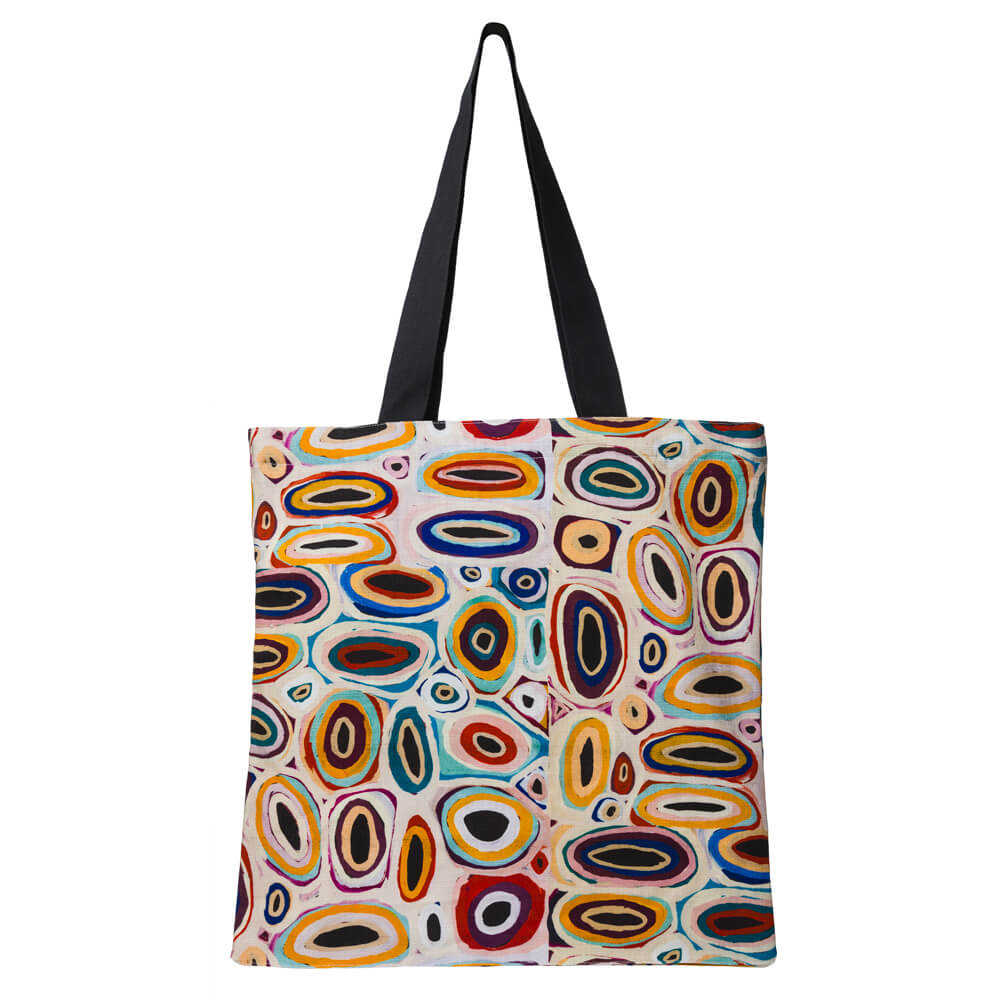
A design on a good bag is not a decorative pattern. It is a specific artist’s work, and reputable sellers supply an artist information or Dreamtime story card with the purchase so you know who made it and what it depicts. Many bags belong to named design collections such as Bush Tucker, On Walkabout, Women’s Business or Women Gathering at Waterholes, each one tied to Country and to a story the artist has the right to tell. Carrying one of these designs is a small act of respect when the artist has been credited and paid, which is exactly why the licence and the story card matter as much as the look of the bag.
How to Buy an Authentic Aboriginal Art Bag
If you want a bag that genuinely supports the artist, a few checks separate the real thing from a knock off. Run through these before you pay.
- Licensing: the seller should name the artist and state that the design is used under a licence agreement, not lifted from a style.
- Royalties: look for a clear statement that royalties are paid to the artist on every purchase.
- Indigenous Art Code: dealers who follow the Indigenous Art Code commit to fair and transparent dealing with artists.
- Business certification: signals such as Supply Nation registration, or membership of the Aboriginal Art Association of Australia, confirm the seller has been independently checked.
- Artist information: a bag that arrives with the artist’s name and story is a strong sign you are buying the real thing rather than a mass produced lookalike.
The same checks apply wherever you shop, so it is worth knowing how to buy authentic art online before you commit to a seller.
Bags for Gifts and Everyday Carry
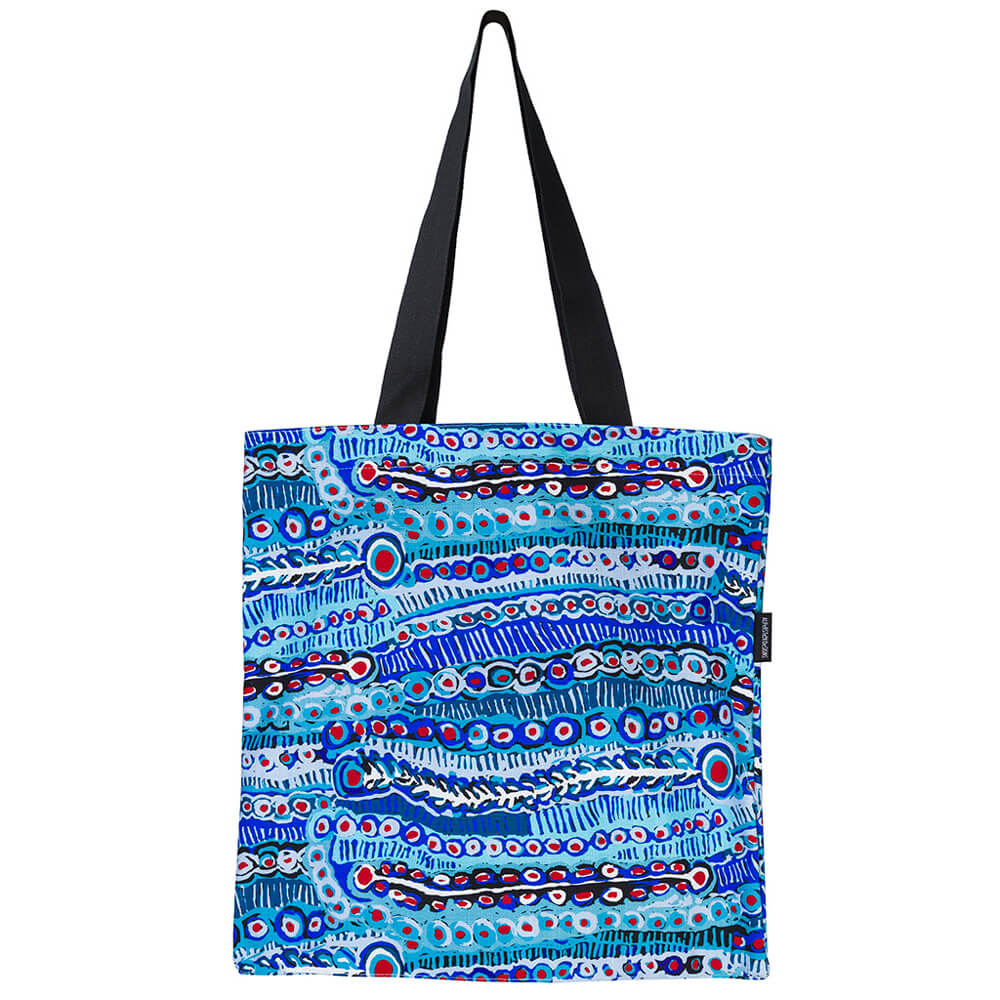
Part of the appeal of these bags is how easily they fit into ordinary life. A cotton tote handles the weekly shop, a sling bag travels well, and a printed handbag works for the office, so the artwork goes wherever you do. That everyday usefulness also makes them strong meaningful gifts, since the recipient gets something they will actually use that also puts money back to the artist. If you are building a wider collection, a bag sits naturally alongside other Indigenous designed homewares. For a structured everyday piece, our shoulder handbag range is a good place to start.
Carrying Culture With Care
An Aboriginal art bag is one of the easiest ways to live with Aboriginal art rather than just look at it. The thing that turns a printed bag into something worth owning is the chain behind it, an artist who made the design, a licence that named them, and a royalty that paid them. Choose on that basis and the bag carries its design honestly, which is the whole point of buying one in the first place.
Before You Buy a Bag
Are Aboriginal art bags ethically made?
They are when the seller works under licence agreements with artists and pays royalties on each sale. Look for the artist’s name, a story card, and signals such as Indigenous Art Code participation or Supply Nation registration.
What materials are Aboriginal art bags made from?
Most use cotton canvas or calico for printed totes, neoprene for structured handbags, and leather for premium cross body and sling bags. Some pouches are made from upcycled cotton with recycled padding.
How much do Aboriginal art bags cost in Australia?
Prices vary with the material and the bag. Printed cotton totes sit at the affordable end, while hand finished leather cross body bags cost more because of the craft and the materials involved.
Where can I buy an authentic Aboriginal art bag online?
Buy from sellers who name their artists and hold licence agreements, such as Aboriginal owned brands, art centres and accredited galleries. Check the seller’s authenticity and royalty statements before you order.