Dot painting and rarrk are both forms of Aboriginal art, but they come from different parts of Australia, use different methods, and carry different cultural meanings. They are often mentioned together in lists of Aboriginal art techniques, but placing them side by side without context can give the impression they are simply two versions of the same thing. They are not.
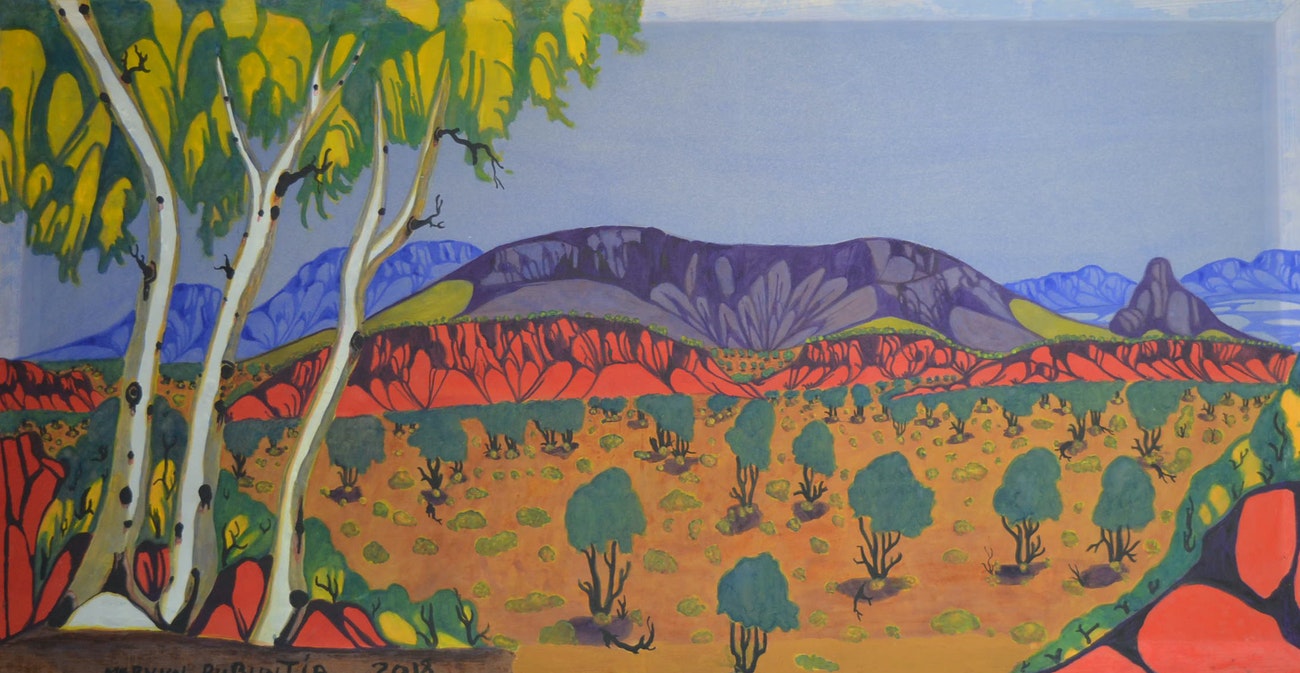
Both traditions are living practices, not historical artefacts. Each belongs to a specific place, language group, and cultural authority. If you are trying to understand Aboriginal art techniques more broadly, the differences between these two styles are a useful place to start.
Different Countries, Different Traditions
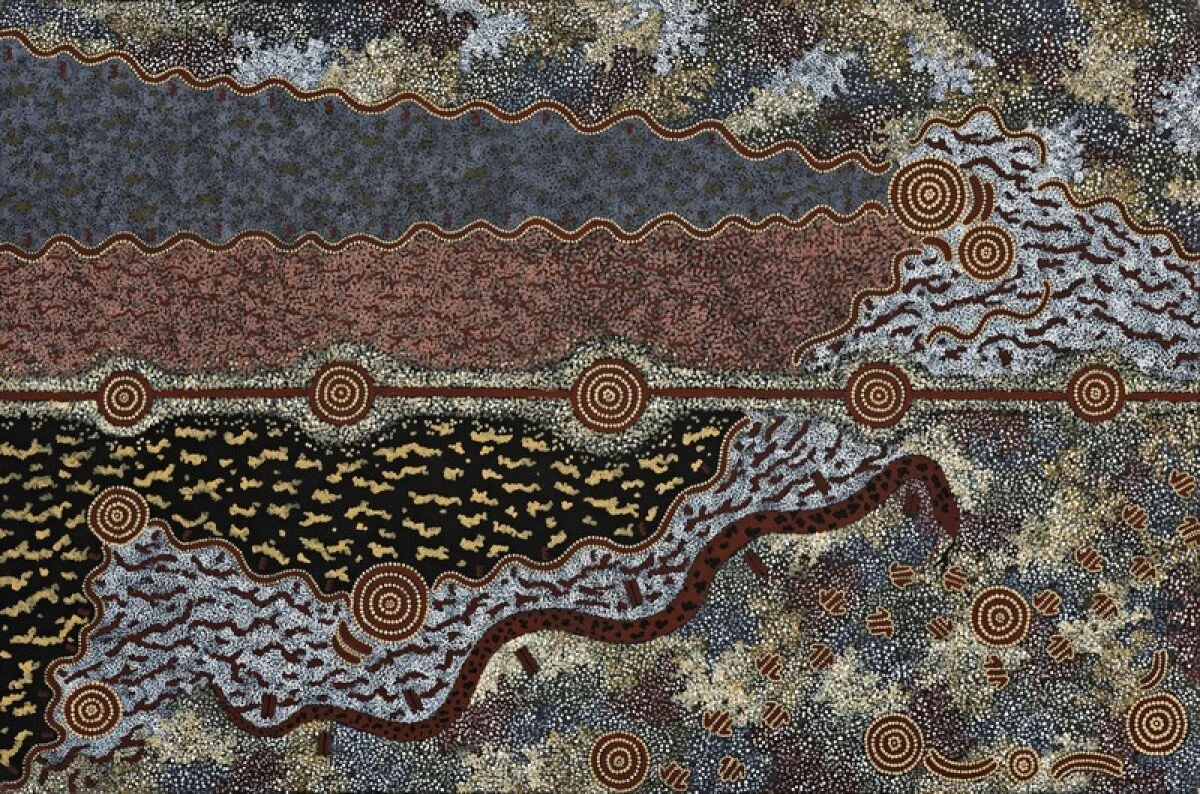
Geography is the starting point for this comparison. Dot painting is strongly associated with the Central and Western Deserts of Australia. It is the visual language most people picture when they think of Aboriginal art, largely because of how widely it has been exhibited and sold since the 1970s. Rarrk, by contrast, belongs to Arnhem Land in the Northern Territory. It is a defining feature of western Arnhem Land art, particularly among Kunwinjku-speaking artists, and looks and functions very differently from the dot work of the desert.
Aboriginal art is regional by nature. Each style carries knowledge tied to specific country, families, and ancestral stories. Neither dot painting nor rarrk belongs everywhere, and neither can be fully understood apart from the country it comes from.
Where Each Tradition Comes From
Dot painting moved onto canvas in the early 1970s out of the Western Desert at Papunya, adapting older ground and body painting traditions into a portable format. The full Papunya history sits in the dot painting guide. Rarrk has been in continuous ceremonial use in western Arnhem Land for far longer than that, with the cross-hatched line work used on bark, body, and rock long before any of it appeared on canvas. The history of how rarrk works as a clan signature is set out in the rarrk article.
Dot Painting vs Rarrk: The Key Differences
The table below summarises the main differences between the two styles across the criteria that matter most for understanding each tradition.
| Dot Painting | Rarrk | |
|---|---|---|
| Region | Central and Western Desert | Western Arnhem Land, Northern Territory |
| Language group | Various Central Desert language groups | Primarily Kunwinjku-speaking artists |
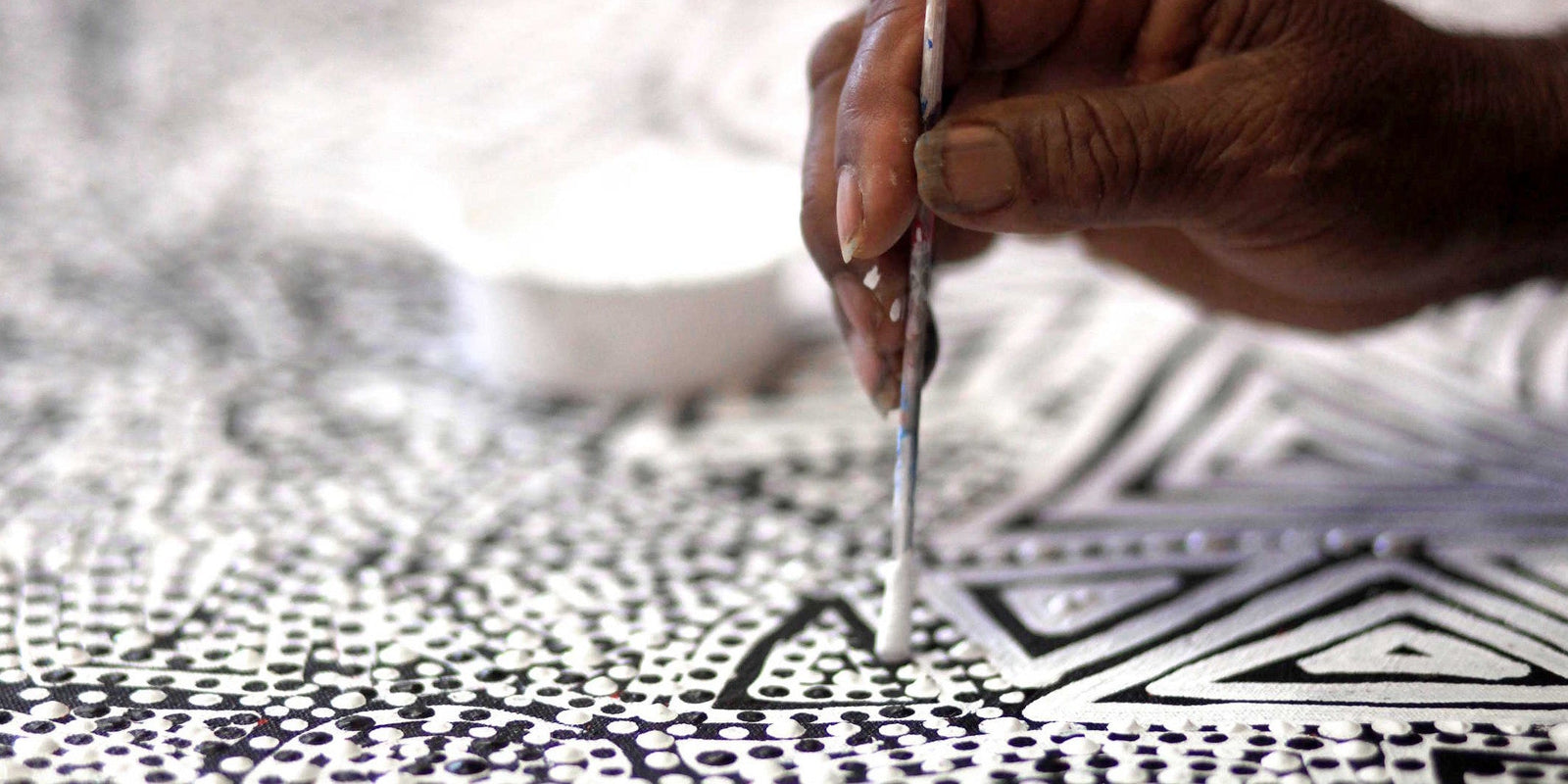
| Visual method | Accumulated points of colour (dots) | Fine parallel and cross-hatched lines |
| Tools | Sticks, brushes of varying thickness | Fine brushes made from reeds or human hair |
| Primary medium | Acrylic paint on canvas or board | Ochre, often on bark or canvas |
| Visual effect | Abstract, textured, can read as landscape or map | Shimmering, structured, conveys ancestral presence |
| Modern canvas origin | 1971, Papunya Tula Art Movement | Pre-dates canvas; ceremonial use is much older |
| Cultural function of marks | Partly used to obscure sacred iconography from public view | Marks encode clan identity and spiritual authority |
The visual contrast is immediate once you know what to look for. Dot painting builds form through colour point by point, with an open, layered texture that can feel expansive. Rarrk builds form through line, creating a tight, rhythmic surface where the density and direction of the hatching carry as much meaning as what is depicted.
The cultural contexts differ just as sharply. Dot painting reached its modern canvas form in the 1970s, adapting older ground and body painting traditions. Rarrk has been in continuous ceremonial use long before that, and its patterns carry specific clan authority that cannot be separated from the person entitled to paint them.
Rarrk and Miny’tji: Another Distinction Worth Knowing
Rarrk is sometimes confused not only with dot painting but also with miny’tji. While both involve fine line work, they are not the same. Miny’tji refers specifically to the sacred clan designs of the Yolŋu people of north-east Arnhem Land. These are named geometric patterns passed down through families, representing rights and responsibilities tied to specific country, sea, and ancestral knowledge. They are fundamental to Yolŋu law and identity.
Rarrk, as used in western Arnhem Land, is a technique that creates a sense of power and presence within figures or backgrounds. Miny’tji are the actual patterns that identify clan authority in north-east Arnhem Land. Both involve cross-hatched fine lines and can look similar to an outside eye, but they belong to different peoples with different cultural protocols. For a closely related comparison, see rarrk versus x-ray art.
Looking at Each Tradition on Its Own Terms
Understanding these distinctions does not require expertise in Aboriginal culture. It requires only the willingness to look at each tradition on its own terms rather than treating Aboriginal art as a single, undifferentiated category. The same logic applies across other comparisons on this site, including how Aboriginal art styles differ by region and traditional versus contemporary Aboriginal art.