The Dreamtime is the foundation of Aboriginal religion and culture, dating back some 65,000 years. It is not a distant event but a living, timeless reality that connects the spiritual, physical, and human worlds across past, present, and future. Understanding what Dreamtime is in Aboriginal culture means understanding the stories, laws, and beliefs that continue to shape the lives of First Nations peoples today.
A Beginning That Never Ended
The Dreamtime is a term used to describe the foundation of Aboriginal spiritual belief and existence. First Nations Peoples believe that the Dreamtime was way back, at the very beginning, a time before the world took form. The Ancestor Spirits created the land, rivers, streams, water holes, hills, rocks, plants, and animals. They gave each tribe its territory, its totems, and its Dreaming.
Dreamtime is the foundation of Aboriginal religion and culture. It dates back some 65,000 years. It is the story of how the universe came to be, how human beings were created, and how the Creator intended for people to live within the world.
Indigenous people understand the Dreamtime not as a distant past but as a beginning that never ended. They hold the belief that it is a period on a continuum of past, present, and future. Anthropologist William Stanner captured this understanding with the word “Everywhen,” reflecting that the Dreaming is timeless rather than fixed in history. Some Aboriginal groups find the English word “Dreaming” inappropriate because it implies something non-real, whereas for them it is a lived daily reality.
How the Ancestors Created the World
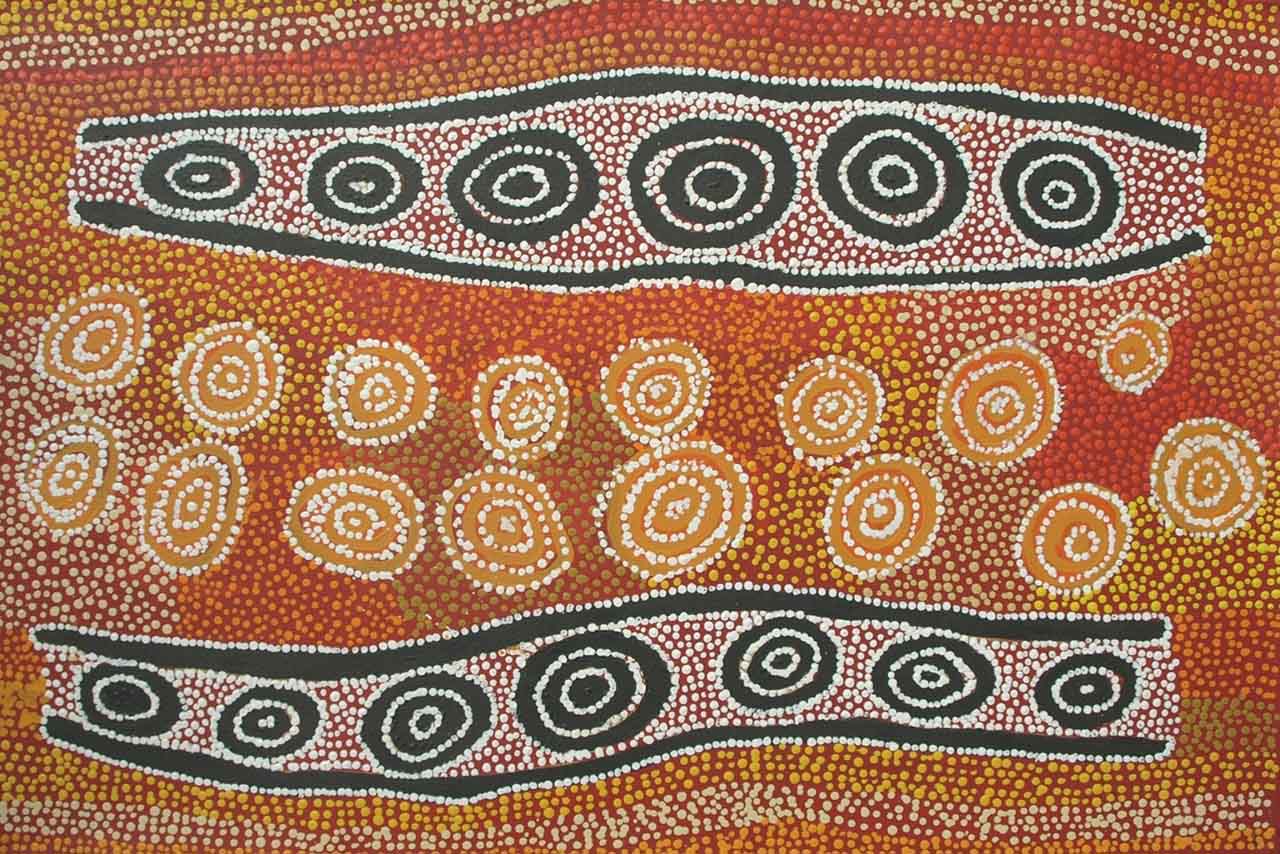
Before the Dreamtime brought the world into being, the land was empty and without form. First Nations People believe this was the way things once were because the ancestors had said so. During the Dreamtime, the land, mountains, hills, rivers, plants, and all living creatures were formed by the actions of supernatural spirits.
Creation stories explain the shape of the physical world, and they differ across communities. In the traditions of the Gamilaraay and Wiradjuri peoples of New South Wales, the sun came into being when a Brolga hurled a massive emu egg into the sky. The yolk burst into flame, illuminating the world for the first time, and the sky spirits decided to rekindle that fire each day. In the Noongar traditions of Western Australia, the sun is personified as Ngaangk, a maternal spirit who carries a smoldering Banksia cone across the sky each morning and returns through a subterranean passage each night.
Distinct tribes hold different beliefs about the Ancestors who shaped the world. Some believe the Ancestors were animal-spirits. In parts of Arnhem Land in the Northern Territory, they believe the Ancestors were huge snakes. In other places, the creator is the Wanadjina. Each community’s stories belong to their place and their people.
Sacred Sites and the Power of Ceremony
The Ancestors made particular sites sacred during the Dreamtime. These places mark where significant events unfolded, and their meaning is inseparable from the stories that gave them form. Uluru (Ayers Rock) and Kata Tjuta (Mt. Olga) carry this potency. The Anangu people believe that the features of Uluru are the physical remains of ancestral Dreamtime beings, including the carpet-snake people known as Kuniya, whose battles during the Dreaming left marks on the rock itself.
Aboriginal people perform ritual ceremonies and customary songs near sacred sites to honor the Ancestral spirits. Ceremonies performed at these sites re-create the events of the Dreaming and help keep the life force of the place active. If the ceremonies are not performed, new life cannot be created.
The Dreaming also forms the basis of Songlines, which function as detailed guides to Country for peoples such as the Yolngu of Arnhem Land. These traditional narratives encode knowledge of seasonal water sources and fire-stick farming practices, and today that knowledge is applied alongside Western climate science in land management programs.
The Laws Declared in the Dreamtime
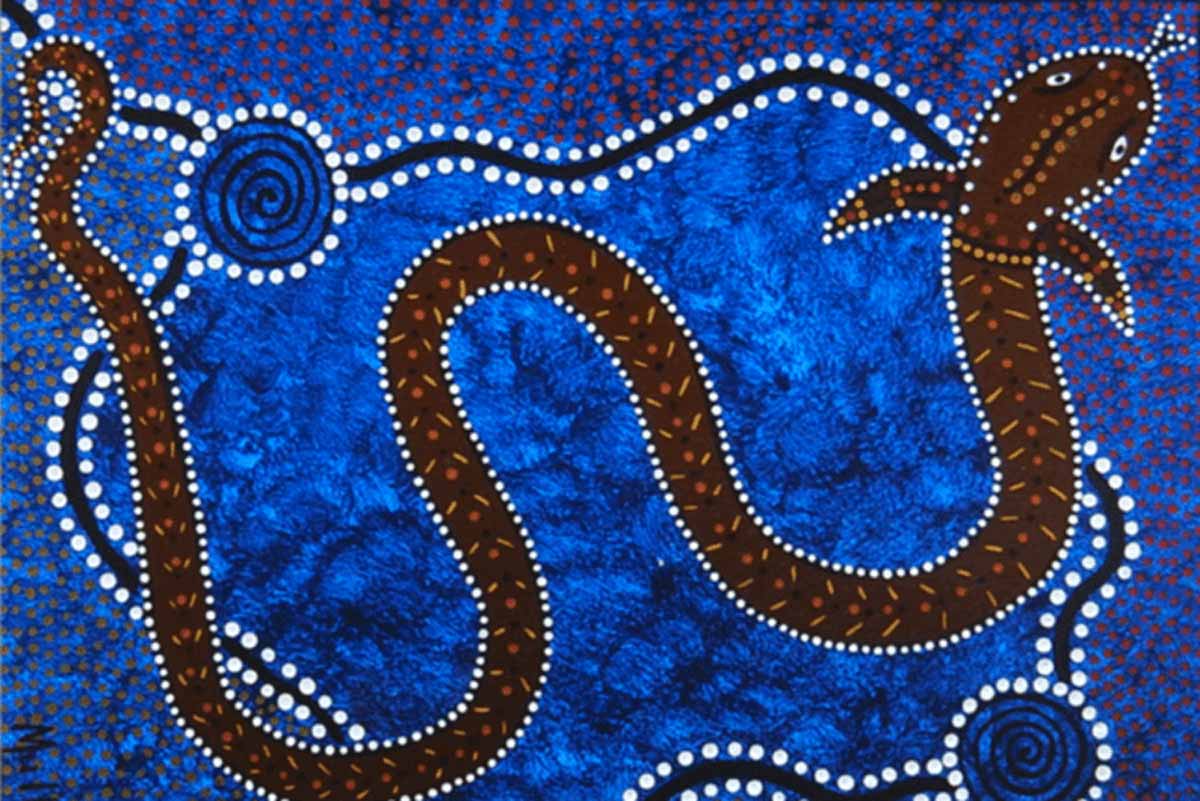
During the Dreamtime, the creators declared the laws of the land. They established how people were to behave toward one another, the customs of food supply and distribution, the rituals of initiation, the ceremonies of death, and the laws of marriage. These rules were not abstract principles but lived obligations embedded in story and passed down through generations.
The Dreaming commands the rules and ways of being in Aboriginal culture today. Dreaming stories teach who one should marry according to the Aboriginal skin system, how to show respect when visiting another’s Country, and how to welcome strangers to one’s own Country. The Dreaming also explains why a rock sits in a certain place, why the echidna has spikes, or why the moon returns full each month. These are answers rooted in the Dreamtime account of how things came to be.
Among groups such as the Pitjantjatjara, ancestral narratives continue to dictate kinship systems that regulate marriage, social obligations, and how disputes are resolved. This framework is referred to as The Law, and it functions as a primary structure for social life in many communities.
The Rainbow Serpent and Other Creator Beings
Among the most widely known creator beings is the Rainbow Serpent. It slept under the ground when the world was bare and cold, with the animal tribes sleeping inside it. When it awoke, it called out to them and gave birth to them, and in its movements across the land it created hills, mountains, lakes, and rivers. The Gaagudju people believe the Rainbow Serpent next forced its way through rocks to make other water sources. The Jawoyn people believe it traveled across the land after waking, and where its body pressed into the ground, frogs filled those grooves with water when the Serpent tickled them and made them laugh.
Many creators are believed to continue living on the land or in the sky, watching over the people. Some inhabit rock crevices, trees, and water holes. Others became heavenly bodies. Still others took the form of natural forces such as wind, rain, thunder, and lightning. These creator beings are often described as men and women who could change shape into animals and other creatures. There are also stories of heroes, heroines, and Father and Mother figures, each belonging to a particular community and place.
A Living Reality Across 250 Language Groups
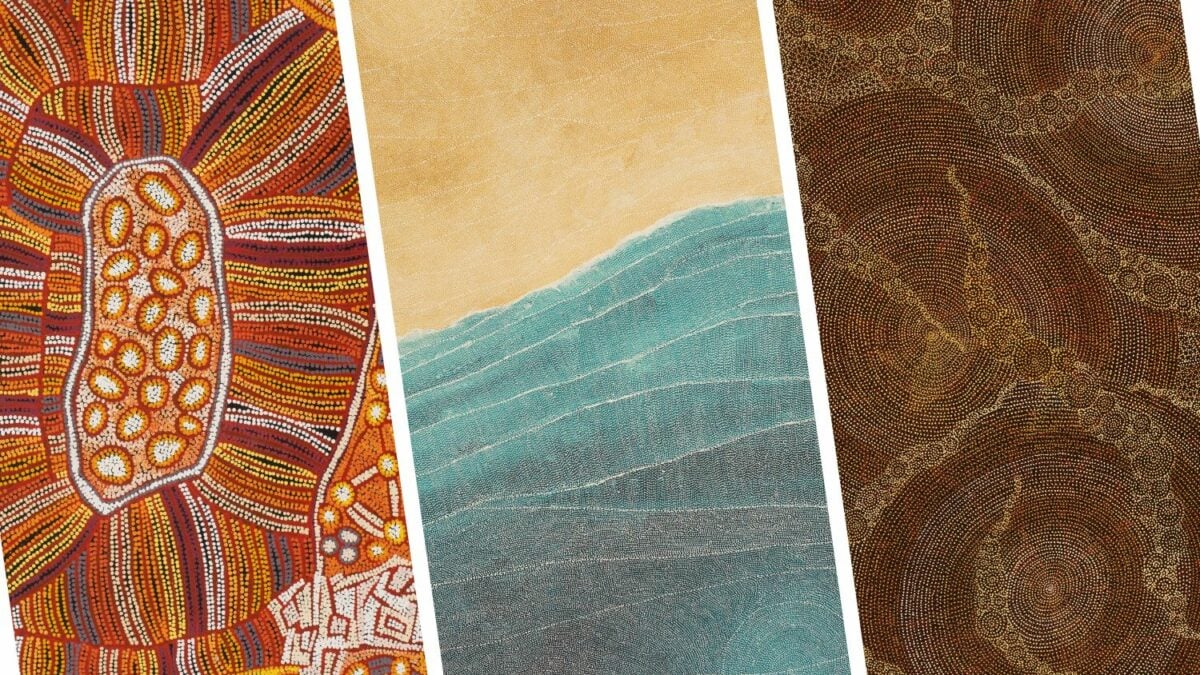
The Dreamtime is not a single unified belief system. The Australian Institute of Aboriginal and Torres Strait Islander Studies recognizes 250 distinct language groups across Australia, each with its own variation in beliefs and stories. What may appear as a shared concept from the outside carries significant differences in meaning, story, and practice across communities.
The word “Dreamtime” was first used by anthropologist Francis Gillen in an ethnographical report in 1896, based on the Arandic word alcheringa used by the Arrernte people of Central Australia. Some scholars have since argued that the translation is imprecise, with the original word carrying a meaning closer to “eternal” or “uncreated.” Different language groups use their own terms for this living reality: the Warlpiri and Pitjantjatjara peoples use Tjukurpa or Jukurrpa, the Gija people use Ngarrankarni, the Noongar language uses Nyitting, and in North-East Arnhem Land it is known as Wongar.
An individual may also hold a personal connection to a Dreaming, a totem linking them to specific ancestors and their stories. A person may belong to a Kangaroo Dreaming, a Shark Dreaming, or a Honey Ant Dreaming, and this connection shapes their identity and their obligations within their community. The Dreaming is not static or linear. It is constantly evolving to explain events and changes today, including floods, storms, and the significant occurrences of people’s lives.
Why the Dreamtime Still Matters
The Dreamtime may be difficult to understand fully from the outside, but it is part of who Aboriginal people are, the very essence and reason for being here. It is all-encompassing, touching every aspect of life from birth to death. An individual receives their spirit as a child through the Dreaming, carries its power through customs and rituals throughout life, and upon death returns to it.
Dreamtime beliefs continue to shape how Aboriginal people relate to land, to each other, and to the world. The land is not property but kin, and the responsibility to care for it is inseparable from cultural identity. Among the Noongar of Western Australia, the landscape is regarded as a subject with its own agency and memory. This understanding has become a reference point in contemporary land management, urban planning, and the legal recognition of Traditional Owners. The Dreamtime, as Aboriginal people have always understood it, will forever be at the centre of their existence as a people.