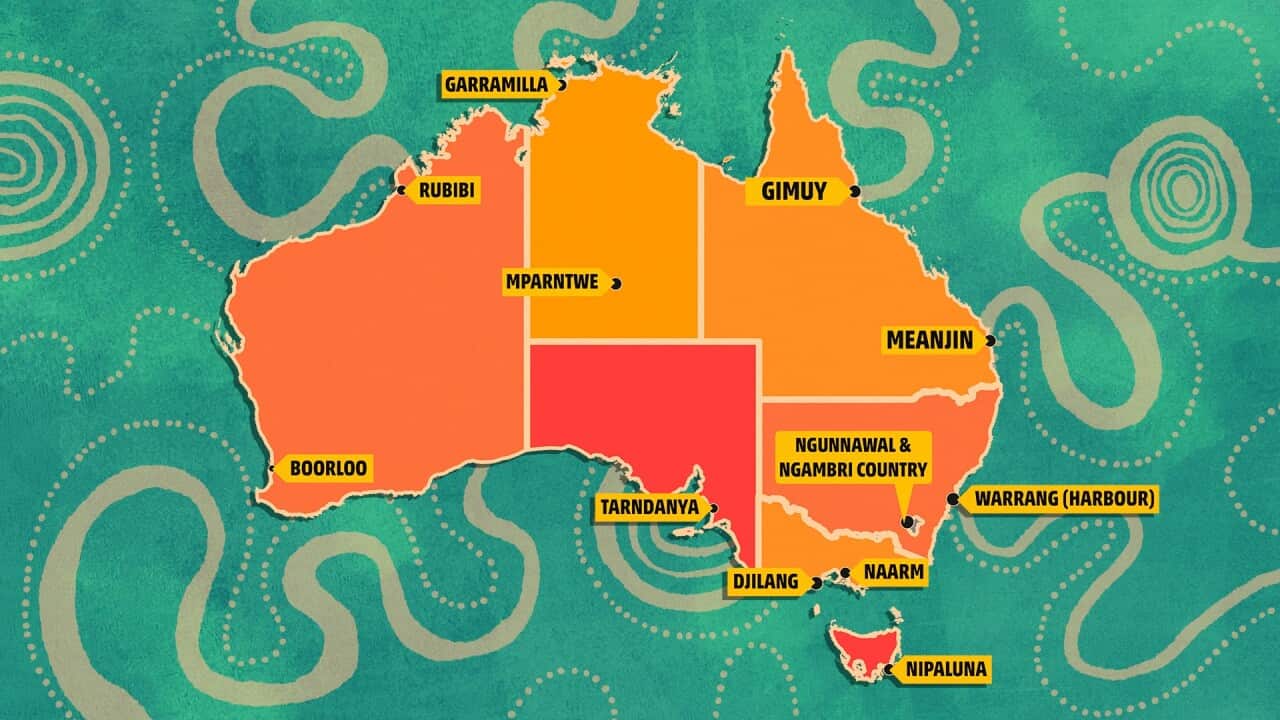
Most people are taught about “Aboriginal Australia” as one group. The truth is closer to the way Europe sits on a map. Australia is home to hundreds of distinct Aboriginal nations, each with its own language, its own Country, and its own Lore. So the short answer to how many Aboriginal nations are there in Australia is that there are up to 500 to 600 nations, often grouped into around 250 language groups. The longer answer, and the one that matters, is in what those numbers actually mean.
The short answer: around 250 language groups and up to 600 nations
At the time the First Fleet arrived in 1788, researchers and Aboriginal communities estimate there were approximately 500 to 600 distinct Aboriginal nations across the continent. These groups are usually classified into around 250 language groups, many with multiple dialects within them. Community sources commonly cite “over 250 Mobs” as the tribal-level figure, while encyclopaedic sources put the count higher at “about 600 tribes or nations and 250 languages with various dialects”. Both descriptions refer to the same continent at the same point in time. The range exists because researchers count slightly different things, but the order of magnitude is consistent: hundreds of nations, not a handful.
What a “Mob” actually means
In Aboriginal English, a Mob is a tribe or nation. Within a Mob there are Clans, which are family groups, and some Mobs have upwards of seven Clans inside them. Most Aboriginal people belong to more than one of these layered identities at once, including a Mob identity, a Clan identity, a family identity, and a personal totem or spirit protector. So when an Aboriginal person says “my Mob”, they are pointing to a specific nation with its own name, language and Country, not to Aboriginal people in general.
Why the count is “around 250” and not one fixed number
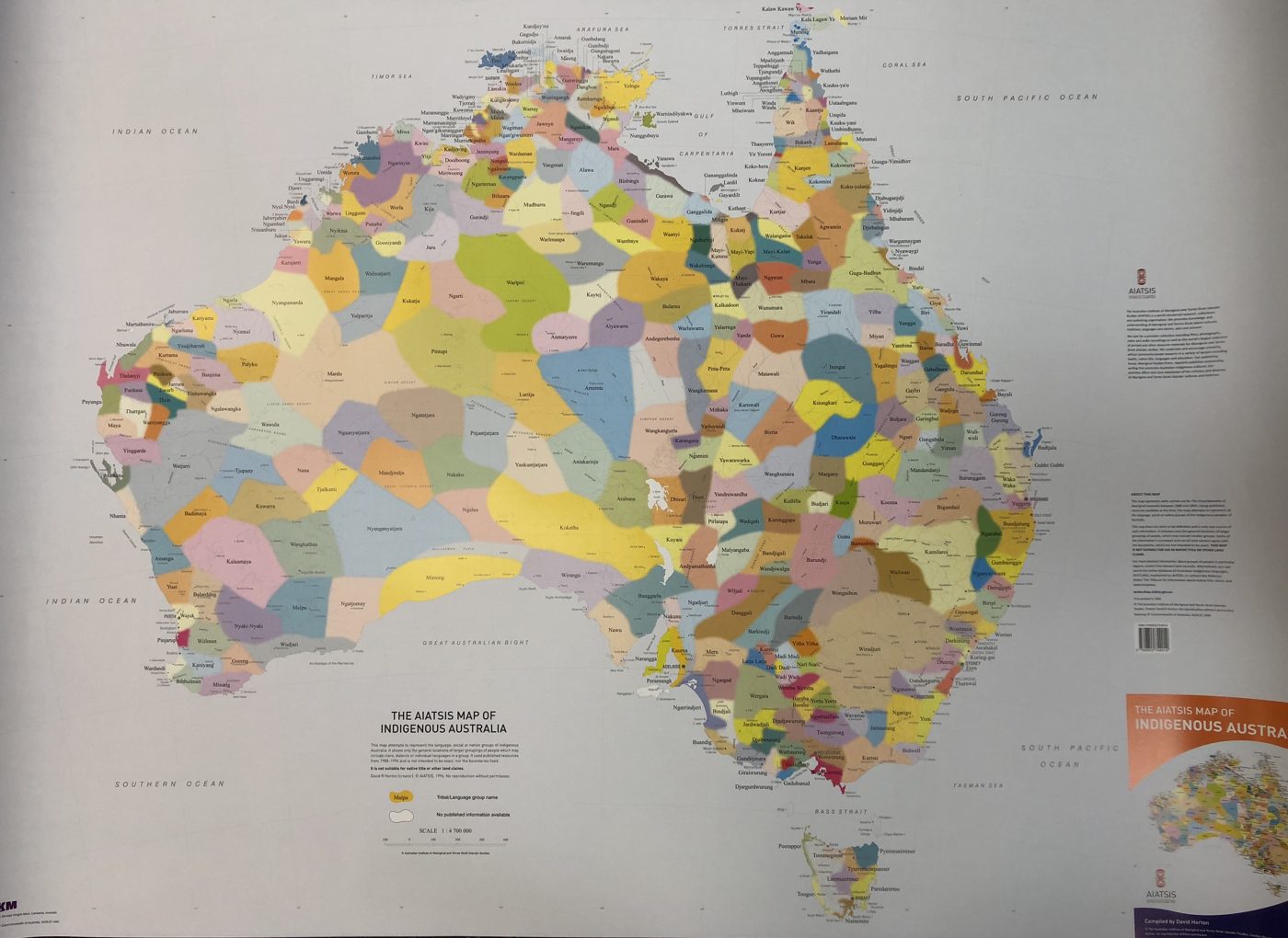
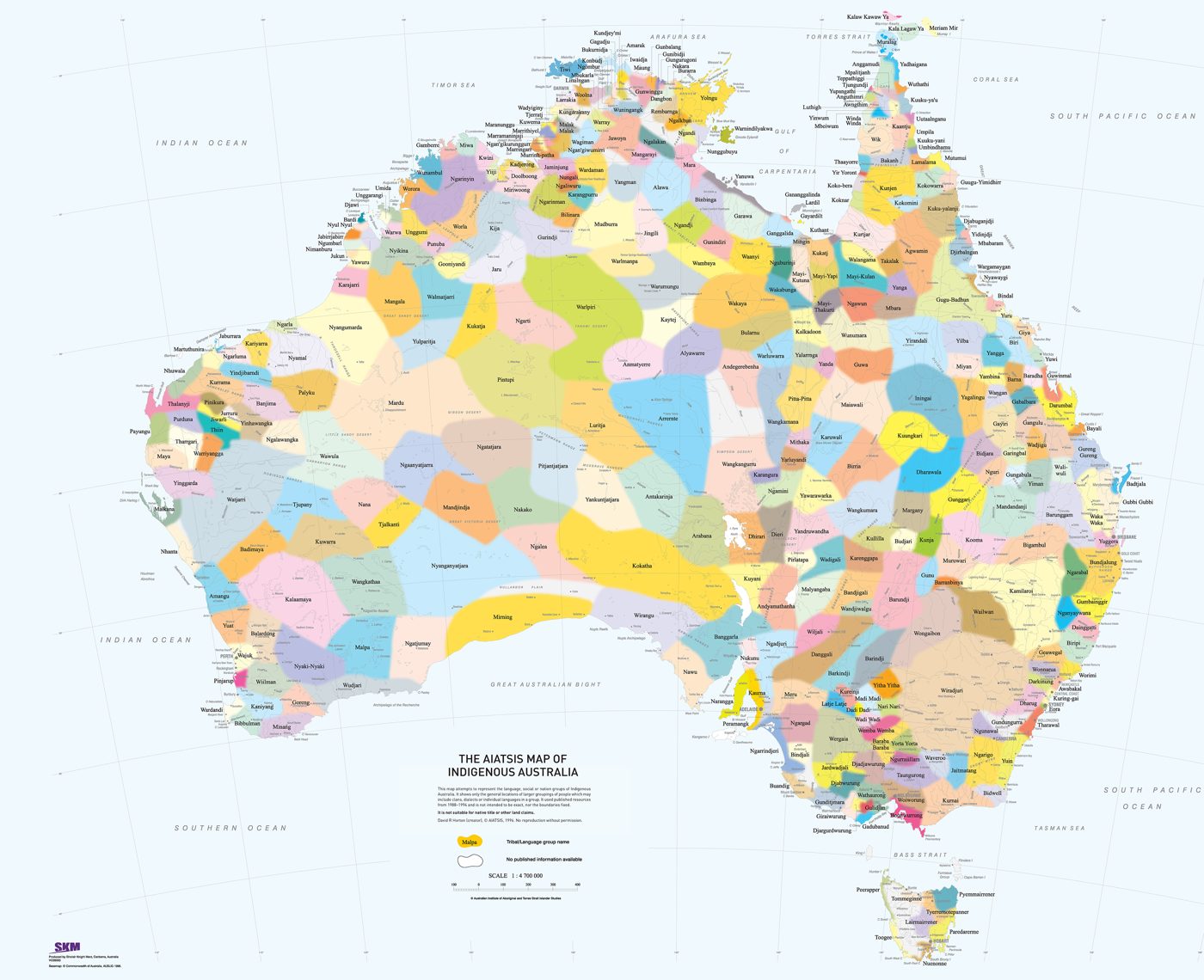
There are three reasons the count is given as a range. First, there is overlap between language and nation: some nations share a language with neighbours, and some single nations spoke up to five or six surrounding languages. Second, colonisation displaced and disrupted communities from 1788 onward, and some Mobs and languages are now “sleeping”, which means they exist in memory and archives but are not in daily use. Third, the boundary lines on any map are an approximation of a living system that pre-dates writing on this continent by tens of thousands of years. The AIATSIS Map of Indigenous Australia attempts a comprehensive view and is the most cited reference, but its compiler Dr David Horton was clear that it represents general areas only.
Language groups across the nations
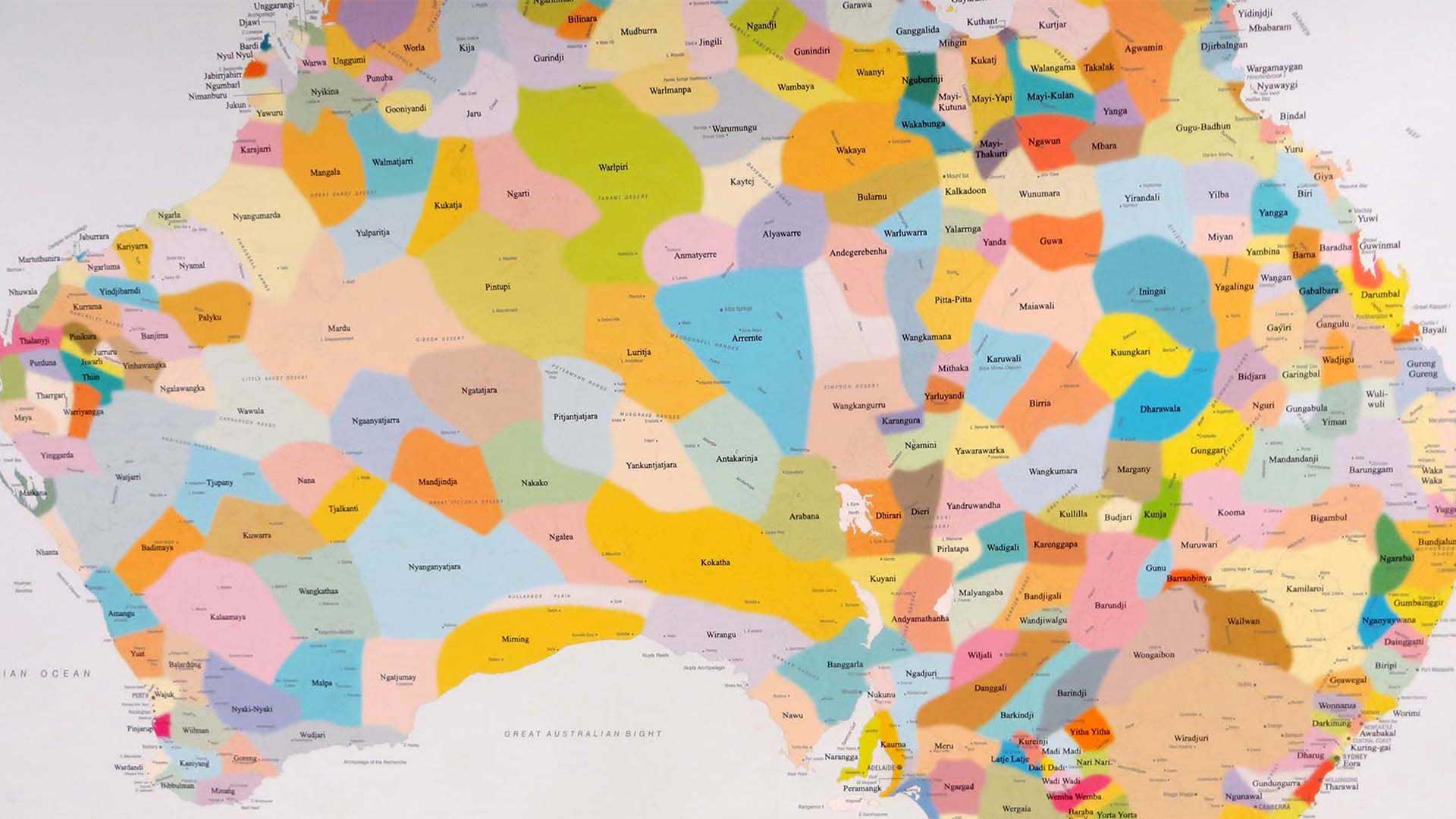
Aboriginal Australia is one of the most linguistically dense regions in the world. At British settlement there were over 200 distinct languages in active use, and many had several dialects layered on top. There was never a single mother tongue across the continent, the way English or Mandarin function elsewhere. The languages share grammatical construct, pronunciation, sound and syntax, but the vocabularies differ. Some languages are restricted: certain words and registers are spoken only by women or only by men, and there are “inside” and “outside” languages that handle public and sacred knowledge differently. Today around 9% of First Nations Australians speak an Aboriginal or Torres Strait Islander language at home, and revival programs run by organisations such as the Victorian Aboriginal Corporation for Languages are bringing more “sleeping” languages back into family use.
Each nation has its own “Country”
A nation in the Aboriginal sense is not the same as a state or a province. The word Aboriginal speakers use is Country, with a capital C. Country has a physical boundary, often marked by a particular tree, a watercourse or a ridge, and it has cultural and spiritual responsibilities tied to it. Most Mobs across Australia hold their Country through the Dreaming, which sets the relationships between people, ancestors, land and water for that specific place. Two neighbouring nations can share a river as a boundary while each holding completely different Lore for what happens on their side of it. This is why “Welcome to Country” and “Acknowledgement of Country” exist as protocols: they recognise that an event is being held on a particular nation’s land.
Regional names sit on top of Mob names
Alongside the hundreds of nation names, Aboriginal people also use pan-Aboriginal regional terms such as Koori, Nunga and Murri. These names emerged after colonisation when people were removed from Country and grouped together on reserves. They sit on top of, not in place of, a Mob name like Bardi or Bundjalung. For the full breakdown, see our guide on how the two groups differ.
The count is for Aboriginal nations only
The 500 to 600 nation figure covers Aboriginal nations on the Australian mainland and Tasmania. Torres Strait Islanders are a separate First Nations group with their own seafaring cultures, languages and island Countries, and they are counted separately.
Finding out whose Country you are on
The most widely used reference for the geographic spread of nations is the AIATSIS Map of Indigenous Australia, which lays out the general locations of language, tribal and nation groups across the continent. Local Aboriginal community-controlled organisations, land councils and language centres are the authoritative source for any specific area, because the AIATSIS map is general by design. If you are working, travelling or creating art that draws on this part of the world, the right starting point is to look up whose Country you are on, name them correctly, and read what they themselves publish about their nation. That is the practical takeaway behind every one of these 500 to 600 numbers.