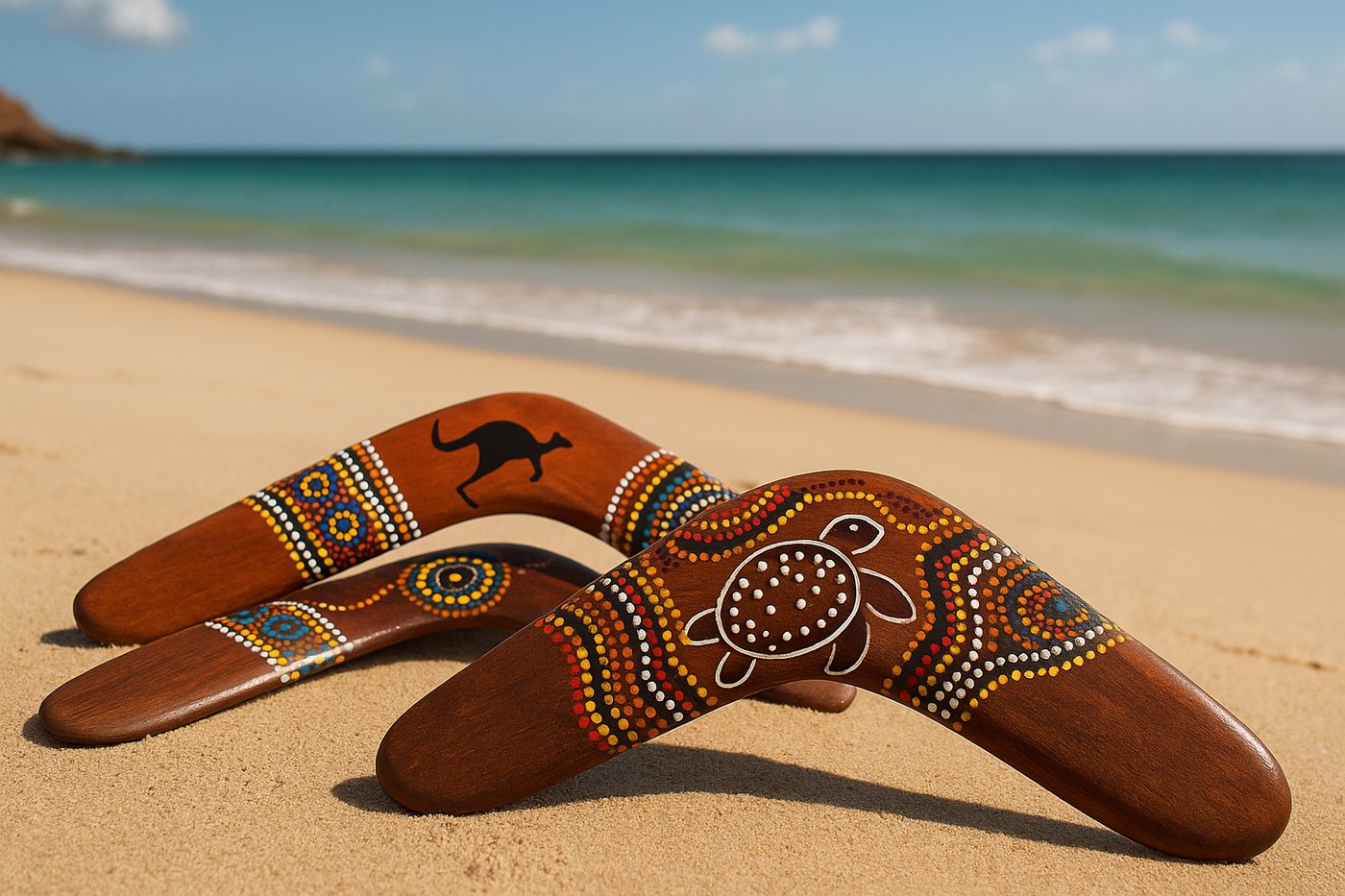
The boomerang is one of the most recognised shapes on Earth, a single curved line that says “Australia” before a word is spoken. Printed on a shirt it can read as a simple souvenir, but the motif carries far more than that. It is a piece of living Aboriginal culture, a tool that predates almost everything else people still wear today, and the meaning behind it is worth knowing before you put it on.
What a boomerang carries
On its own the boomerang looks like a graphic, yet in Aboriginal art it belongs to a wider language of art symbols. Marks on bark and canvas are read, not just admired. Concentric circles stand for a meeting place or a waterhole, connecting lines trace travel between them, and a boomerang shape often points to a man, a journey, or the act of providing for a group. The curve is rarely decoration alone. It usually sits inside a story about Country and the people who move across it.
Tool, weapon, and returning flight
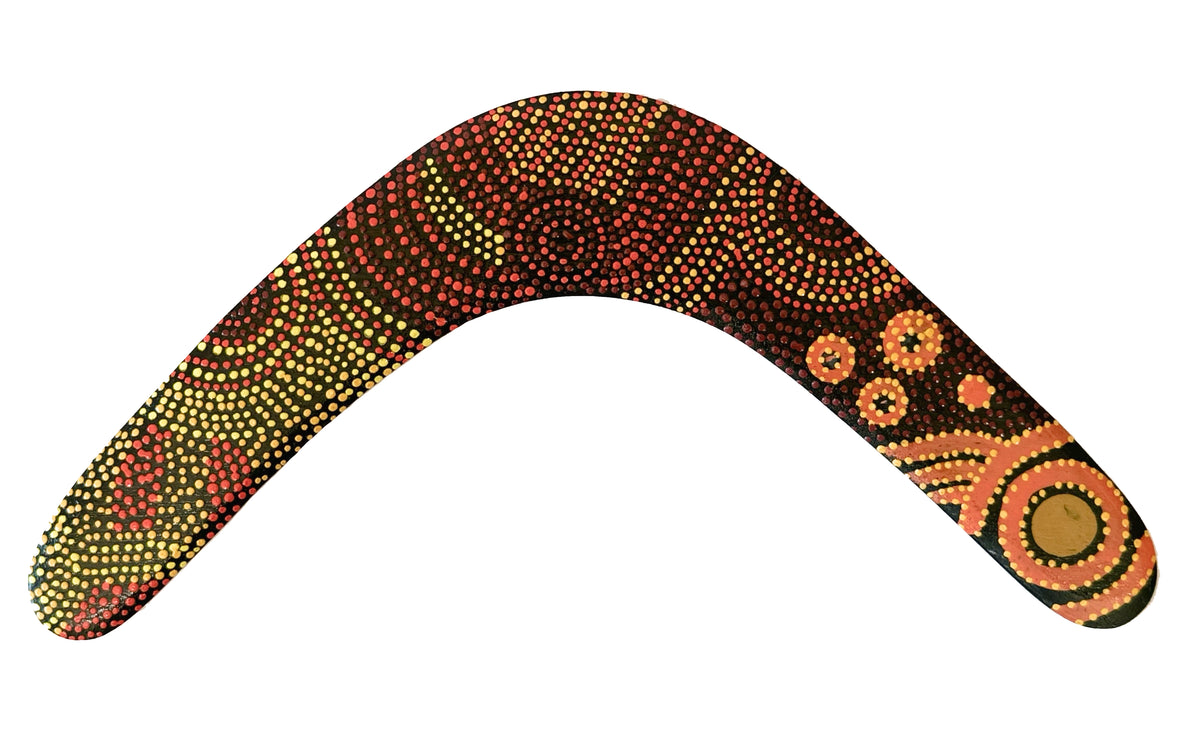
Long before it became an emblem, the boomerang was working equipment. Aboriginal peoples invented the returning boomerang thousands of years ago, and carbon dating places the oldest examples at more than 10,000 years old, so the returning design is genuinely an Australian invention. Making a good one took real skill. A maker chose exactly the right branch, then heated the wood over a fire to set a slight longitudinal twist, so the two arms sat in different planes. That twist is what sends it curving back.
Not every boomerang returns, and the two kinds did very different jobs. The returning type was used for sport and for driving birds, thrown so it hovered above a flock like a bird of prey and sent them diving into waiting nets. Its wide arc made it unreliable in a fight, so it was never a war weapon. The heavier non-returning type did the harder work and came in several forms:
- Hook: a true fighting weapon and a warrior’s first choice, also used for digging and processing a carcass.
- Club: weighted like a hammer for hunting animals and for combat.
- Hunter or killer: an all-rounder for taking game, digging, preparing fire and food, and even a musical instrument when two were tapped together.
Traditional pieces were cut from dense hardwood. Mulga (acacia aneura), native to the arid interior, was a common choice for boomerangs, digging tools and spear-throwers alike.
From a working tool to a national symbol
Somewhere between the hunting ground and the gift-shop shelf, the boomerang became an internationally recognised symbol of Australia. That shift is worth pausing on. A piece of Aboriginal technology, once used to gather food, now stands in for an entire continent on tea towels, keyrings and t-shirts. Wearing the shape can be a quiet nod to that history, or it can flatten thousands of years of invention into a cliche. The difference usually comes down to who made the design and whether its story is honoured.
What it means to wear a boomerang
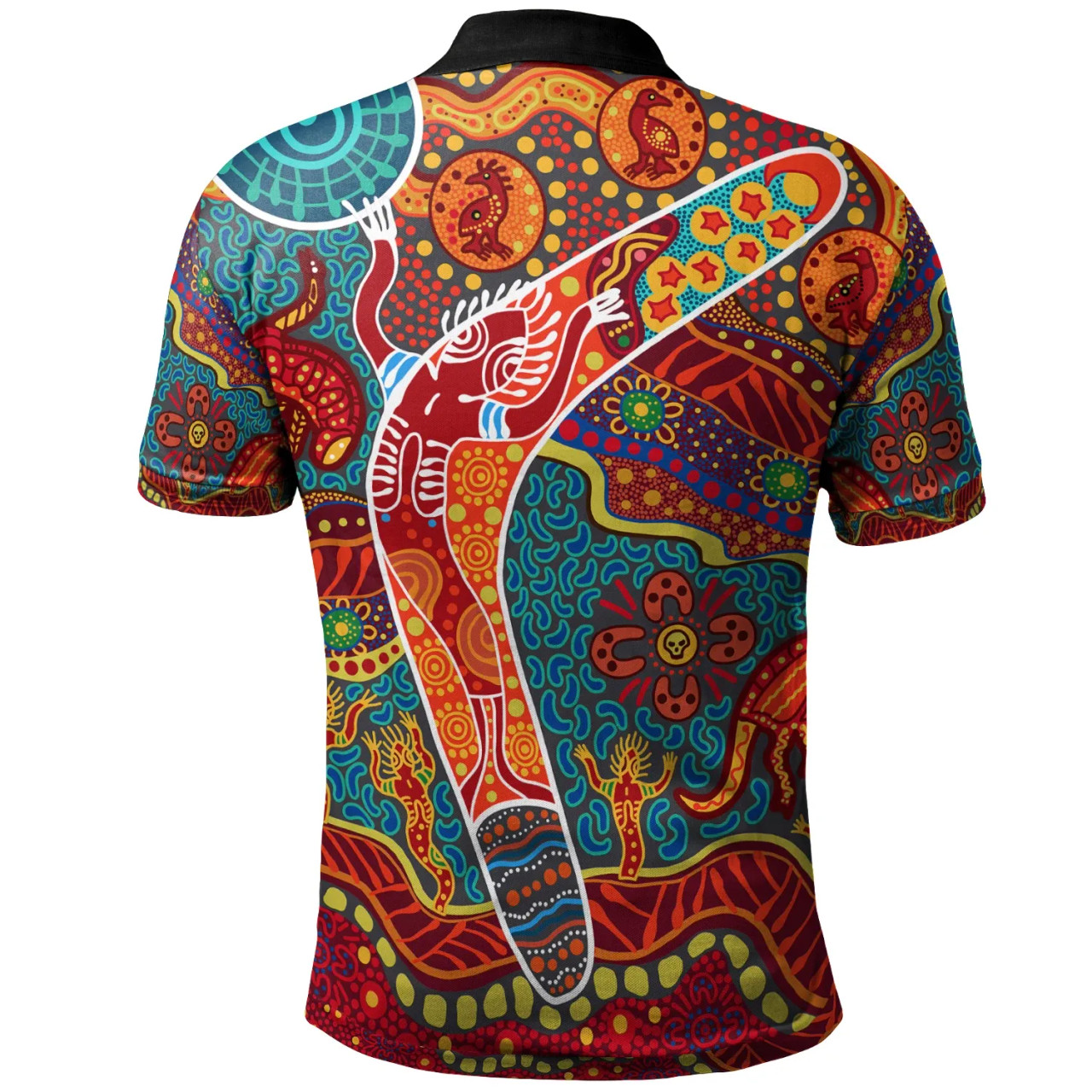
A boomerang motif on a garment is not just a print. When an Aboriginal artist draws it, the curve tends to keep the meaning it holds on bark or canvas: movement, return, provision, and the bond between a person and their Country. Trusted labels treat that seriously. They credit the artist by name, share the story behind the design, and pay royalties on every sale. The motif also travels well, moving from a carved object onto fabric, hoodies, scarves and tees, which is why one design can run across a whole boomerang collection rather than living on a single piece.
Authentic art or just “boomerang inspired”?
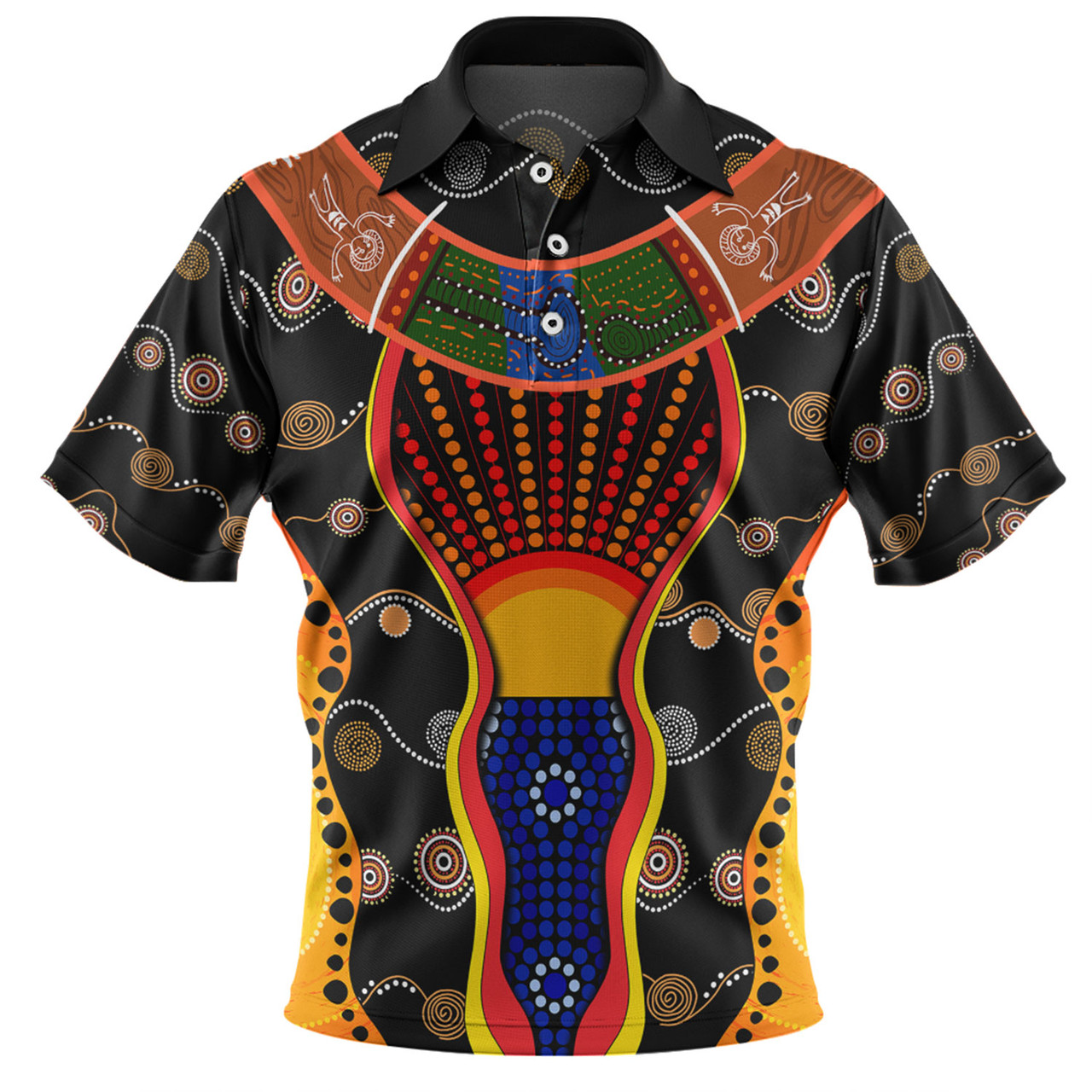
Search for boomerang clothing and the first results are often mass-market polos labelled “Aboriginal inspired”, printed in polyester and shipped from overseas with no artist named and no royalty paid. They look the part and miss the point. Genuine pieces share a few clear signals, and the same checks apply to any Indigenous shirts you are thinking of buying.
| What to check | Authentic boomerang design | “Aboriginal inspired” print |
|---|---|---|
| Artist | Named Aboriginal artist, story shared | No artist credited |
| Royalties | Paid to the artist on every sale | None |
| Made | Often Australian made, with AAAA or Australian Made marks | Mass produced overseas |
| Fabric | Cotton or quality blends | Generic polyester |
Carrying the boomerang with respect
The boomerang’s appeal is easy to understand. It is elegant, ancient, and unmistakably Australian. Choosing a piece that names its artist and returns something to them keeps the shape tied to the people who invented it, rather than reducing it to a logo. Worn that way, a boomerang design does what the object always did. It comes back to where it started.
A Few Boomerang Questions, Answered
What does the boomerang symbolize in Aboriginal culture?
There is no single answer, because meaning shifts between communities and artists. Broadly, the boomerang is linked to movement, journeys, hunting and provision, and on a design it usually sits within a wider story about a person and their Country rather than standing alone.
Did Aboriginal people invent the returning boomerang?
Yes. The returning boomerang is an Aboriginal Australian invention, and carbon-dated examples confirm boomerangs have been made here for more than 10,000 years, which makes the returning design a remarkable feat unique to Australia.
What is a traditional boomerang made of?
Dense hardwood. Mulga, also known as acacia aneura, was a favoured timber in arid Australia and was shaped over a fire to give a returning boomerang its curved flight.
How can I tell an authentic design from a generic print?
Look for a named Aboriginal artist, a stated royalty paid to that artist, and authenticity marks such as Australian Made or an AAAA logo. If a polo is simply labelled “Aboriginal inspired” with no artist and no royalty, it is decoration, not authentic art.