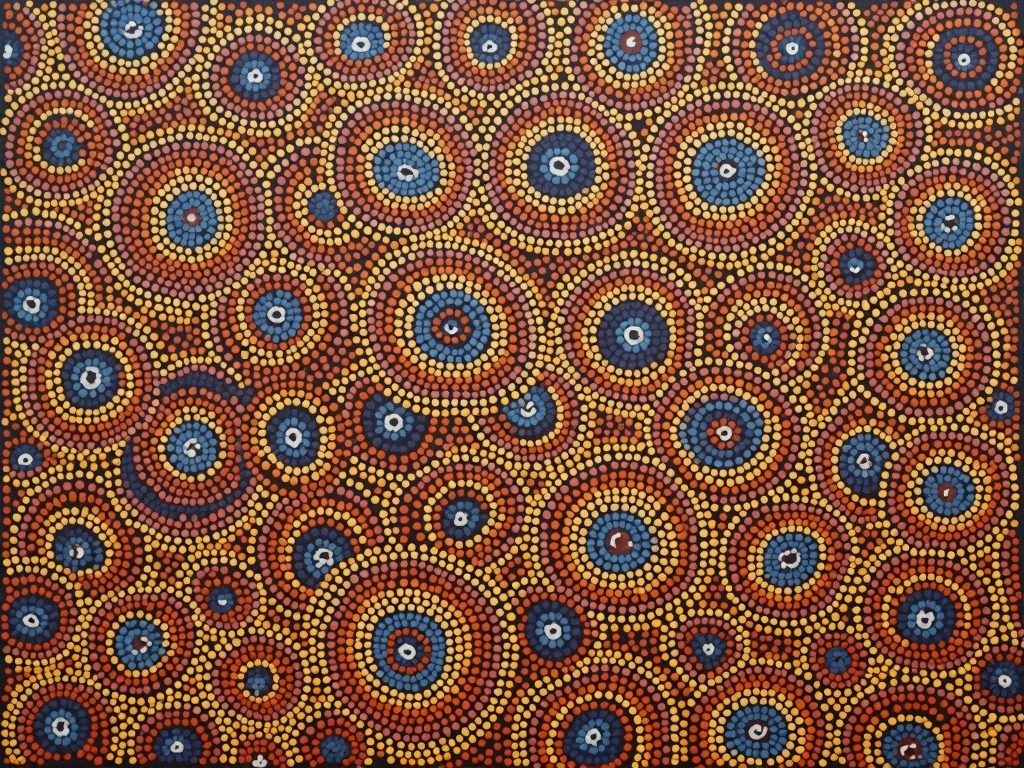
Walk into any Australian gallery showing Aboriginal work and the first style most visitors recognise is dot painting. Concentric circles, networks of dots, ochre and acrylic, dreaming maps. It feels ancient, and the iconography behind it is. The painted-on-canvas form most people picture, though, is barely fifty years old. The movement began at Papunya in 1971, when senior Western Desert law-holders started transferring ceremonial ground designs onto school board and canvas, and the cooperative those painters formed went on to change how Australia sees its first artists.
This is a roundup of ten Aboriginal dot painting artists whose work you should know: founders of the movement, late-bloomers from Utopia, Pintupi masters from the deep desert, and contemporary painters carrying the technique forward. Each section names where they painted, what dreaming they belonged to, and the work that earned them the record price or the international show.
What counts as a dot painting
A dot painting is defined by technique rather than subject. The recognisable dot marks must remain visible, produced by repeated imprints of a paint-covered brush, stick or other dotting implement onto canvas or board. Dots range from minute fine work made with thin sticks (one stick produces only about ten dots before clagging up with paint and becoming unusable) to large overlapping dots up to four centimetres across. The patterns may be neat and traditional or wild and expressionist.
Two origin stories sit underneath the style. The first is protective: when acrylic made paintings permanent, senior artists used overdotting to obscure sacred motifs from the uninitiated, layering dots across iconography that had previously been wiped from the sand after teaching. The second is descriptive: the desert landscape itself is studded with stones, spinifex tufts, flowers and distant trees, and dot patterns are how the country looks from above. The story of how that knowledge moved from rock and ground onto portable surfaces is a longer one, told in the broader rock to canvas shift.
The Papunya Tula pioneers
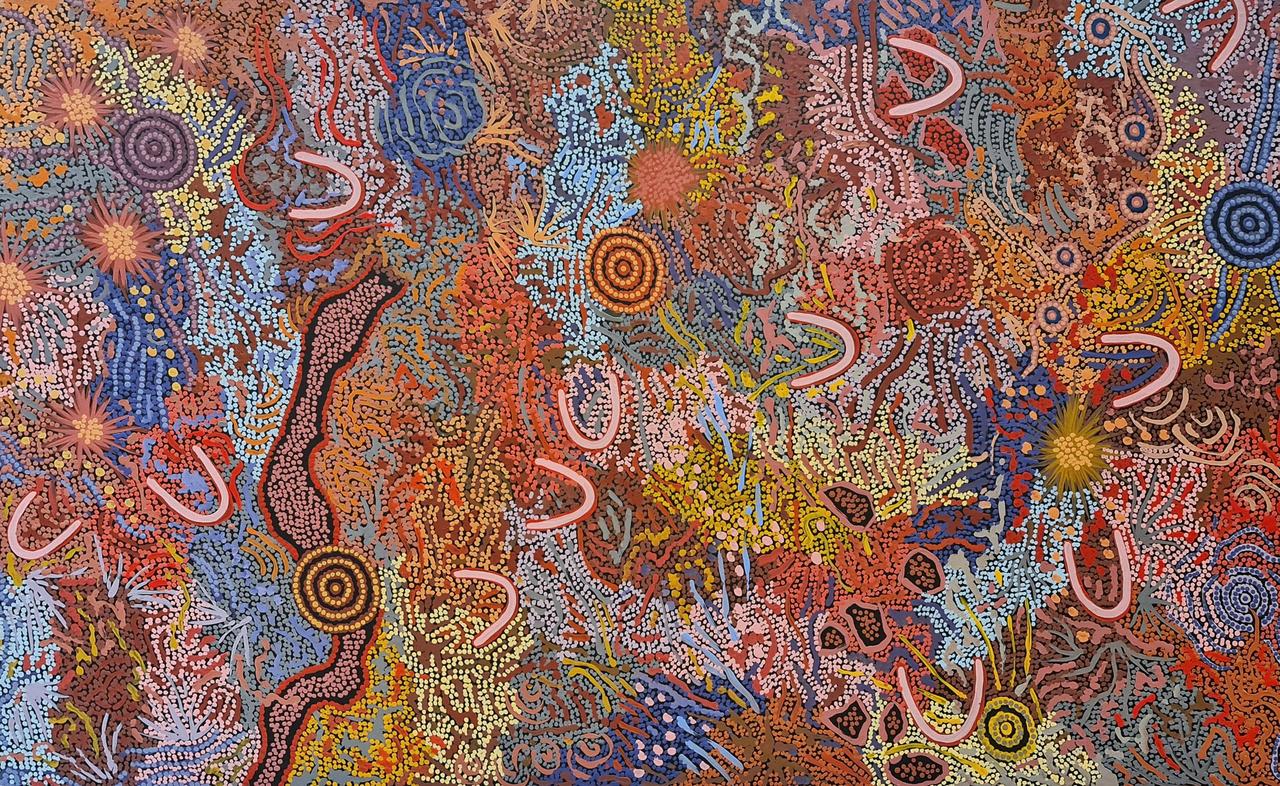
The painters who started at Papunya in 1971 are the first generation of the movement. They were senior law-holders, mostly men, who agreed that ground designs could be moved onto board if the sacred parts stayed hidden. The cooperative they founded, Papunya Tula Artists, still operates today.
Clifford Possum Tjapaltjarri
Anmatyerre, c. 1932 to 2002. A founding member of Papunya Tula and the painter most associated with the movement’s encyclopaedic ambition. His "Warlugulong" (1977) maps multiple dreaming tracks across a single canvas in a cartographic style that nobody had attempted before. He was appointed an Officer of the Order of Australia. His daughter Gabriella continues the family lineage.
Turkey Tolson Tjupurrula
Pintupi, c. 1938 to 2001. Another founding Papunya painter, known for the "Straightening Spears at Ilyingaungau" series, where minimalist parallel lines compress a conflict-and-resolution story into pure abstract form. His best work pairs deep narrative with stark visual economy.
Billy Stockman Tjapaltjarri
Anmatyerre and Western Arrernte, c. 1927 to 2015. One of the original painting men at Papunya and later chairman of Papunya Tula Artists. He painted Budgerigar, Snake and Wild Potato Dreamings with strong traditional iconography. Holding the cooperative together as it went global was as much his legacy as the paintings themselves.
Utopia’s late-blooming masters
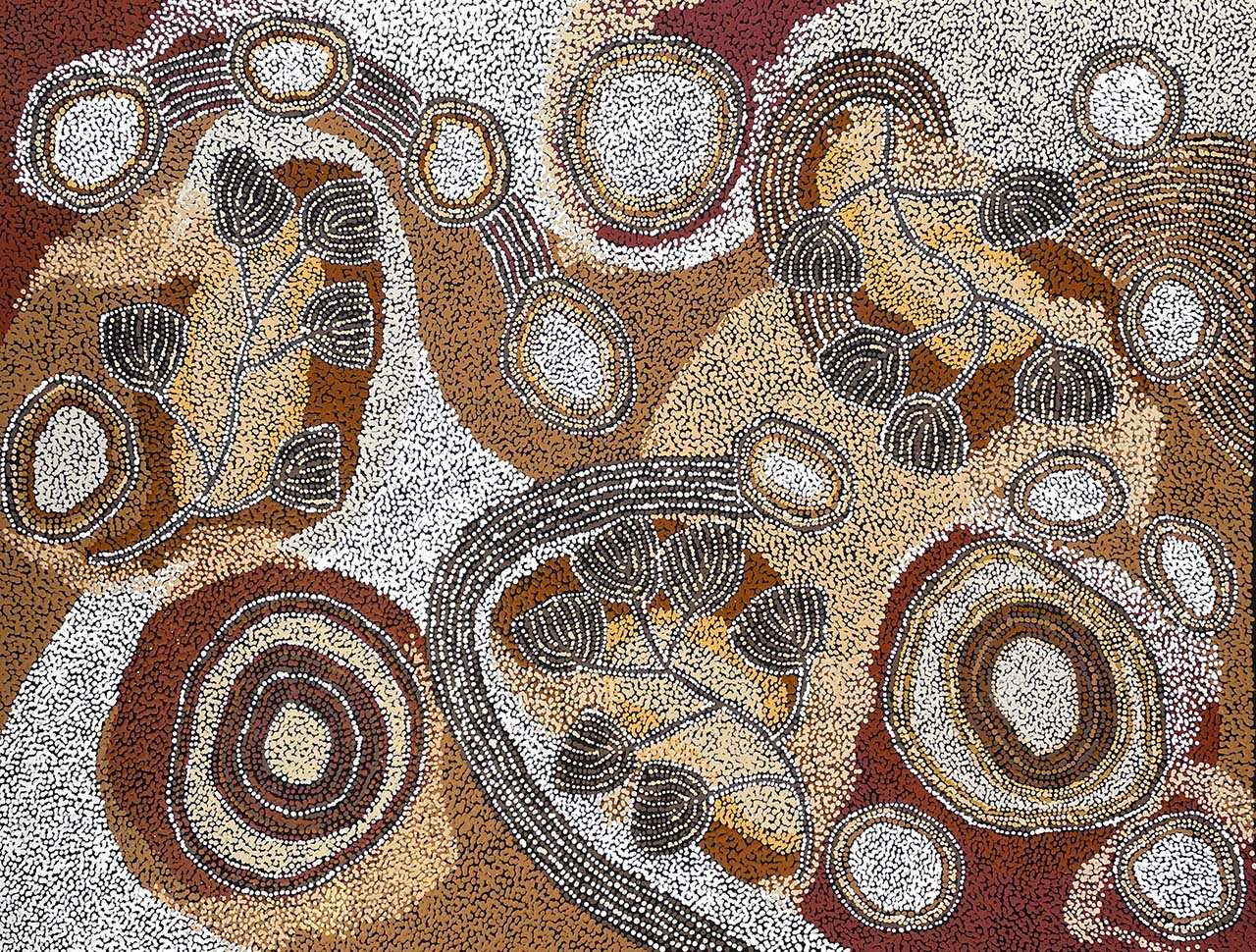
Utopia is a former cattle station a few hundred kilometres north-east of Alice Springs. Many of its most celebrated painters started in batik and switched to acrylic on canvas only as elders, picking up a brush for the first time in their seventies.
Emily Kame Kngwarreye
Anmatyerre, c. 1910 to 1996. Began painting in her late seventies and produced roughly three thousand works in an eight-year career. "Earth’s Creation" and "Big Yam Dreaming" became the works that announced her internationally. Her body of work moves from fine dotting through bold linear striping into near-abstract colour fields, all anchored in Alhalkere country and the yam dreaming.
Kathleen Petyarre
Alyawarr and Anmatyerre, c. 1940 to 2018. Painted the Mountain Devil Lizard (Arnkerrth) Dreaming in intricate layered dots that map the lizard’s tracks across her ancestral country. She won the NATSIAA in 1996 for that series, and her dot work is among the most technically refined of the Utopia generation.
Gloria Petyarre
Anmatyerre, c. 1942 to 2021. Best known for the Bush Medicine Leaves paintings, where calligraphic flowing brushstrokes replace formal dots, but her earlier work in Awelye women’s ceremony designs uses dotting throughout. She won the Wynne Prize in 1999, the first Aboriginal person to take that major Art Gallery of New South Wales award.
Kudditji Kngwarreye
Anmatyerre, c. 1928 to 2017. Emily Kame’s younger brother. He arrived late to painting and quickly developed a colour-field abstract style that critics compared to Mark Rothko, although the country and the My Country dreamings are the only references he ever cited.
Pintupi storytellers in geometric dots
Pintupi country sits in the Western Desert, west of Papunya, and the community produced some of the boldest geometric painters in the movement. Many of the most acclaimed Pintupi artists came out of the Pintupi Nine, the last group of Indigenous Australians to make first contact with Western society, which happened in 1984 when nine family members walked out of the desert.
Warlimpirrnga Tjapaltjarri
Pintupi, born c. 1958. The eldest of the Pintupi Nine and the first to paint. His Tingari Cycle works are mesmerising: repeating concentric squares of fine dots that critics in the United States have compared to Op Art, although Warlimpirrnga has been clear that the work is country, not optical experiment. A major Kassel show pushed his international standing to the top tier.
Ronnie Tjampitjinpa
Pintupi, born c. 1943. A senior Papunya Tula painter known for bold geometric Tingari paintings in restricted palettes. His compositions feel both ancient and graphic, the kind of work that translates well into print and large-scale public installation.
Warlpiri and Western Desert women
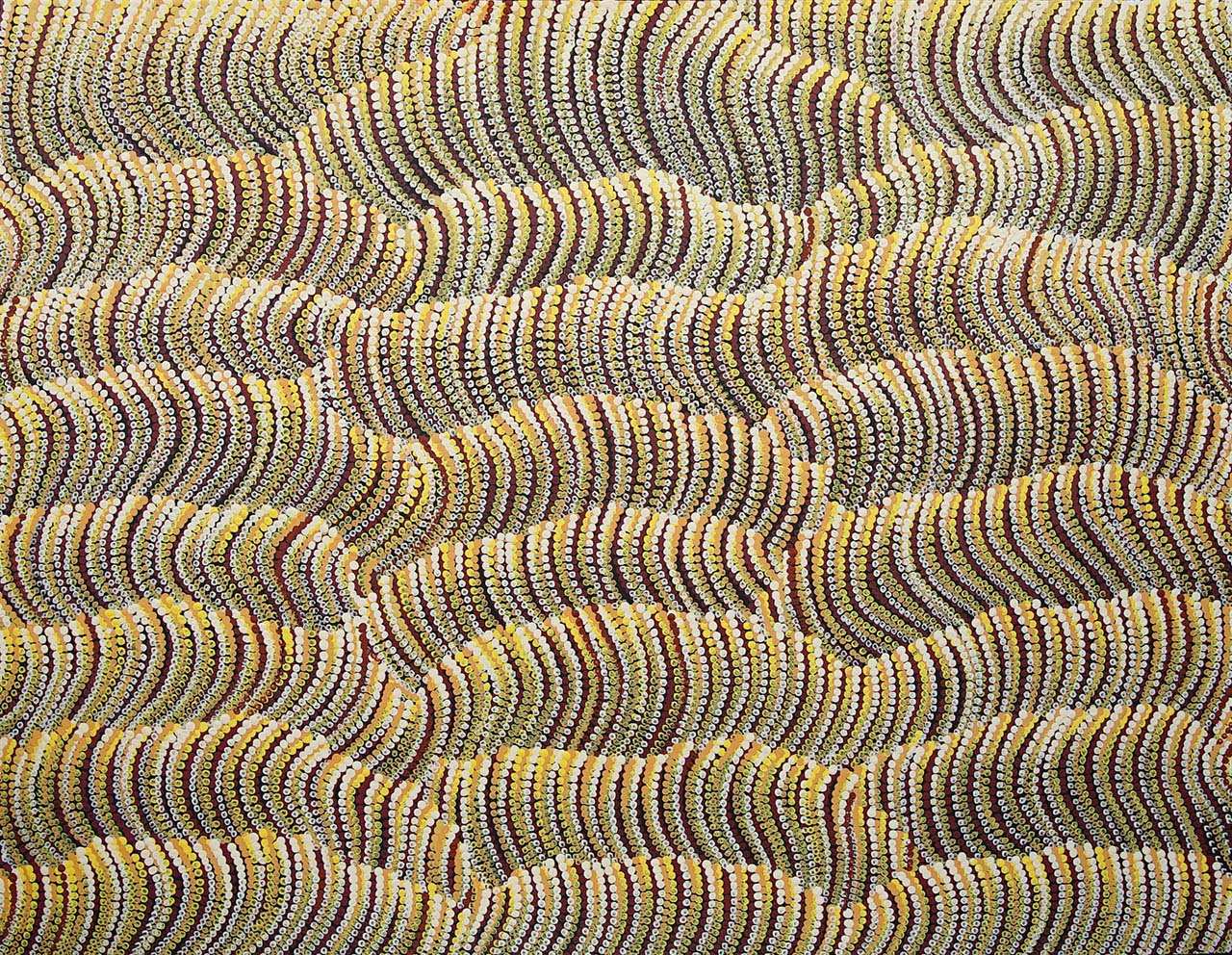
The Western Desert women’s painting movement gathered force at Kintore in the early 1990s and reshaped the whole field. The women painted ceremonial body designs (Awelye), water and yam dreamings, and the Two Travelling Women cycle. The 1970s revolution made painting on canvas possible; the women’s movement two decades later made it global.
Dorothy Napangardi
Warlpiri, c. 1950 to 2013. Her Mina Mina salt-pan paintings use intersecting fine lines to evoke the shimmer of light across salt and sand. She won the NATSIAA in 2001, and her work feels closer to landscape mapping than narrative dotting: minimalist, monochrome, hypnotic.
Lily Kelly Napangardi
Luritja and Warlpiri, born c. 1948. Paints the sandhill (Tali) country near Mount Liebig in dense parallel white lines that read as wind across dunes. She was one of the first Watiyawanu Art Centre painters to break internationally, with major Sydney sell-out shows in the early 1990s.
Makinti Napanangka
Pintupi, c. 1930 to 2011. A senior Papunya Tula painter whose loose energetic line work depicts the Kungka Kutjarra (Two Travelling Women) and the hairstring skirts of ceremony. She won the NATSIAA in 2008, and her paintings carry a raw immediacy that distinguishes her from the more precise dot stylists.
Rover Thomas and the East Kimberley influence
The Western Desert had Papunya. The East Kimberley had Warmun. Rover Thomas Joolama (c. 1926 to 1998), originally Wangkajunga and Kukatja and later painting in Gija country, co-founded a parallel movement that used natural ochres and pigments instead of acrylic and minimalist composition instead of dense dotting. His work uses dots sparingly, typically as outline rather than fill, and that influence runs through Queenie McKenzie Nakara and the generations after them. Thomas represented Australia at the Venice Biennale in 1990, a watershed moment that recalibrated how the international art world classified Aboriginal painting. Including him in a dot painting roundup acknowledges that the technique was never owned by one region: the Kimberley painters used it differently, and that difference is worth seeing.
Contemporary fine-dot painters carrying it forward
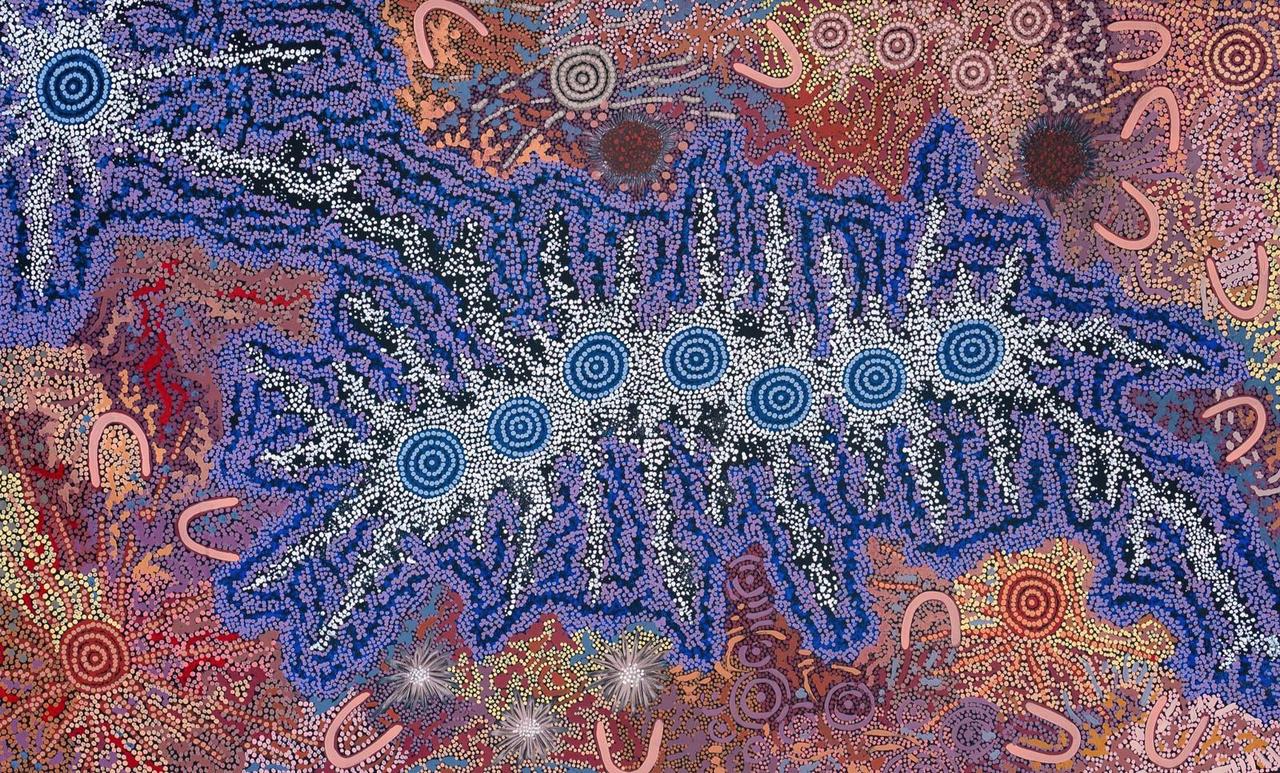
The senior generation has been passing on. The painters carrying the technique now include both family lineage and new voices from outside the original communities.
Gabriella Possum Nungurrayi
Anmatyerre, born 1967. The eldest daughter of Clifford Possum, who learned the family country and the Seven Sisters Dreaming directly from her father, and paints in a meticulous fine-dot style that bridges generations.
Jorna Newberry
Pitjantjatjara and Ngaanyatjarra from Warakurna. Her uncle is the late Tommy Watson, whose work sells for hundreds of thousands of dollars. Jorna’s fire dreamings and desert-wind paintings push dot technique into three distinct styles, and her dots themselves are finer than her uncle ever made.
Sarrita King
Began exhibiting in Paris, Berlin and Singapore by twenty-seven. Paints aerial-view country across all four elements: lightning, fire, water and ancestor dreaming. Her dot work creates pattern fields that read as aerial photography of the desert.
Where their work lives now
Some of these painters have major holdings in the National Gallery of Australia and the National Museum of Australia. Others sit in private collections in Europe and the United States. The best place to see the work in person is still the art centres in the communities themselves: Papunya Tula in Alice Springs, Warmun, Warlukurlangu and a dozen others. The major state galleries also rotate their Aboriginal collections constantly and almost always have a Kngwarreye, a Possum or a Petyarre on the wall.
If you are collecting rather than only looking, work with galleries that pay the artist’s percentage back to the community, and check the certificate. Authenticity in Aboriginal dot painting is not a stylistic question. It is a question of whether the painter belonged to the country and the dreaming the work depicts, and whether they were paid properly for it. The wider story of how this generation reshaped Australian culture sits inside the broader Aboriginal art history, and the artists named here are most of the reason it has the international weight it does today.