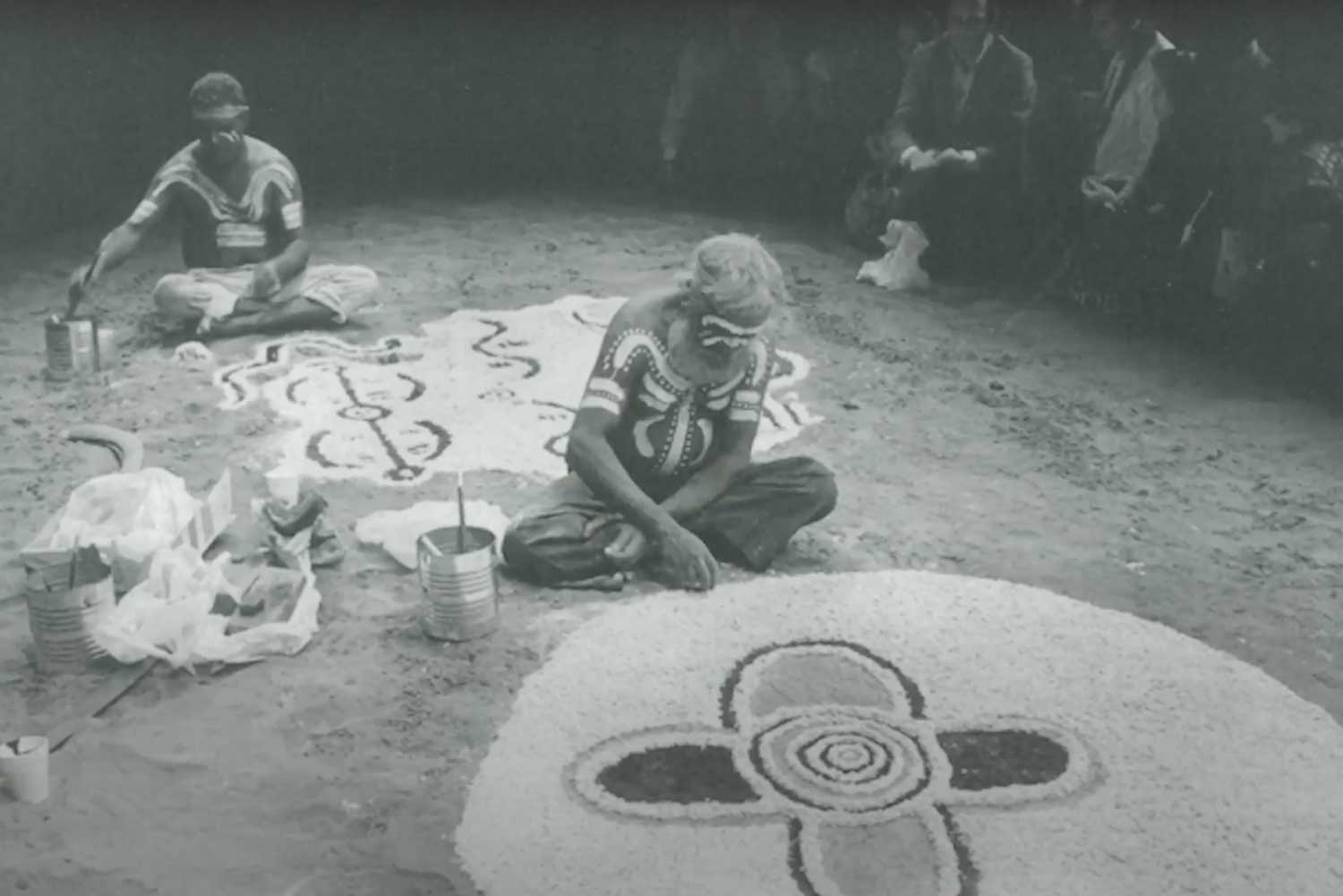
The Papunya Tula art movement is the single most important origin point in contemporary Aboriginal art. It started in 1971 at a remote government settlement in the Northern Territory, with senior desert men painting murals on a schoolhouse wall. Within a year, the artists had set up their own company. Within a decade, the dot painting style they invented had become the most globally recognised face of Aboriginal art.
This article focuses on the movement itself, its founding, structure, and visual style. For where it sits in the wider arc of Aboriginal art, see our full history. For the broader 1970s context of land rights and recognition that shaped what happened next, see our piece on the 1970s revolution.
1971: The Spark at Papunya
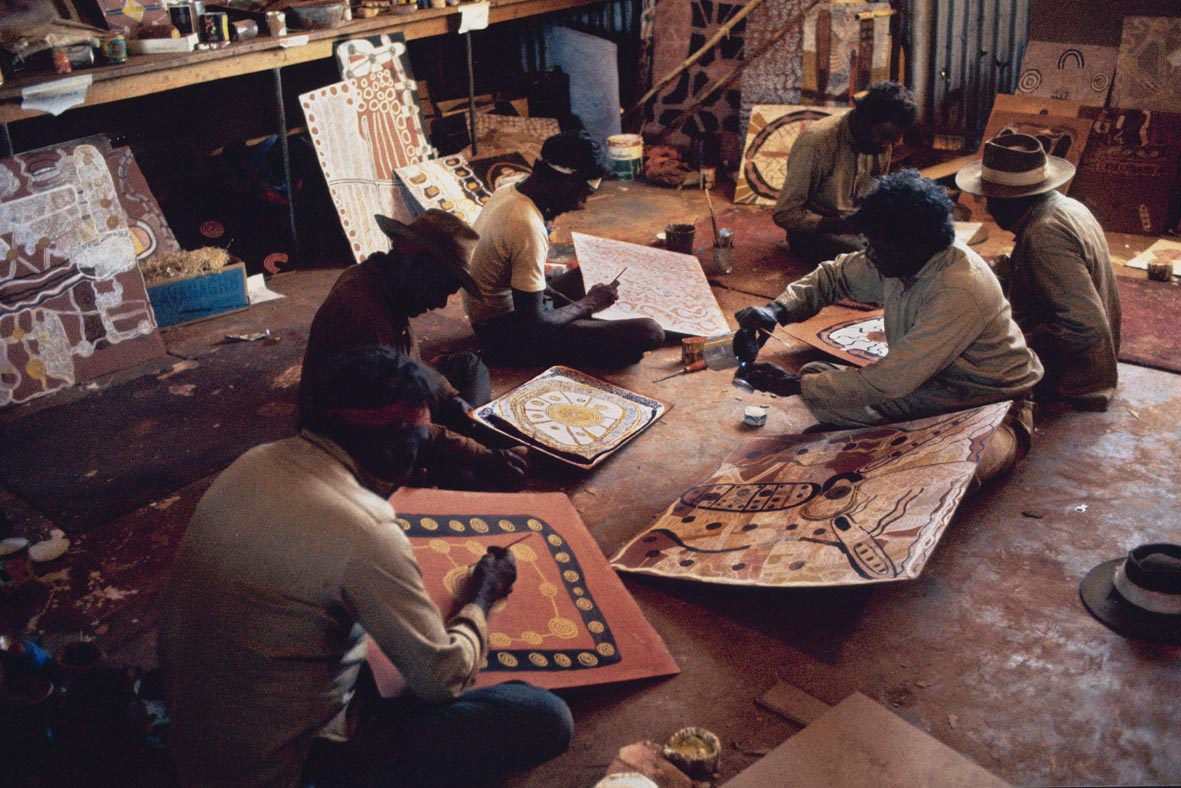
The catalyst occurred in 1971 when a schoolteacher named Geoffrey Bardon initiated a project to paint murals on one of the blank walls at the Papunya school. The project received tremendous interest from the men in the community, and following this the Papunya community began to paint on any available materials, including hardboards and floor tiles. The original mural project was framed as a school activity, but culturally it was the senior men’s role to paint sacred designs, and the moment quickly moved from a school wall to a community art practice.
Papunya itself was not the traditional country for any of the peoples who lived there. The settlement was established in 1960 when the government forced Aranda, Anmatyeree, Luritja, Warlpiri, and Pintupi peoples off their land and into the settlement. The fact that the movement began under those conditions is part of why painting Country, the land each artist’s family belonged to, mattered so deeply.
The Founding Year: 1972 and Papunya Tula Artists Pty Ltd
The following year the community started displaying their work around Australia, and in 1972 the artists successfully established their own company. They named it Papunya Tula Artists Pty Ltd. From the start the company has been entirely owned and directed by traditional Aboriginal people from the Western Desert art region, predominantly of the Luritja and Pintupi language groups. The official structure today has 49 shareholders and represents around 120 artists.
The cooperative model is the structural innovation that distinguishes Papunya Tula from any earlier Aboriginal art enterprise. The stated company aim is to promote individual artists, provide economic development for the communities they belong to, and assist in the maintenance of a rich cultural heritage. Artists work on their own terms, sharing the stories they have rights to share, and the proceeds flow back into the desert communities the company exists to serve.
The Dot Painting Style and What It Veils
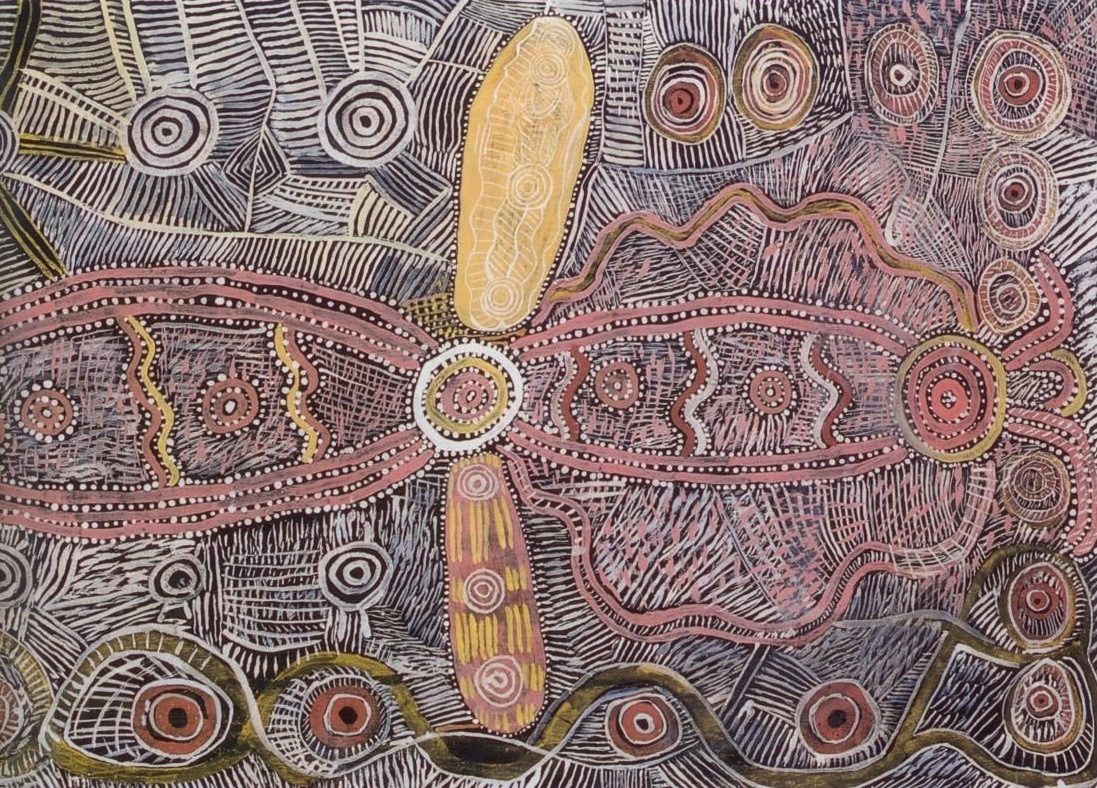
The Papunya Tula painting style derives directly from the artists’ knowledge of traditional body and sand painting associated with ceremony. The dot painting that the world now recognises is not a decorative choice. It is the translation of a ceremonial visual language onto a permanent surface. Portraying these ancestral creation stories for the public has required the careful removal of sacred symbols and the active monitoring of which ancestral designs can leave the community at all.
Modern Aboriginal canvas painting is roughly fifty years old as a medium, and the dot painting form is at the centre of that fifty-year window. The intricate dotting technique is characterised by representations of traditional Dreamtime stories and the symbols that map Country, and it is the visual signature most often credited with bringing contemporary Aboriginal art to global attention. For the wider story of how Aboriginal art moved off rock and onto canvas, see our piece on the rock-to-canvas shift.
What “Papunya Tula” Actually Means
“Papunya Tula” is the name of two small hills not far from the Papunya settlement. The phrase translates as a meeting place for all brothers and cousins. It is a shared Honey Ant Dreaming site for groups from across the Western Desert region. The artists chose the name in 1972 specifically because of its inclusivity. Papunya was not the traditional country for the peoples who painted there, but the two hills the company is named for were a recognised meeting place that crossed family and language lines.
The naming choice mirrors the cooperative’s structure. A meeting place where many groups could come together is exactly what the company aimed to be for the painters it represented.
From Papunya to Kintore and Kiwirrkura
Many Pintupi and Luritja people who had been moved to Papunya in 1960 began moving back to their traditional homelands during the 1980s. The Papunya Tula company followed them. Following the homelands movement, the company constructed studios in the newly established communities of Kintore and Kiwirrkura, extending operations into Western Australia as far as 700 kilometres west of Alice Springs.
That extension turned Papunya Tula from a single settlement art enterprise into a regional network. Today the cooperative spans hundreds of kilometres of the Western Desert, with artists painting in studios closer to the Country whose stories they are inheriting and carrying forward.
Global Reach and Continuing Tradition
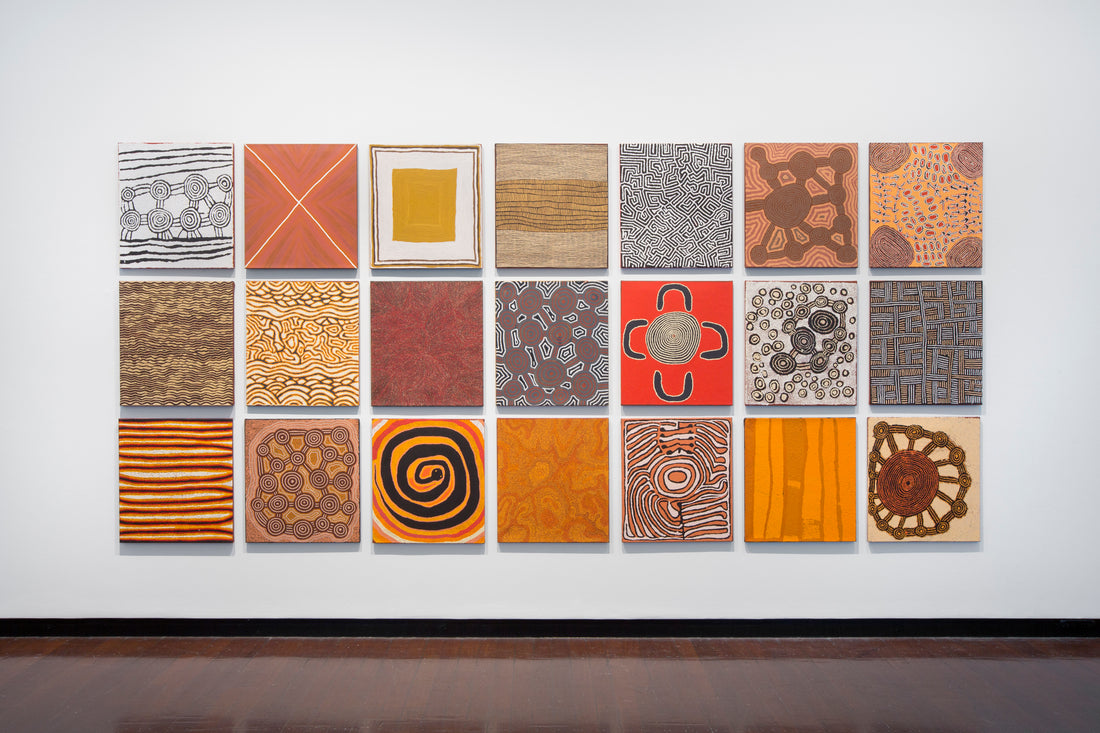
The creation of Papunya Tula Artists is commonly regarded as the origin of the Western Desert art movement, which then inspired other Indigenous Australian communities to document their cultural heritage onto permanent artworks for a Western art market. Papunya Tula and Papunya Tjupi Arts both continue to produce work with international reputation and a strong cultural connection to Country, and their pieces sit in most public galleries, major museums, and institutional and private collections within Australia and overseas.
New generations of Papunya Tula artists are now building on the foundations the founders laid. Contemporary painters blend traditional themes with modern artistic expressions, and the cooperative’s commitment to cultural integrity ensures every work is both art and a piece of history. The movement that began with senior men painting a school wall in 1971 has become the global benchmark for contemporary Indigenous art, and the company is still, more than half a century later, owned and directed by the artists themselves.