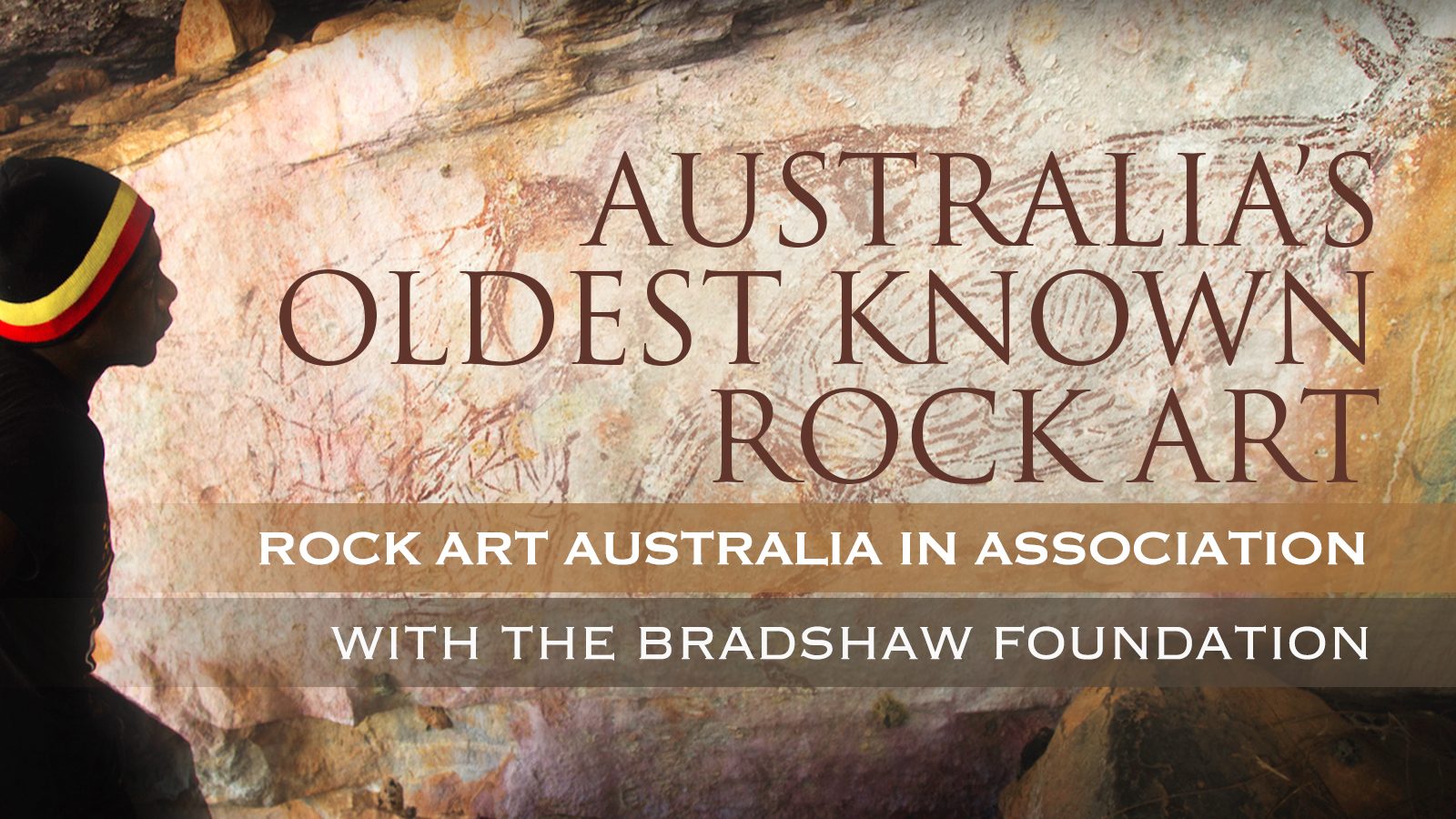
Australia holds more than 100,000 known rock art sites, the largest concentration of any country on Earth. First Nations people arrived here between 65,000 and 80,000 years ago, and the surfaces they painted, engraved, and stencilled are still being read, refreshed, and protected today. The continent is one of the most important open archives of human visual culture, and a handful of places stand out as the oldest known windows into it.
Seven sites currently sit on Australia’s National Heritage List specifically for their rock art. This article walks through the most significant of them, from the 65,000-year-old occupation layer at Madjedbebe to the 17,300-year-old kangaroo painted on a Kimberley rock shelter ceiling. For the longer story these sites belong to, see our full timeline of Aboriginal art. For the technical question of how researchers actually verify these ages, see our piece on dating methods.
Madjedbebe, Arnhem Land: Australia’s Oldest Living Place
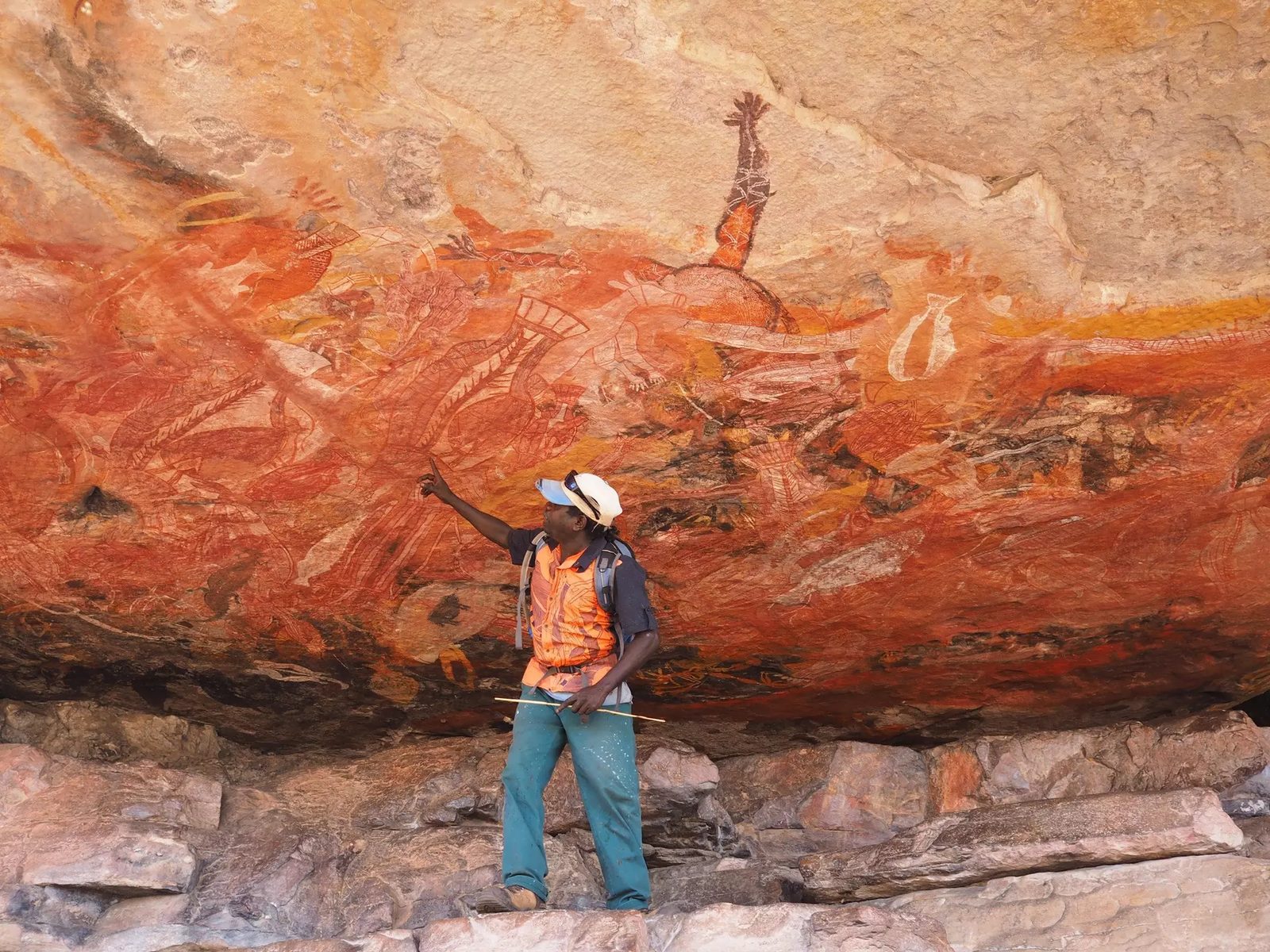
Madjedbebe is the oldest documented site of human habitation in Australia. The rock shelter sits on the edge of the Jabiluka wetlands in Arnhem Land and was the focus of major 2017 excavations that dated occupation at 65,000 years, plus or minus 5,000. Some material recovered there is possibly older. Among the oldest artefacts, archaeologists found ochre and reflective paint substances, the raw materials of rock art.
The presence of pigments that early in the record is one of the strongest reasons Aboriginal Australia is described as the world’s longest continuous artistic culture. Research at the site, led by Dr Florin and colleagues, has also recovered plant foods that show how First Australians were living and adapting to climate change 65,000 years ago. Madjedbebe is not a public visitor site. It is a deep-time archaeological one, and its significance is in what it proves about when art-making here began.
Murujuga (Burrup Peninsula), Pilbara
Murujuga, in the Pilbara region of Western Australia, is the rock art landscape behind the Dampier Archipelago and the Burrup Peninsula. The site is dominated by petroglyphs, images pecked, hammered, or chipped into the rock surface rather than painted onto it. Petroglyphs typically depict shapes like circles, arcs, dots, and animal tracks, and the Dampier Archipelago carries one of the largest collections of these engravings anywhere in Australia.
The Dampier Archipelago, including the Burrup Peninsula, sits on Australia’s National Heritage List specifically for its rock art. It is also adjacent to one of Australia’s heaviest industrial precincts. According to the National Museum of Australia, remote rock art sites face ongoing threats from mining, industrial, and pastoral activities, and Murujuga is the most cited example of that pressure in the country.
The Drysdale River Kangaroo, Kimberley
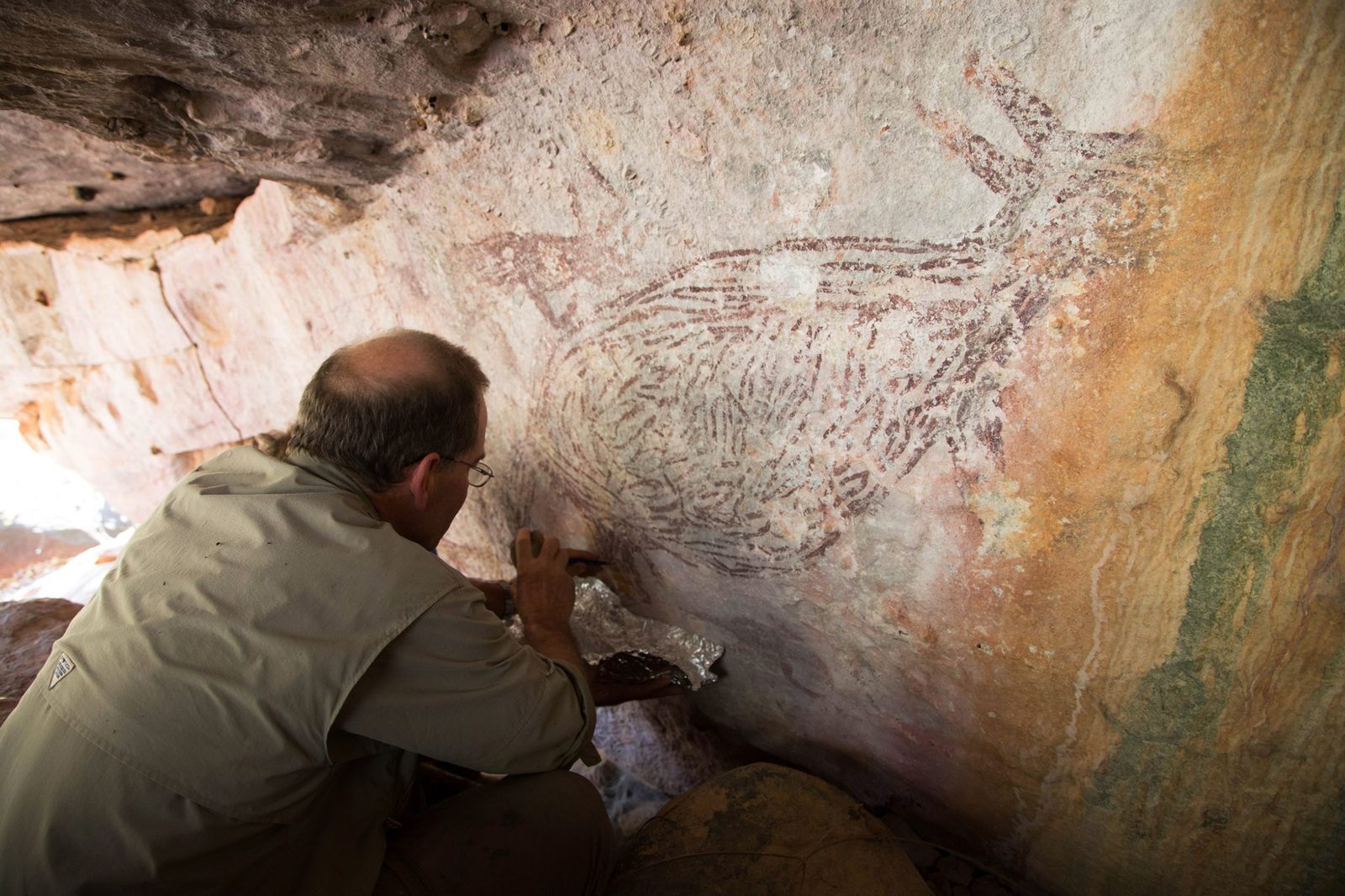
Australia’s oldest known in-situ rock painting is a two-metre kangaroo on the ceiling of a collapsed rock shelter in Drysdale River National Park, Western Australia. The work sits on the Unghango clan estate in Balanggarra Country, in the north-east Kimberley. Researchers from the Rock Art Dating project, working in partnership with the Balanggarra Aboriginal Corporation, dated the kangaroo to 17,300 years old in 2021, using fossilised mud wasp nests built both over and under the pigment.
The painting was made during the Last Ice Age, when sea levels were 106 metres lower than today. It is painted in the older naturalistic style of Kimberley rock art, in iron oxide ochre in a deep red mulberry colour. The same research team has separately dated Gwion figures elsewhere in the Kimberley region at 12,000 years old. The 17,300-year date does not mean nothing older exists. It means this is the oldest painting yet dated where the image remains where it was originally made.
Kakadu National Park, Northern Territory
Kakadu holds one of the greatest concentrations of rock art on Earth. Two of its galleries are easy to reach by sealed road, with ranger talks running through the dry season. Burrungkuy (Nourlangie) is a sandstone plateau with paintings that include the figure of the Lightning Man, the ancestor who brings storm and rain. The shelter also carries practical instruction, including a panel showing which parts of an echidna should not be eaten.
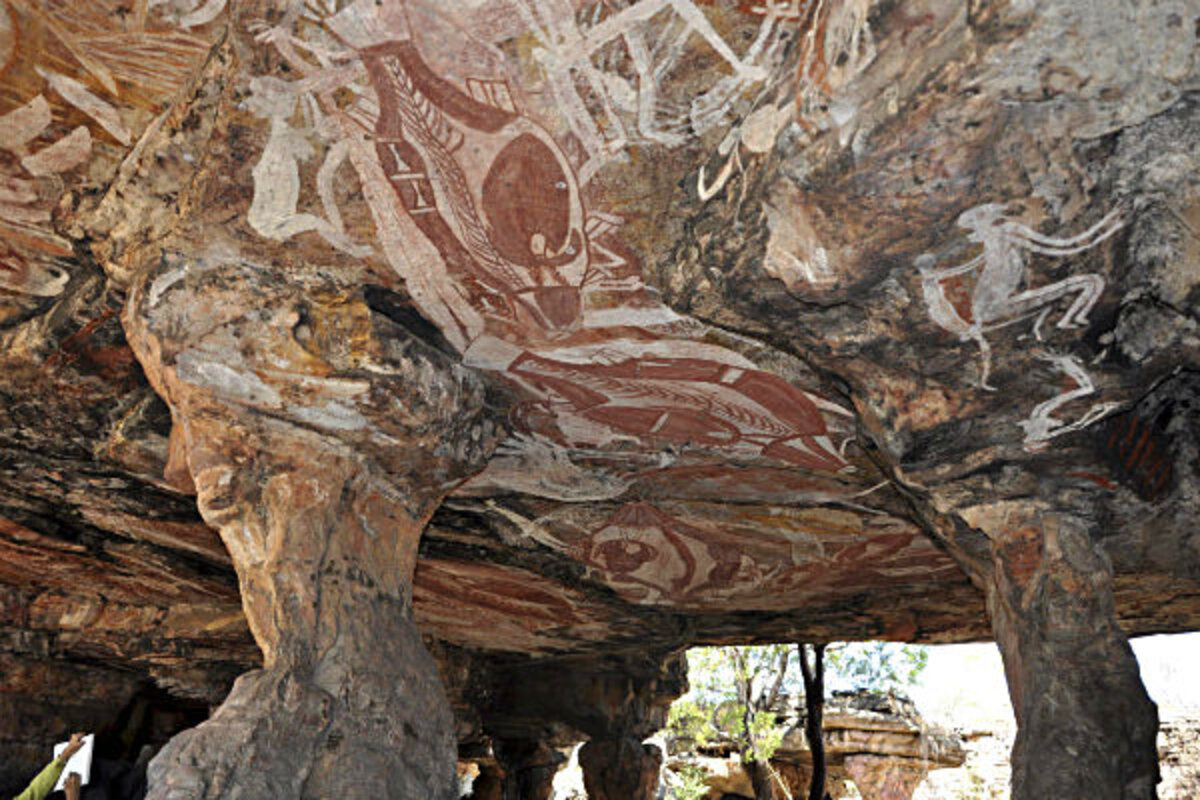
Ubirr stands at the edge of the Nabab floodplain on the East Alligator River. Its Main Gallery shows barramundi, goannas, mullet, catfish, turtles, and a Tasmanian tiger, all rendered in the X-ray style that exposes anatomical detail through the body of each figure. Ubirr also carries contact art: a painting of a white man, thought to be an early farmer, sits among the older work, and other galleries in nearby Arnhem Land record the Macassan traders from Sulawesi who reached the coast before British colonists did.
Carnarvon Gorge, Central Queensland
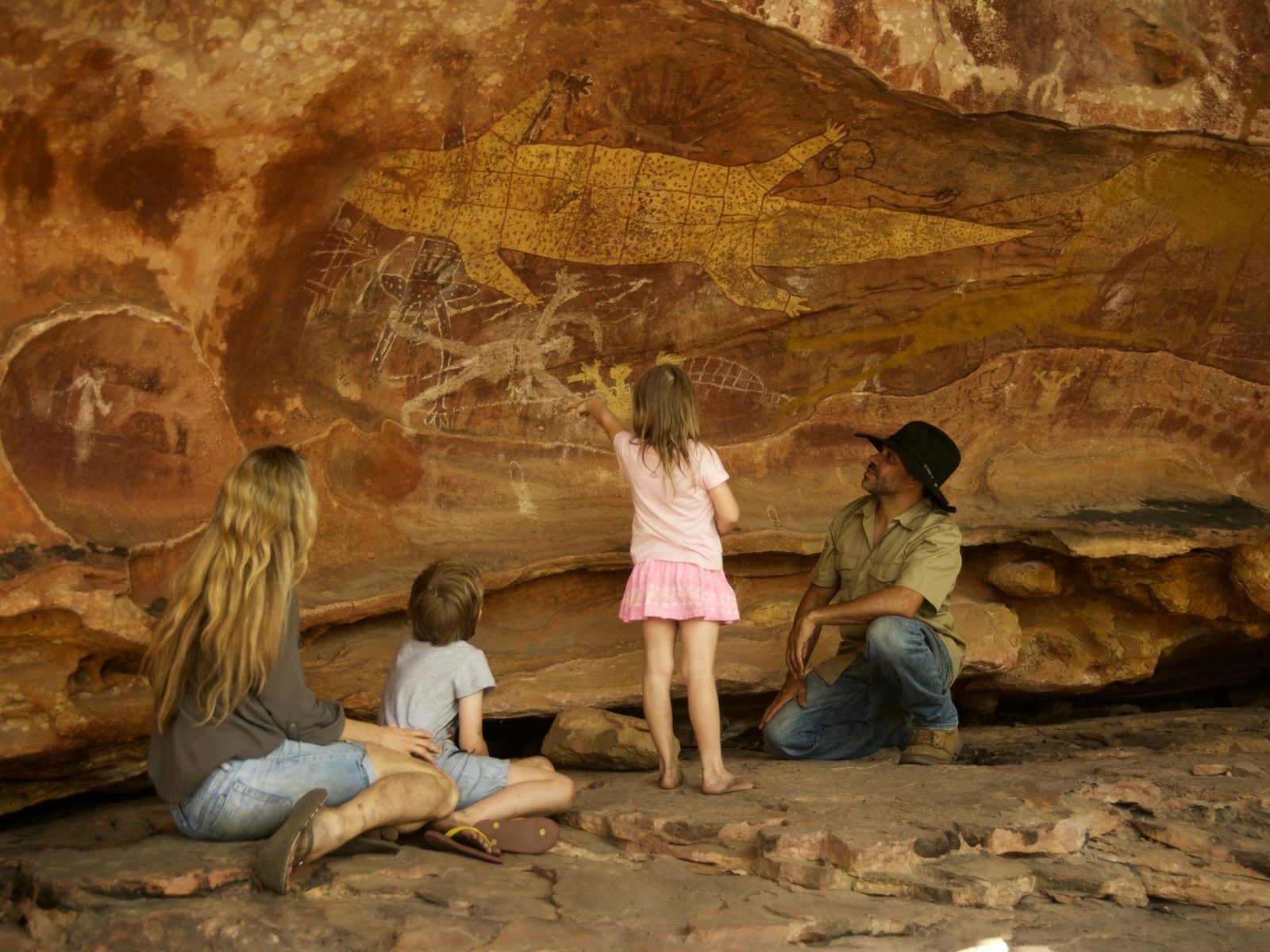
Carnarvon Gorge is a long way from anywhere. A thirteen-hour drive inland from Brisbane, followed by a six-kilometre hike, gets you to the Art Gallery and Cathedral Cave panels. The stencilling work at both is considered the most sophisticated of its kind in the world. Red fishing nets are created from rows of tiny triangles, made by blowing wet ochre between two splayed fingers across the rock face. Tools, weapons, animals, and ceremonial objects belonging to the first people of this central Queensland oasis are recorded across hundreds of metres of sandstone.
Because most of the work is done in ochre, much of it is fragile. Haematite, an iron oxide pigment, is the longest-lasting of the natural colours and is the reason older surviving rock art tends to carry that reddish iron hue. Lighter ochres fade faster, which is one reason rock art conservation is now a national priority.
The Grampians (Gariwerd), Victoria
The Grampians National Park, known as Gariwerd to Jardwadjali and Djab Wurrung Traditional Owners, holds more than 80% of Victoria’s rock art. Around 200 sites are known across the range. Five are open to the public, and new sites are still being identified, including a recently rediscovered depiction of the mystical Bunyip. The headline site is Bunjil Shelter in the Black Range Scenic Reserve near Stawell, which carries the only known painting of Bunjil, the creator-spirit of the Jardwadjali people.
Bunjil is described by Local Custodian Levi Lovett as the leading figure in Jardwadjali spiritual life, the ancestor who created their land, people, plants, animals, religion, and the laws by which they live. The Grampians was added to the National Heritage List partly for the cultural weight of these galleries, which sit at the southern edge of Aboriginal rock art distribution and contain motifs found nowhere else.
Blue Mountains, New South Wales
An estimated one thousand Aboriginal rock art sites are scattered across the one million hectares of the Blue Mountains National Park, an hour west of Sydney. The most visited is Red Hands Cave, where hand stencils in red, yellow, and white ochre line a small sandstone overhang. The stencils are thought to have been made between 500 and 1,600 years ago. An 8-kilometre loop walk from Glenbrook reaches the site, or a 1-kilometre walk from the Red Hands Cave car park does it the easier way.
Hand stencils are made by placing the hand against the rock and blowing pigment around it. The resulting outline is unmistakeably individual. The Blue Mountains examples sit alongside an estimated thousand other rock art sites in the same national park, and the form continues to be used today as a marker of presence, family, and Country. The motifs feed directly into the rock-to-canvas shift that defined twentieth-century Aboriginal art.
Before You Visit: Cultural Protocol on Rock Art Country
Most of these sites are protected sacred places. Photography is sometimes restricted, touching the rock is always forbidden, and certain galleries are off-limits to particular visitors based on cultural protocol. Where rangers, Traditional Owners, or community guides offer talks, take them. The interpretation you get on Country, from people who hold the stories, cannot be replaced by any signboard. Many of the deeper meanings behind the symbols on these walls are reserved for initiated knowledge holders, and respecting that boundary is part of seeing the work properly.
Aboriginal rock art is not a closed chapter. New sites are still being identified, older paintings are still being retouched and refreshed by descendant communities, and the Burrup Peninsula, Kakadu, the Kimberley, and other regions remain living cultural landscapes where new generations of artists continue practices that began at Madjedbebe sixty-five thousand years ago. Walking quietly into one of these places is one of the rarest experiences left on the planet. Treat it that way.