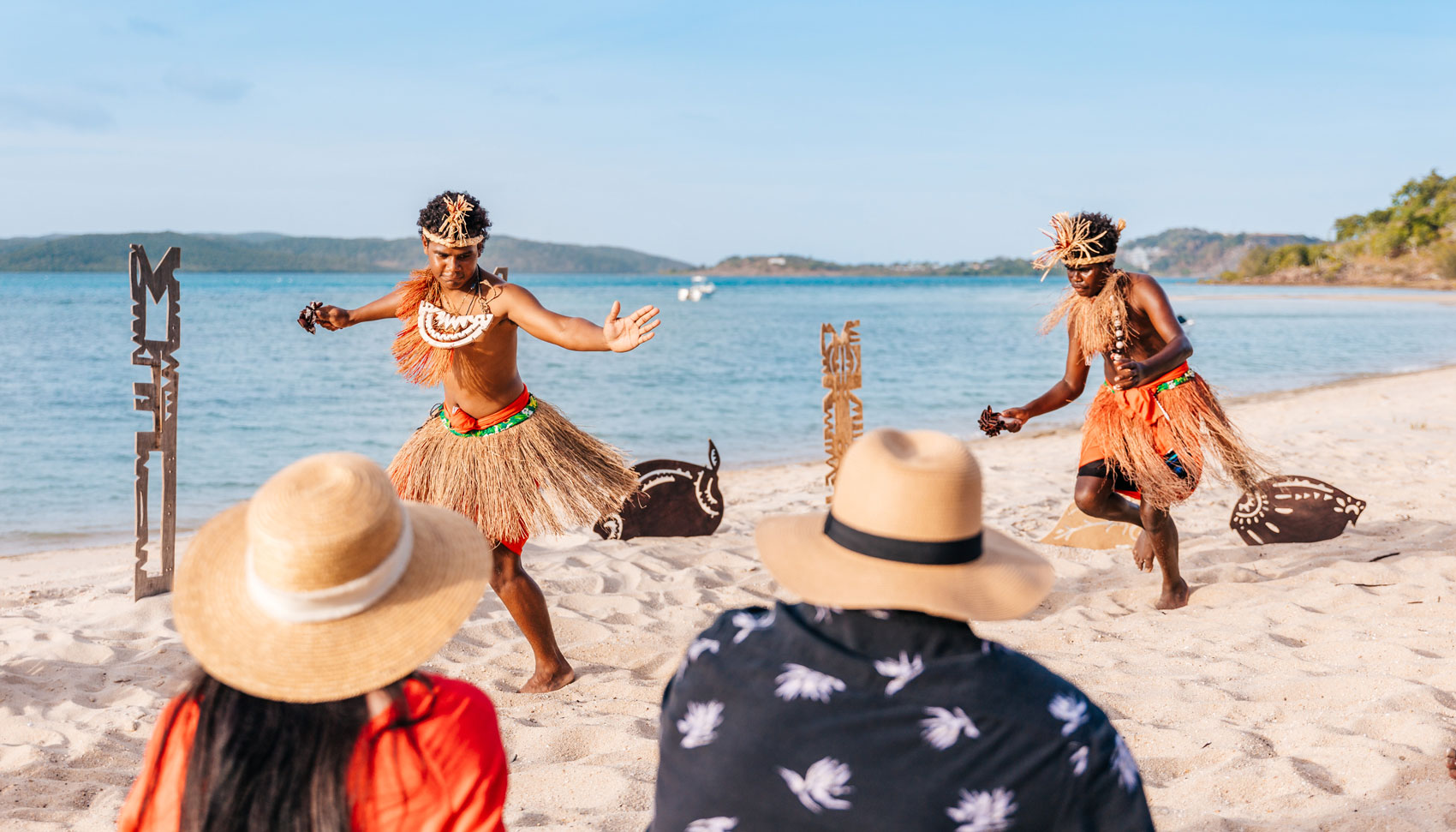
Torres Strait Islander art traditions are stylistically distinct from mainland Aboriginal art, but the two are often discussed together because Torres Strait Islanders and Aboriginal peoples are Australia’s two recognised Indigenous groups. The art lives at the meeting of land, sea, and sky, and it covers everything from carved dhari headdresses and turtleshell masks to award-winning contemporary printmaking.
Where the Torres Strait is
The Torres Strait sits between the tip of Cape York Peninsula in far north Queensland and the borders of Papua New Guinea and Indonesia. The region takes in more than 274 islands and has historically served as a trading hub between Europe, Asia, and the Pacific. Around 80% of Torres Strait Islander Australians now live on the mainland, mostly in north Queensland, while maintaining strong cultural connection through art, language, and ceremony. The traditional languages are Meriam Mir in the Eastern Islands and Kala Lagaw Ya in the Western and Central Islands, with Torres Strait Creole blending both with English.
The core mediums of Torres Strait Islander art
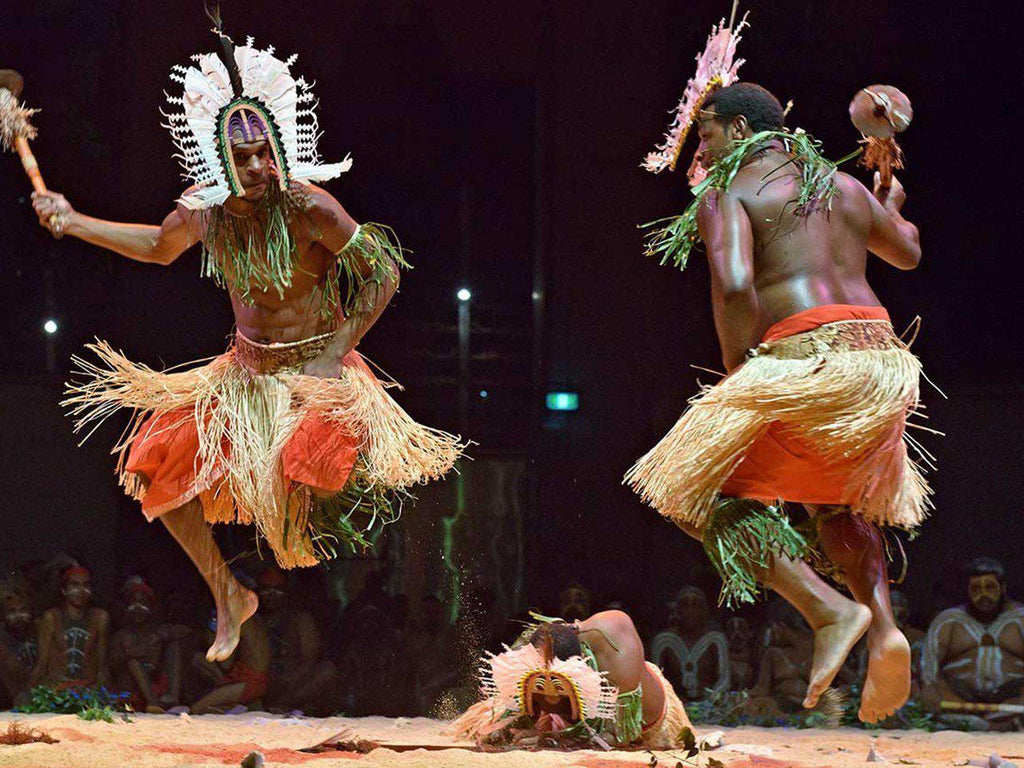
Three mediums dominate contemporary Torres Strait Islander art: printmaking, weaving, and mask-making. Dance is closely tied to them, with moving sculptural components in headdresses synchronised with choreography. Marine imagery runs through the work: turtles, sharks, and dugongs appear as totemic beings that reflect the spiritual and survival relationship between Islanders and the sea around them.
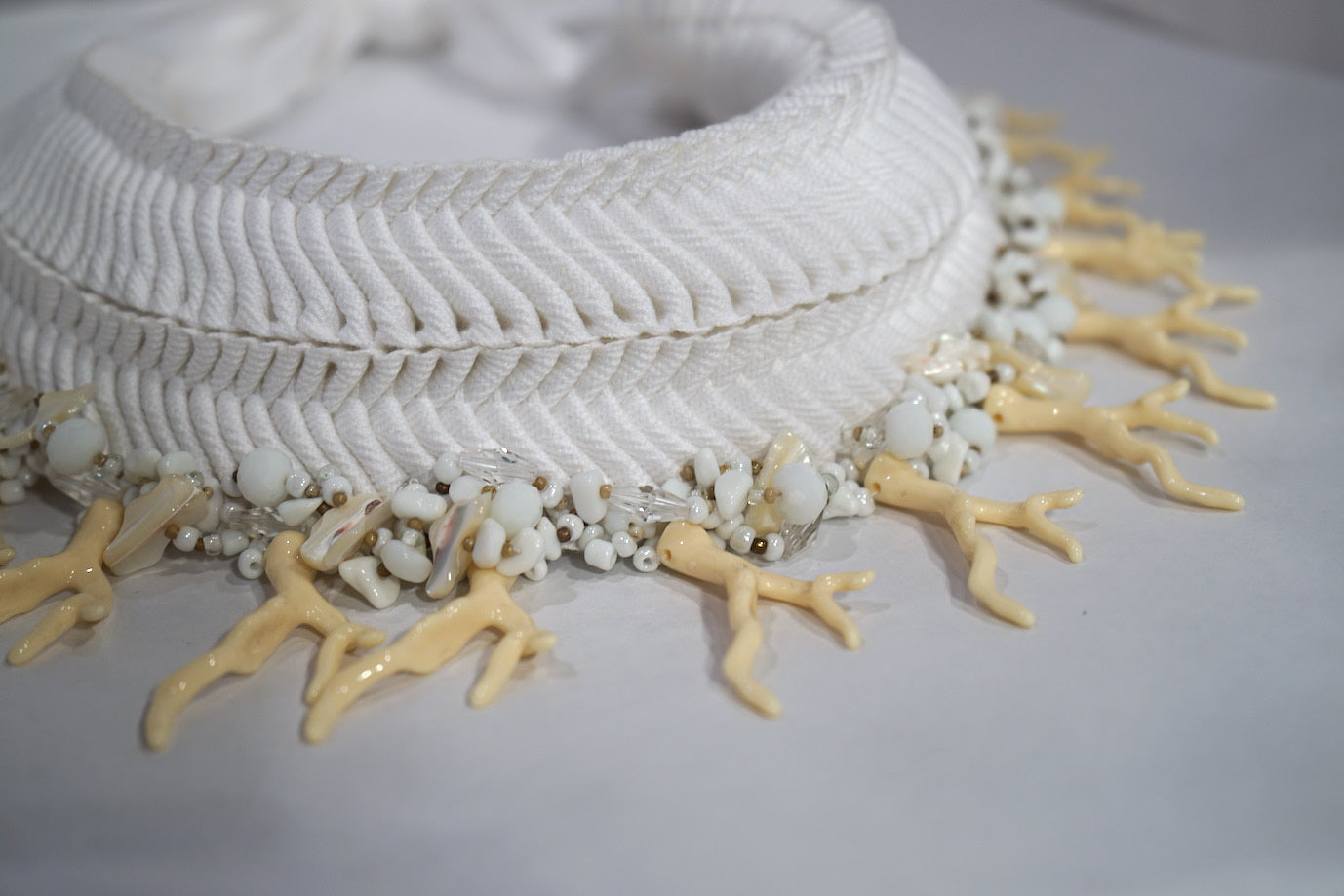
Printmaking became a signature form in the 1990s, when artists translated traditional carving and tattooing patterns onto lino and etching plates. Weaving, including coiled and beaded works, continues alongside contemporary fabric prints made through dedicated art centres.
The dhari headdress
The dhari is the ceremonial feathered headdress that appears at the centre of the Torres Strait Islander flag. Traditional dhari were made from frigate bird and pigeon feathers, while modern versions often use cardboard, plywood, and cane to recreate the same form. Both old and contemporary dhari are central to dance and ceremony and have moved into sculptural art in the hands of contemporary makers.
Turtleshell masks, krar and le-op
Torres Strait Islanders are the only culture in the world to make turtleshell masks. They are called krar in the Western Islands and le-op in the Eastern Islands. The form has international significance and is one of the strongest visual identifiers of Torres Strait Islander art history. Contemporary artists also work in fibreglass to recreate the look of hawksbill turtle shell while protecting the species itself, which keeps the visual tradition alive without the original material.
The Coming of the Light, 1871
The Coming of the Light refers to the arrival of the London Missionary Society in 1871, an event still commemorated each year in the Torres Strait. The arrival of Christianity changed Island culture in lasting ways: many traditional practices were altered or banned, while others were incorporated alongside the new beliefs. The aftermath of 1871 sits behind a lot of contemporary work, which often holds older totemic imagery and Christian symbolism in the same frame.
The Haddon Collection and Ailan Kastom
Between 1898 and 1899, anthropologist Alfred Cort Haddon collected around 2,000 objects from the Torres Strait. The resulting Haddon Collection, archived at Cambridge, is the most comprehensive Torres Strait Islander cultural archive in the world. Closer to home, Queensland Museum holds more than 26,000 Torres Strait Islander objects, with some pieces created well before the 1880s. The framework that ties this material together is Ailan Kastom, a distinct cultural concept that varies slightly from island to island and incorporates language, maritime heritage, totems, and celestial elements.
Notable contemporary artists and art centres
Several artists have shaped the contemporary face of Torres Strait Islander art. Dennis Nona (born 1973) is an award-winning printmaker whose etchings, prints, bronze sculptures, and skateboard carvings translate traditional carving and tattooing into new media. Alick Tipoti (born 1975) is known for intricate linocut works that depict complex legends and has more recently moved into ceremonial dance masks made from fibreglass. Ken Thaiday Snr (born 1950) makes shark dance headdresses that combine plywood, bamboo, and feathers, sometimes with imagery drawn from World War II. Other major figures include Ellen José, whose work fuses Torres Strait Islander, Asian, and European techniques, and Destiny Deacon, a pioneer of performative photography.
Art centres anchor the contemporary scene. Gab Titui Cultural Centre on Thursday Island, established in 2004, and Erub Erwer Meta on Erub Island, established in 2008, function as keeping places and working art studios. The 1992 Mabo decision, which overturned the legal fiction of terra nullius and is now commemorated each year on Mabo Day at the close of National Reconciliation Week, also reshaped the political ground on which this art is now made. In the same year, Bernard Namok designed the Torres Strait Islander flag, with green for land, black for the people, blue for the sea, and a white star for peace and the five island groups, the dhari at its centre.
Torres Strait Islander art in the wider story
Torres Strait Islander art traditions sit beside mainland Aboriginal traditions as a separate visual culture with its own rules, its own materials, and its own ocean-centred world. Set against the dot painting of the central deserts or the bark painting and rarrk of Arnhem Land, the printmaking, weaving, and mask-making of the Torres Strait make clear how varied First Nations art across Australia really is.