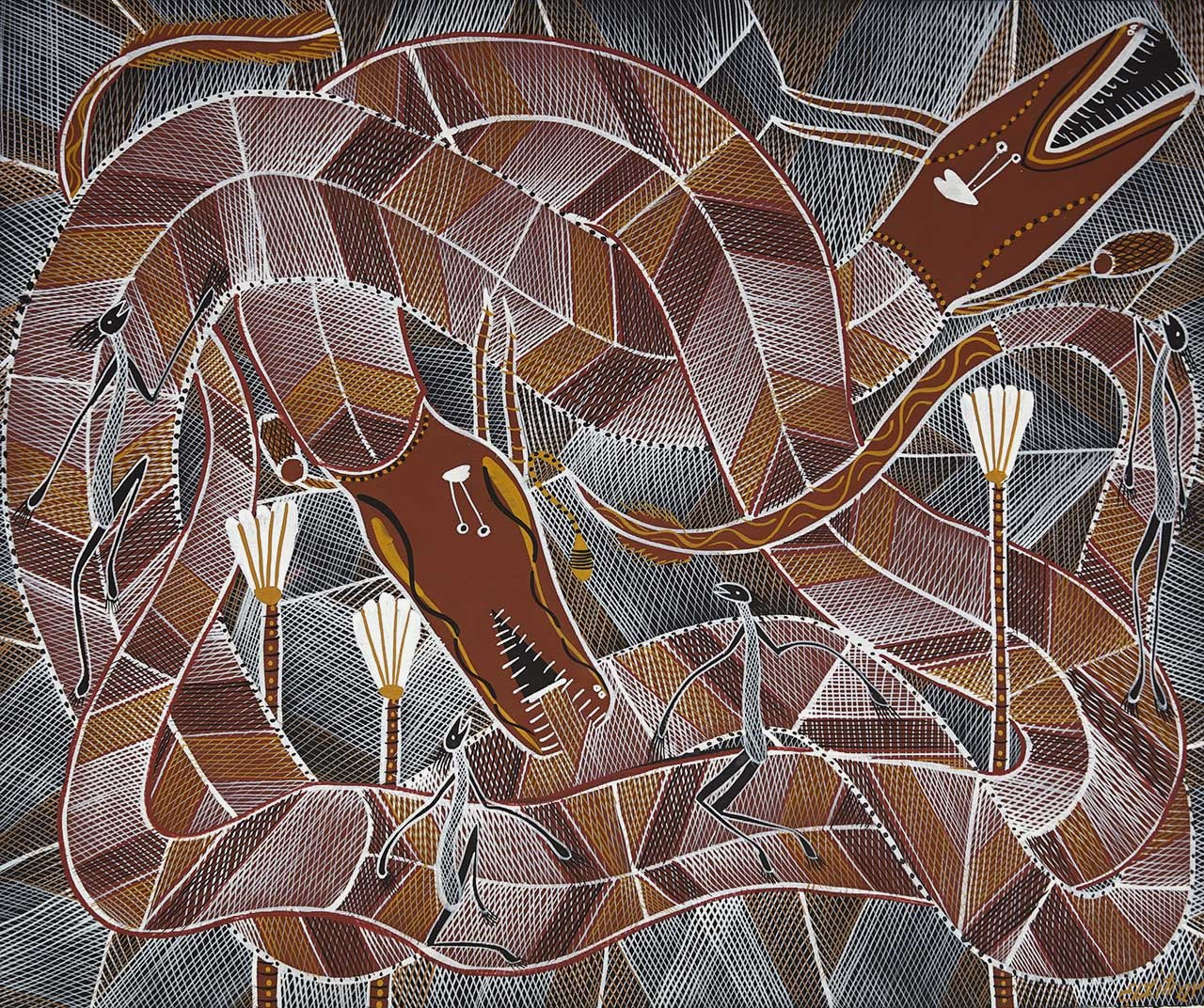
The Aboriginal art of Arnhem Land is one of the most distinctive and longest running artistic traditions in the world. Spread across 97,000 square kilometres of northern Australia and rooted in tens of thousands of years of rock art, it now reaches international audiences through bark paintings, fibre sculpture, weaving, and memorial poles created in community-run art centres.
Where Arnhem Land is
Arnhem Land sits in the north-east of the Northern Territory and covers around 97,000 square kilometres of country, encompassing Kakadu National Park. It was declared an Aboriginal Reserve in 1931 and remains one of the largest such reserves in Australia. The Yolngu people of east Arnhem Land are one of the largest Aboriginal groups in the country and continue to maintain a vigorous traditional culture. Coastal communities also had long trading contact with Malay and Macassan visitors well before European settlement.
An unbroken artistic tradition
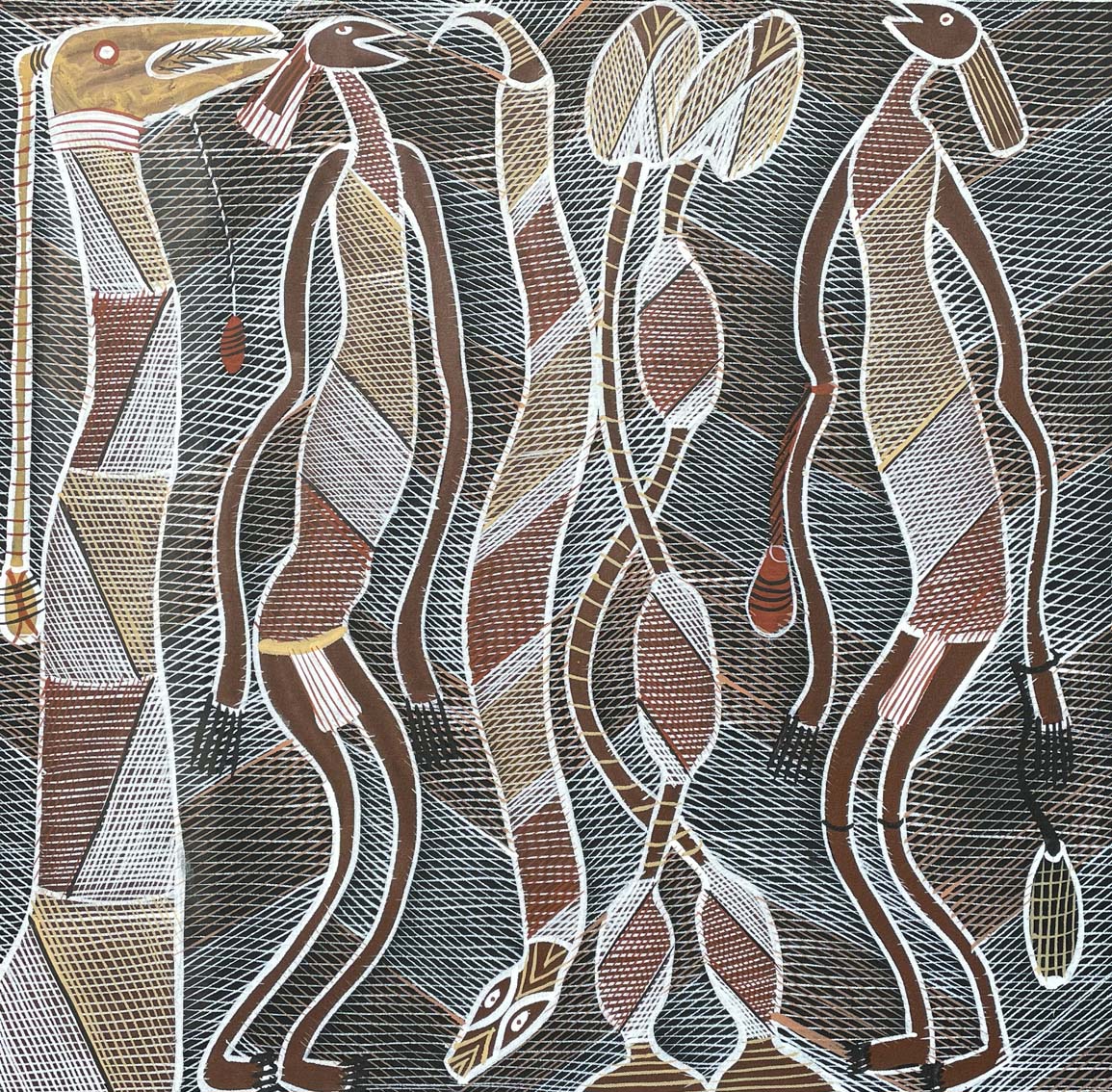
Rock art sites near Ubirr Rock, Injalak Hill, and Cannon Hill contain images spanning 10,000 to over 20,000 years. That ancient imagery is not a museum piece sealed off from today; it is a living tradition that directly influences modern Aboriginal paintings made in the same region.
The first known European commissions of bark paintings from West Arnhem Land came from anthropologist Baldwin Spencer and pastoralist Paddy Cahill, starting in 1912. They exchanged tobacco for artworks that referenced the imagery of the rock escarpments. From that point, a cross-cultural art form using organic materials evolved, and bark paintings became transportable artworks that could be bought and sold beyond the region.
Bark painting: the signature form
Bark painting is the form most people associate with Arnhem Land. Artists work with materials drawn from their own Country: ochres pulled from the earth, bark stripped from local trees, and binders made from natural resins. The surface is prepared, fired, and flattened before the painting begins.
The themes are drawn from creation stories, ceremonial knowledge, and the relationships between people, land, and ancestral beings. Forms are not limited to bark alone. Artists also produce paintings on paper, fibre sculptures, silkscreens, lithographs, and hand-printed textiles, with bark remaining the cultural and commercial centrepiece.
Cross-hatching and clan designs
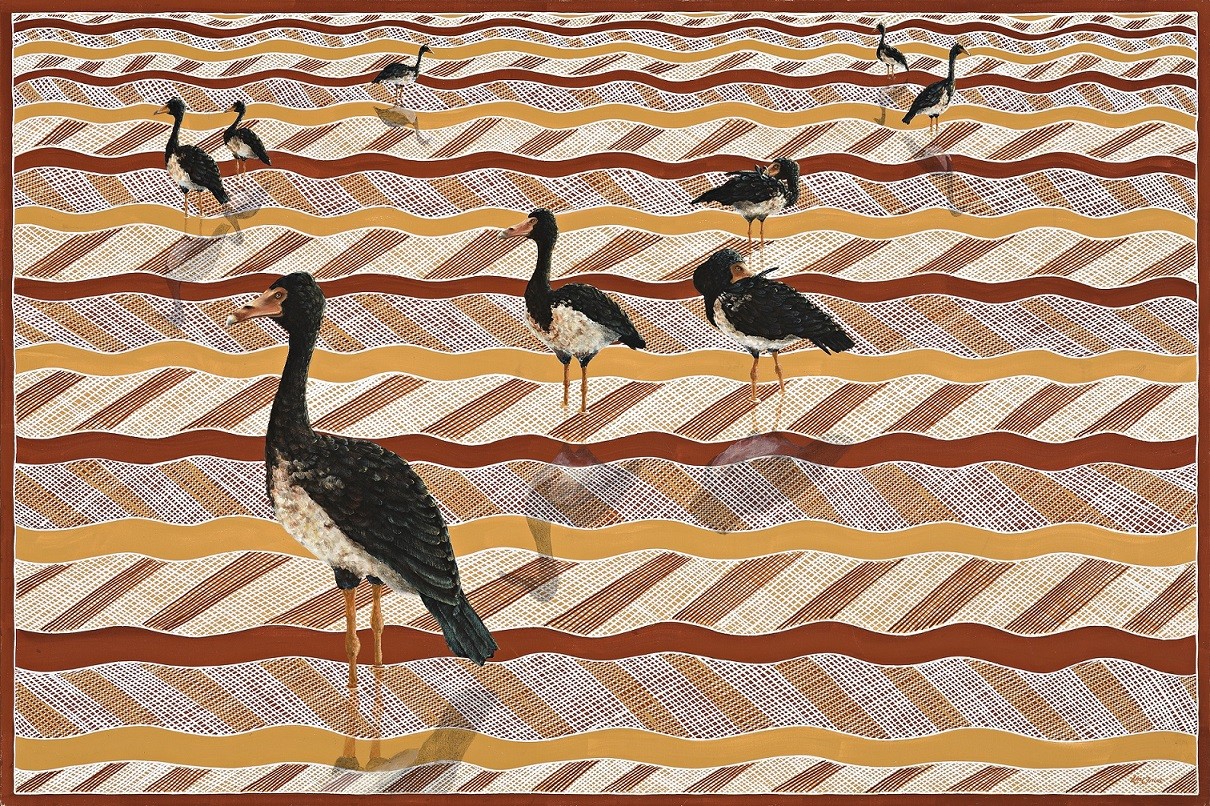
One of the most recognisable features of Arnhem Land bark painting is fine cross-hatching, known in many language groups as rarrk. The technique builds layer upon layer of fine parallel lines, often in alternating ochres, to create a shimmering surface that carries ceremonial meaning as well as visual texture.
Male Yolngu artists from east Arnhem Land also work with distinctive clan designs called miny’tji, traditionally heightened against plain red ochre grounds in the way they would appear on men’s bodies for Ŋärra’ ceremonies. The patterns identify specific clans and country, and only certain people have the right to paint specific designs.
Sculpture, weaving, and memorial poles
The art of Arnhem Land extends well beyond paint on bark. Hollow log carvings known as lorrkon or larrakitj are made from the trunks of termite-hollowed trees and were traditionally used in mortuary ceremonies. In the 21st century, larrakitj have become important standalone works by senior Yolngu artists, with some creators being direct descendants of the artists Donald Thomson commissioned during his fieldwork in east Arnhem Land between 1935 and 1942.
Weaving is the other major strand. Yolngu and Kunwinjku artists produce bathi (baskets), dilly bags, and woven mats using pandanus and other plant fibres, often dyed with the same earth pigments used in bark painting. Both traditions are taught within family lines and across generations.
Dreamtime themes and key motifs
Themes in Arnhem Land art are rooted in Dreamtime narratives, ancestral creation stories that describe how the country, the seasons, and the law came into being. Common motifs include the rainbow serpent, mimih spirits, ancestral kangaroos and barramundi, magpie geese, and the X-ray style of depicting animals with their internal anatomy visible. These figures are not decorative; they sit inside long systems of knowledge that the artwork helps to carry forward.
Notable artists and art centres
Many of the most respected names in Aboriginal art come from Arnhem Land. Edward Blitner, Hamish Garrgarrku, and Djambu Barra Barra are among the contemporary artists frequently exhibited in major galleries. Art centres such as Buku-Larrnggay Mulka at Yirrkala and Maningrida Arts & Culture are community-controlled organisations that represent local artists, manage sales, and protect cultural integrity. Buying through a recognised community art centre is widely considered the gold standard for ethical purchase.
The outstation movement, in which smaller family groups have moved back to traditional lands, has been one of the most important developments for art in Arnhem Land. As senior artist Gawirrin Gumana put it in 2009: “We want to stay on our own land. We have our culture, our law, our land rights.” That return to country has helped keep both the techniques and the stories behind them in active use.
The bigger picture of Arnhem Land art
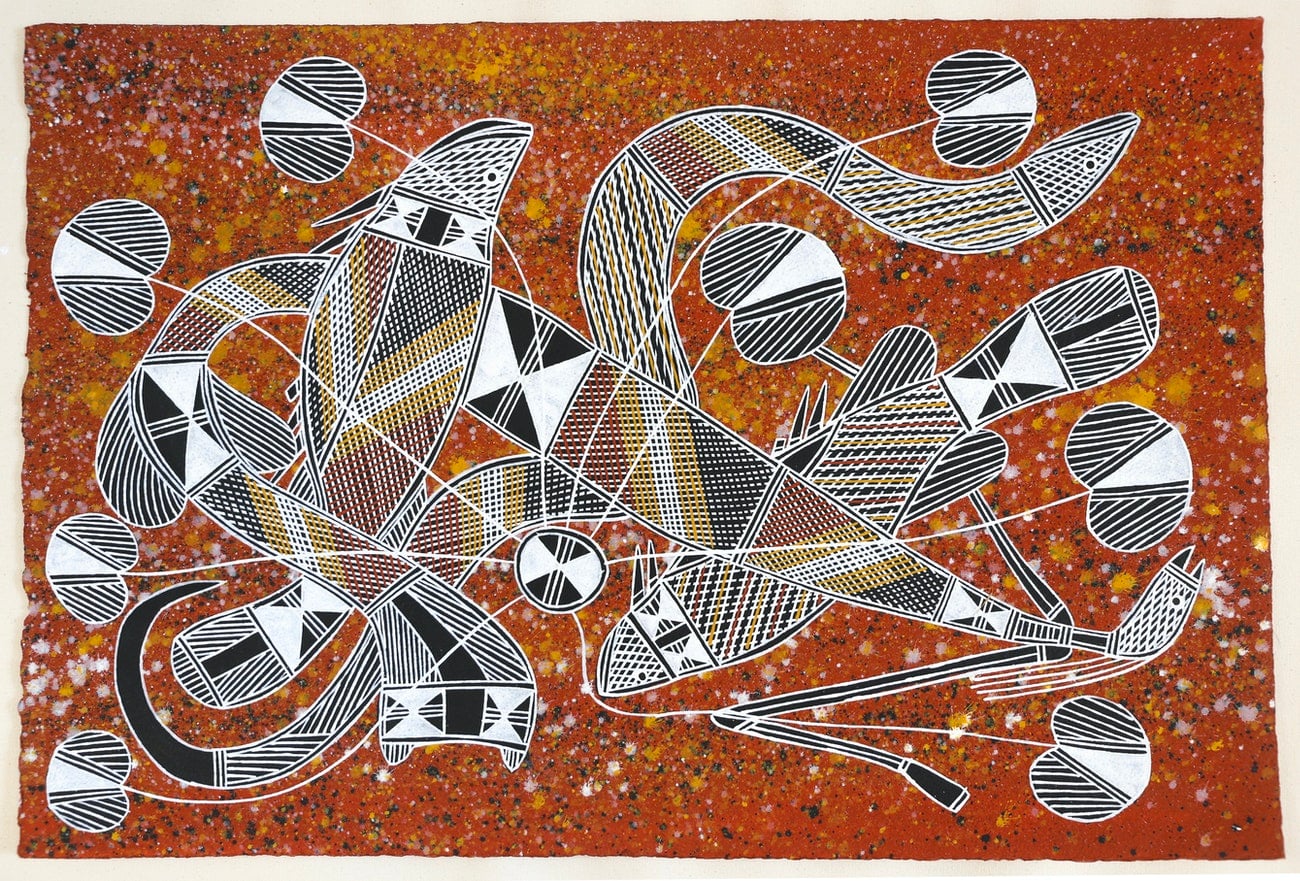
The Aboriginal art of Arnhem Land is not a single style but a layered tradition of bark painting, weaving, sculpture, and memorial pole carving, each carried by particular clans and language groups. Compared with the dot painting movements of the central deserts, it speaks in a different visual language, but the underlying logic of country, ancestry, and law is the same. For a sense of how it differs from other regions, see how Aboriginal art styles differ by region across the continent, and the conversation around Arnhem Land becomes part of a much larger picture.