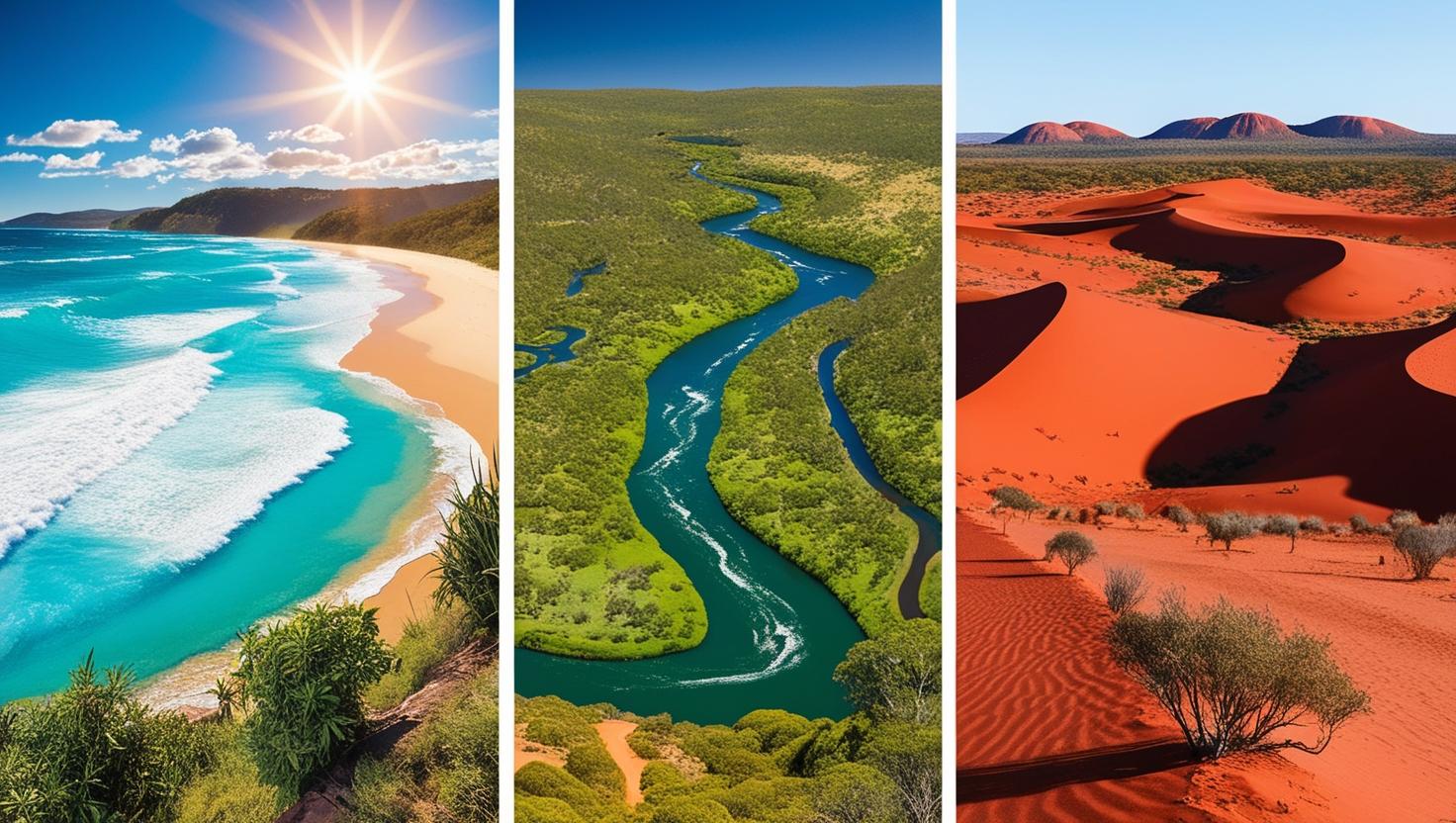
Walk across a desert plain in Central Australia and walk across a reef flat near Mer Island, and you are standing on the lands of two different First Nations groups. Aboriginal and Torres Strait Islander people are both Indigenous Australians, but their cultures grew from different geographies, different ancestors, and different stories. Knowing the difference is the start of respecting both.
Two First Nations, one continent
The Indigenous people of Australia are from two distinct cultural groups: Aboriginal people and Torres Strait Islander people. Together they make up about 3.3 percent of the Australian population, around 800,000 people out of 25 million. Their shared story is one of the oldest continuous civilisations on earth, extending back over 65,000 years, with ancestors who were among the first humans to migrate out of Africa, across the coastlines of India and Asia until they reached Australia.
Treating the two groups as one homogeneous Indigenous Australian culture flattens that history. They are not one group. They speak different languages, trace identity to different places, and tell different creation stories.
Mainland Australia vs the 274 Islands of the Torres Strait
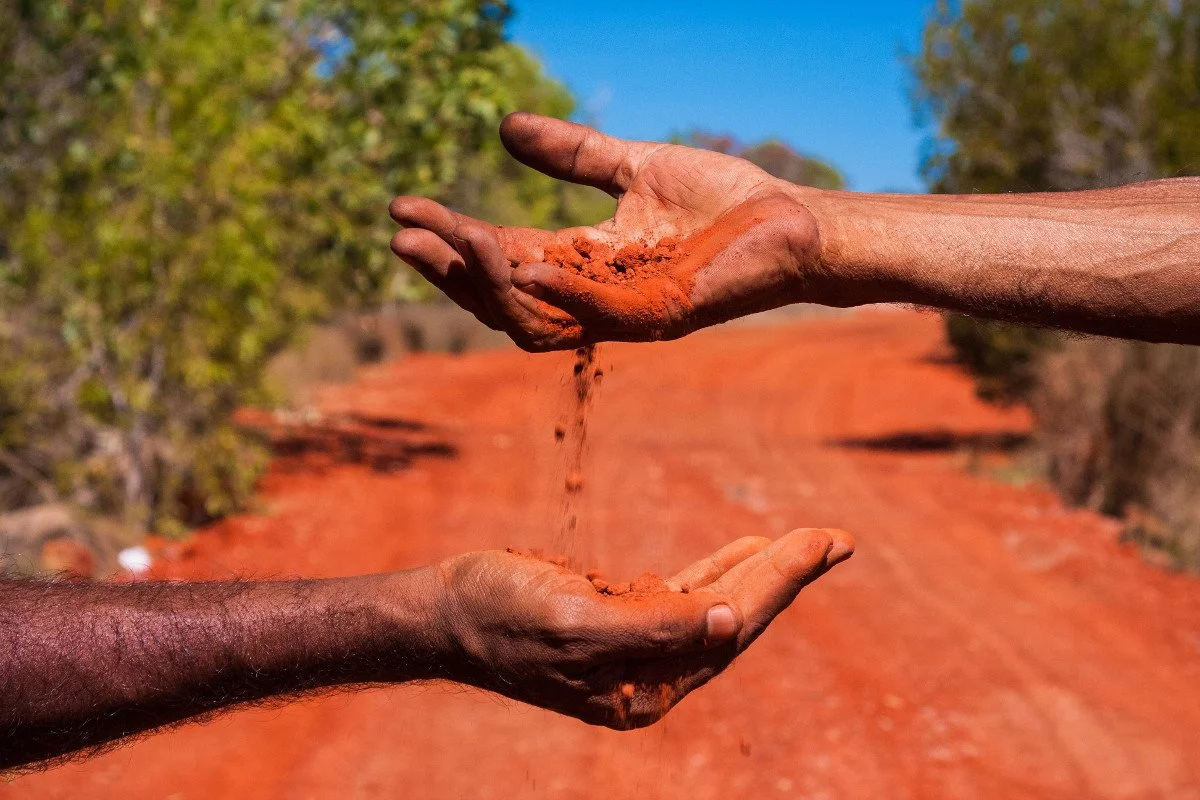
Aboriginal people are the original peoples of mainland Australia. The word Aboriginal is a broad term that groups the nations and custodians of the mainland and most of its surrounding islands, including Tasmania, K’gari, Palm Island, Mornington Island, Groote Eylandt, Bathurst and Melville Islands.
Torres Strait Islander people come from the Torres Strait, a body of water between the northern tip of Cape York in Queensland and the south-west coast of Papua New Guinea. There are at least 274 small islands distributed across roughly 48,000 square kilometres. Islanders are of Melanesian origin, which is what sets their lineage apart from Aboriginal Australians. Not every Islander lives on the islands today. Around 64 percent live in Queensland on the mainland or on the islands, a movement often called the Torres Strait diaspora. Two Torres Strait Islander communities sit on the mainland inside Queensland’s Northern Peninsula Area: Bamaga and Seisia.
Languages and the names people call themselves
At the time of colonial invasion in 1788, around 250 languages and 600 dialects were spoken across more than 500 different nations on the Australian mainland. There is no single Aboriginal mother tongue. The only languages widely shared today are English and Aboriginal Kriol, sometimes called Aboriginal English. Across the many distinct Aboriginal languages there are still similarities in pronunciation, grammar, syntax and sound, which is why some Dreamtime stories told in language can carry meaning across nations even when the words differ.
Aboriginal people often prefer regional or nation names over the broad label. Koori covers the southeast coast. Murri is used across much of Queensland. Bundjalung, Bardi and Noongar name specific peoples.
Torres Strait Islanders generally identify by their home island or island group. Two main language families live across the strait, along with Yumplatok, the Torres Strait Creole that bridges them.
Words like Aborigines, Islanders or the acronym ATSI are considered shorthand and are now treated as discriminatory. Some individuals identify with both groups, which is why Aboriginal and/or Torres Strait Islander peoples is the most accurate collective phrase.
The Dreaming and the Tagai, two spiritual frameworks
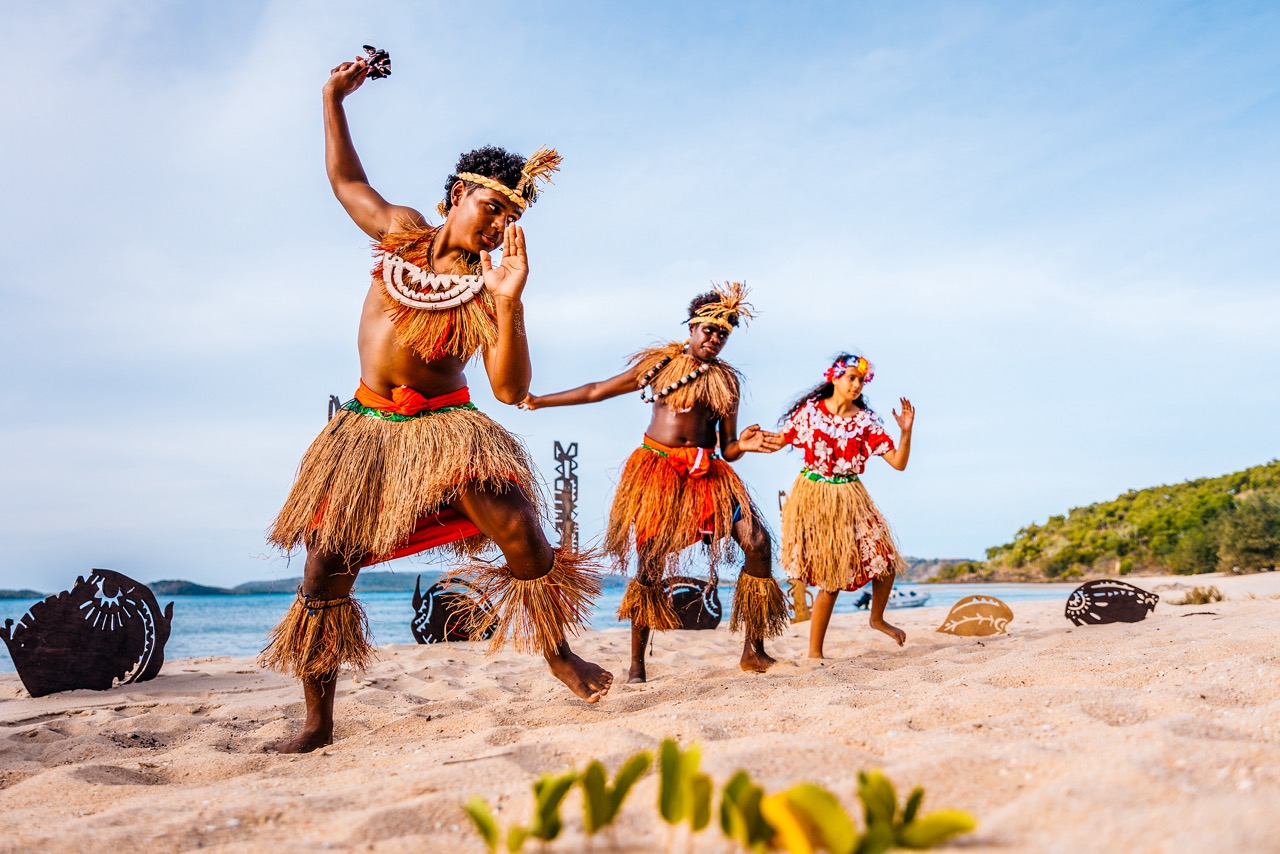
Both groups carry deep spiritual systems, but the two frameworks have different geographies and different sky-and-land stories.
The Dreaming
For many Aboriginal peoples, the Dreaming (sometimes still called the Dreamtime) describes the network of spiritual beliefs about creation and existence. Spirits made the rivers, streams, waterholes, hills, rocks, plants and animals, and the knowledge of that creation is passed down through stories, songs, dances and ceremonies. The Dreaming sits across past, present and future at once, which is why the Dreamtime has fallen out of use in many communities. It can sound like a timeframe stuck in the past, and the Dreaming is not.
The Tagai
Torres Strait Islanders are united by the Tagai, a spiritual belief system built around the stars. The stories of the Tagai describe Islanders as sea people whose place in the world is fixed in the order of the stars. It is the framework that ties together ceremony, navigation, fishing and seasons across the islands.
Art, dance and the things you can see
Aboriginal and Torres Strait Islander art is among the oldest art in the world, and the look of each group’s work is genuinely different.
Aboriginal art today is much wider than dot painting alone. The dot style began in the early 1970s in the community of Papunya and remains only a small fraction of contemporary Aboriginal art. Other living forms include:
- Dance, contemporary or traditional, such as the Chooky Dancers’ interpretation of Zorba the Greek
- Craft and visual art including textile work, pottery, weaving, wood carving, ceramics, jewellery, grass weaving, miniature carvings, film and glasswork
- New-media work where artists paint skateboards, weave ghost nets into sculpture, or build dilly bags from scrap metal
- Law, the body of knowledge passed on through storytelling
- Ceremony, performed for community as well as for visitors
Torres Strait Islander art runs on different visual languages. It is known for mask-making, printmaking, sculpture, and elaborate storytelling through dance. Colours and symbols differ from one nation to another in both groups, and the meaning behind a piece travels with the nation it came from.
One specific instrument question that comes up often: not everyone can play the didgeridoo. Traditionally the didgeridoo is played by men, and in some Aboriginal communities the instrument is off-limits to women.
Family, kinship and customary adoption
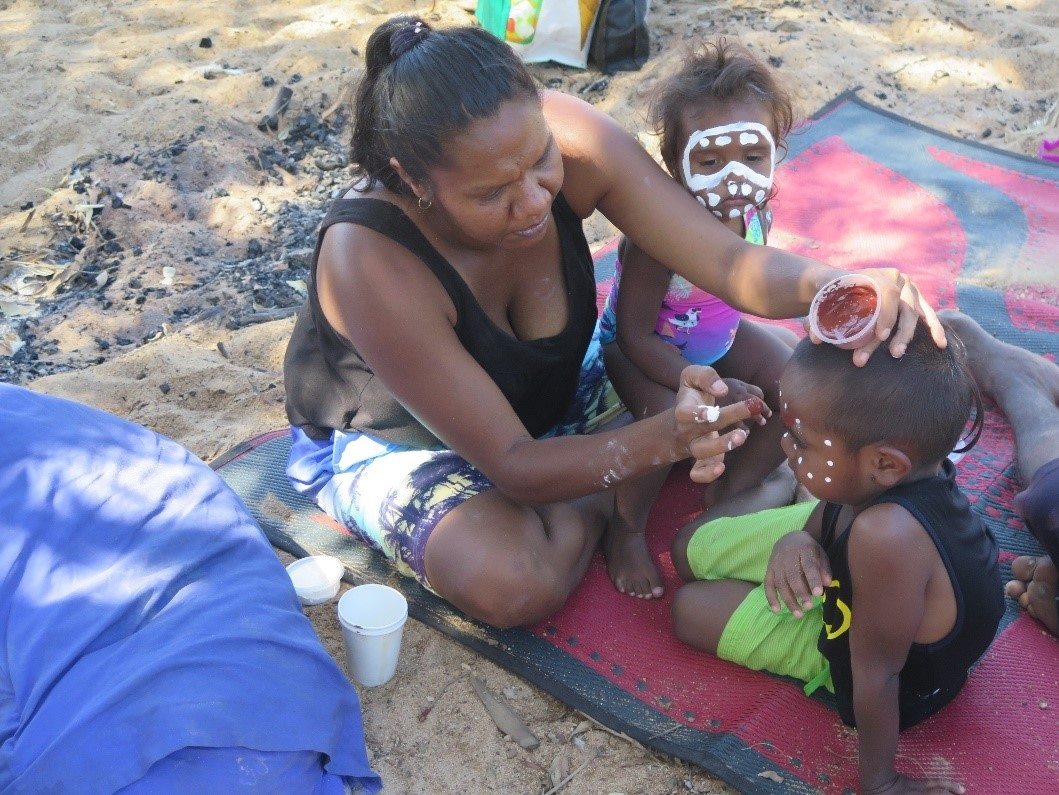
First Nations Australians share a complex system of family ties, roles and responsibilities, but the practice of raising a child can look different on the mainland and in the strait.
Across Aboriginal communities, the broader kinship network shares responsibility for raising children. Elders bridge past and present by passing on skills, stories and law. Some Torres Strait Islanders practise traditional or customary adoption, where a child may be raised by family members other than the biological parents. This strengthens bonds between families, allows childless relatives to raise their own child, and can distribute boys and girls more evenly across households.
Both systems rest on the same idea, that children belong to community and Country, not only to two parents.
Two flags, two stories
The flags are the clearest visual shorthand for the difference, and each one was designed to tell its own people’s story.
The Aboriginal Flag
Designed in the 1970s. Black represents the Aboriginal people. Yellow represents the sun. Red represents the earth and the relationship between people and land.
The Torres Strait Islander Flag
Designed in the 1990s. A white dharri, or deri, headdress sits at the centre, with a five-pointed star representing the different island groups. White stands for peace, green for land, black for the people, blue for the sea.
How to refer to Aboriginal and Torres Strait Islander people
The Australian Government Style Manual sets out a clear hierarchy. Use the most specific name available and only fall back to a broader term when you have to.
- Specific group: use the nation, island or community name, for example Yawuru, Meriam or Saibai
- Many Aboriginal nations: a regional term like Murris or Kooris
- Many Torres Strait Islander peoples: a regional term like Kulkalgal, which covers the central islands of Masig, Poruma, Warraber and Iama
- Both groups together: First Nations people, First Australians, or Aboriginal and/or Torres Strait Islander peoples
Avoid shorthand like Aborigines, Islanders or ATSI, and avoid past-tense framing that treats either culture as something that happened rather than something still happening. Hundreds of First Nations languages and dialects are alive today, and the preferred word for languages not currently spoken is sleeping, not extinct.
Both are always capitalised, and the two protocols differ in who delivers them and when.
The short answer, side by side
Aboriginal and Torres Strait Islander peoples share a history as the First Peoples of this continent, but they are not interchangeable. Aboriginal people come from the mainland and Tasmania, speak hundreds of distinct land-based languages, and carry the Dreaming as their spiritual framework. Torres Strait Islanders come from 274 islands between Cape York and Papua New Guinea, are Melanesian in origin, identify by home island, and look to the Tagai and the stars.
The two groups share kinship at the heart of family, the oldest continuous cultural lineage on earth, and a deep relationship with Country and sea Country. They differ in geography, language, art forms, spiritual stories, and the flags that fly over their communities. Treating each group on its own terms, and using the specific names people choose for themselves, is what makes the difference matter.