Rarrk cross hatching art is a traditional Aboriginal painting technique that uses fine, parallel lines to create shimmering geometric patterns. Artists from Arnhem Land layer these precise lines using natural ochres and specialized hair brushes called marwats. The resulting visual shimmer represents ancestral power and encodes sacred clan knowledge for the Yolngu and Kunwinjku people.
Understanding rarrk requires looking beyond its striking visual texture. The technique serves as a profound visual language that connects contemporary Indigenous artists to ancient Dreamtime narratives and specific regional landscapes.
Where Did Rarrk Cross Hatching Originate?
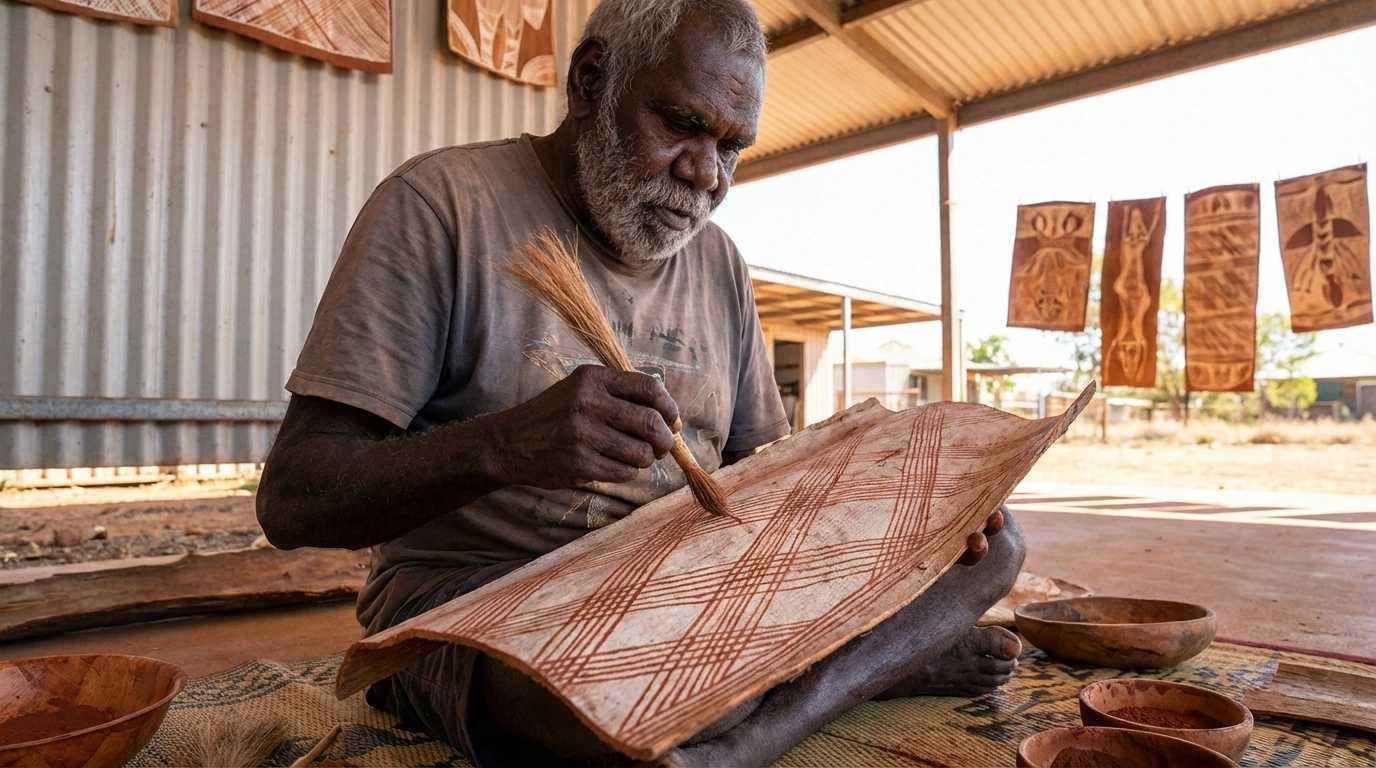
Rarrk originates from Arnhem Land in Australia’s Northern Territory. This vast region holds some of the world’s oldest continuous artistic traditions. Indigenous clan groups, particularly the Yolngu and Kunwinjku people, have practiced this specific line-work painting method for thousands of years.
The earliest examples appear on rock walls and in ceremonial body painting. Traditional custodians applied these intricate patterns during sacred rituals to invoke the presence of creation ancestors. Over time, the practice expanded to bark paintings and larrakitj. A larrakitj is a hollow log memorial pole used in traditional burial ceremonies.
Today, artists continue to pass these regional visual traditions down through generations. The technique remains strongly tied to its geographic roots. Understanding how styles differ by region helps you recognize genuine rarrk compared to the bold dot painting originating from the Western Desert.
The Technique and Materials Behind the Art
The physical creation process demands immense focus and specialized tools. Artists traditionally use natural ochre pigments sourced directly from their local Country. These earth pigments provide a distinct palette of rich reds, yellows, whites, and blacks.
The defining tool for this art form is the marwat. A marwat is a fine brush crafted from straight human hair, often tied to a thin wooden handle. The artist dips this specialized brush into the ochre and pulls it steadily across the surface. This deliberate motion creates perfectly straight, fine lines.
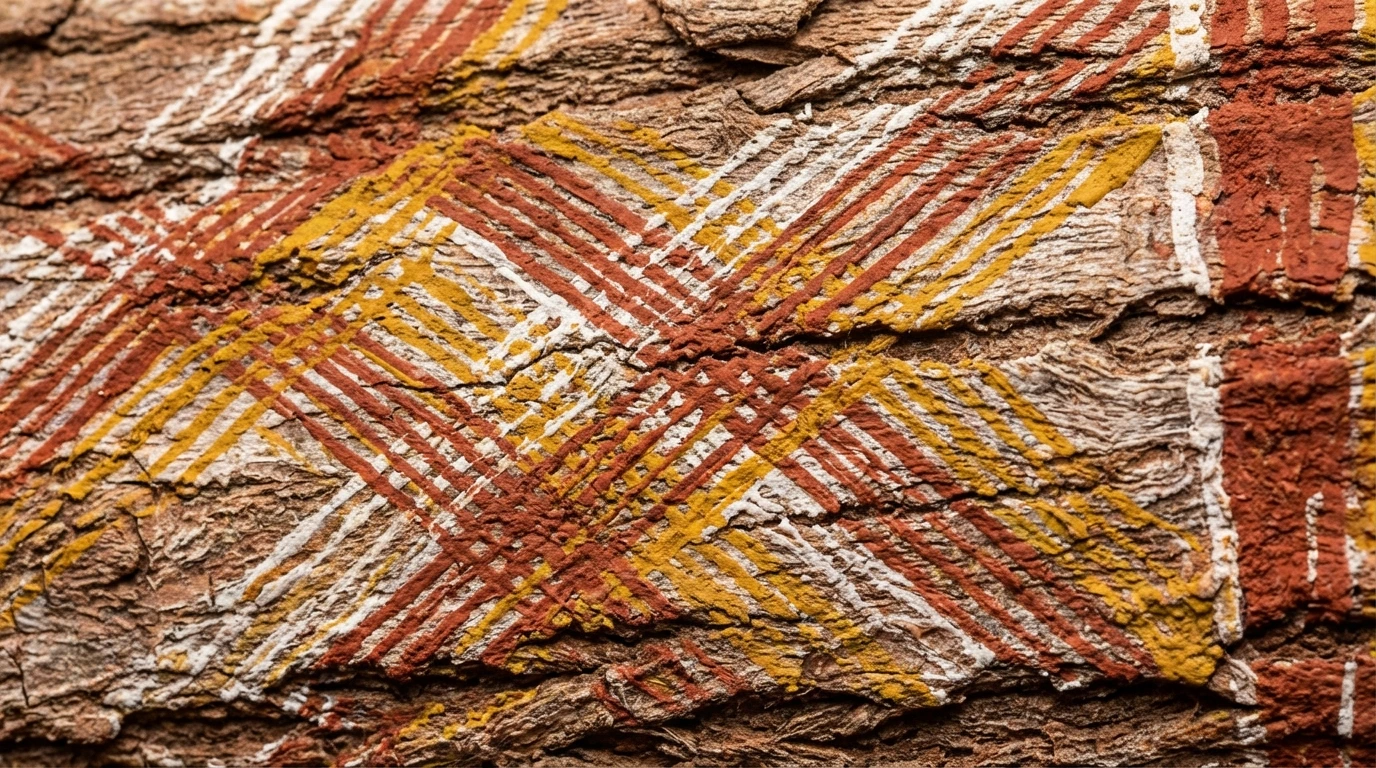
Once the first set of parallel lines dries completely, the artist applies a second set crossing over the first. This foundational technique builds the complex visual structure. Many advanced applications layer multiple directions, making the final surface appear almost woven.
What Does the Shimmering Effect Mean?
The visual shimmer generated by layered rarrk cross hatching is not merely decorative. This optical effect holds deep spiritual significance. The Yolngu people call this shimmering quality “bir’yun.” The shimmer evokes the spiritual presence and life force of ancestral beings.
The lines themselves function as a coded visual language. Different patterns represent specific clan designs, known as miny’tji. Each miny’tji belongs exclusively to a particular clan group. The precise geometry represents their totems, their land, and their ancestral connections.
The Yolngu word for this shimmering quality is bir'yun. Bir'yun is not surface decoration. It is understood as the visible trace of ancestral power coming through the surface of the painting, the same brilliance that elders speak of when describing the first light catching water or the flash on a fish's scales. A well-built rarrk field is judged by how strongly it produces this effect, and a flat or muddy field is read as a painting that has not been finished properly.
There is also a distinction between rarrk as a technique and miny'tji as the named clan design that the technique carries. Rarrk is the line work itself, the act of laying down parallel and crossing lines with a marwat. Miny'tji is the specific geometric pattern that belongs to a particular clan and tells that clan's ancestral story. Where dots in Western Desert dot painting partly serve to obscure sacred elements from outsiders, rarrk works in the opposite direction, intensifying presence rather than masking it.
Rarrk in Contemporary Aboriginal Art
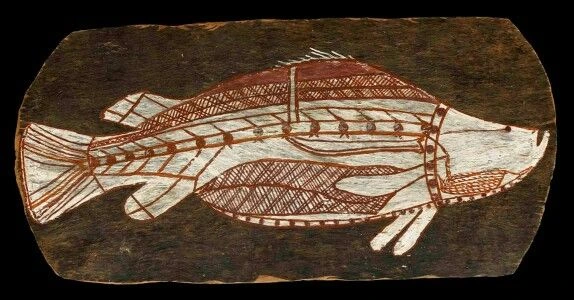
Modern Indigenous artists have adapted rarrk for new mediums without losing its cultural authority. Bark remains a traditional canvas. Many artists now apply these ancient patterns to modern canvases, sculptural pieces, and premium apparel.
Rarrk also appears inside the x-ray figure tradition, where cross hatched lines fill the body cavities of fish, reptiles, and mammals. In that combination the rarrk is doing the same work it always does, intensifying presence, while the x-ray outline carries the ecological knowledge of how the animal sits inside its skin.
Ethical engagement with this art form requires knowing its origins. The global market contains mass-produced imitations that strip these sacred designs of their meaning. Authentic pieces come from artists who hold the cultural right to paint specific clan patterns. Koarooginal works directly with Indigenous creators to ensure every design respects the traditions it draws from. Our collections celebrate these authentic Dreamtime stories while providing fair compensation to the artists.
FAQ
What brush is used for rarrk painting?
Description for this block. Use this space for describing your block. Any text will do. Description for this block. You can use this space for describing your block.
How does rarrk differ from dot painting?
Rarrk uses fine, parallel, intersecting lines to build patterns. Dot painting uses individual dots of paint applied with a stick. Rarrk originated in Arnhem Land in the Northern Territory. The contemporary dot painting movement began significantly later in the Western Desert region at Central Australia.
Can anyone paint rarrk cross-hatching?
No. Creating authentic rarrk requires cultural permission. The specific geometric patterns represent clan identities and sacred narratives. Only artists initiated into that knowledge and granted permission by their community elders hold the right to paint those precise patterns.
Where to Start With Rarrk
Rarrk cross hatching art is a precise technique that carries the spiritual power of Arnhem Land’s oldest cultures. The shimmering lines encode sacred clan knowledge, map ancestral connections to Country, and bring ancient stories into the present day. Support Indigenous artists who keep this visual language alive through authentic, ethically produced artworks.