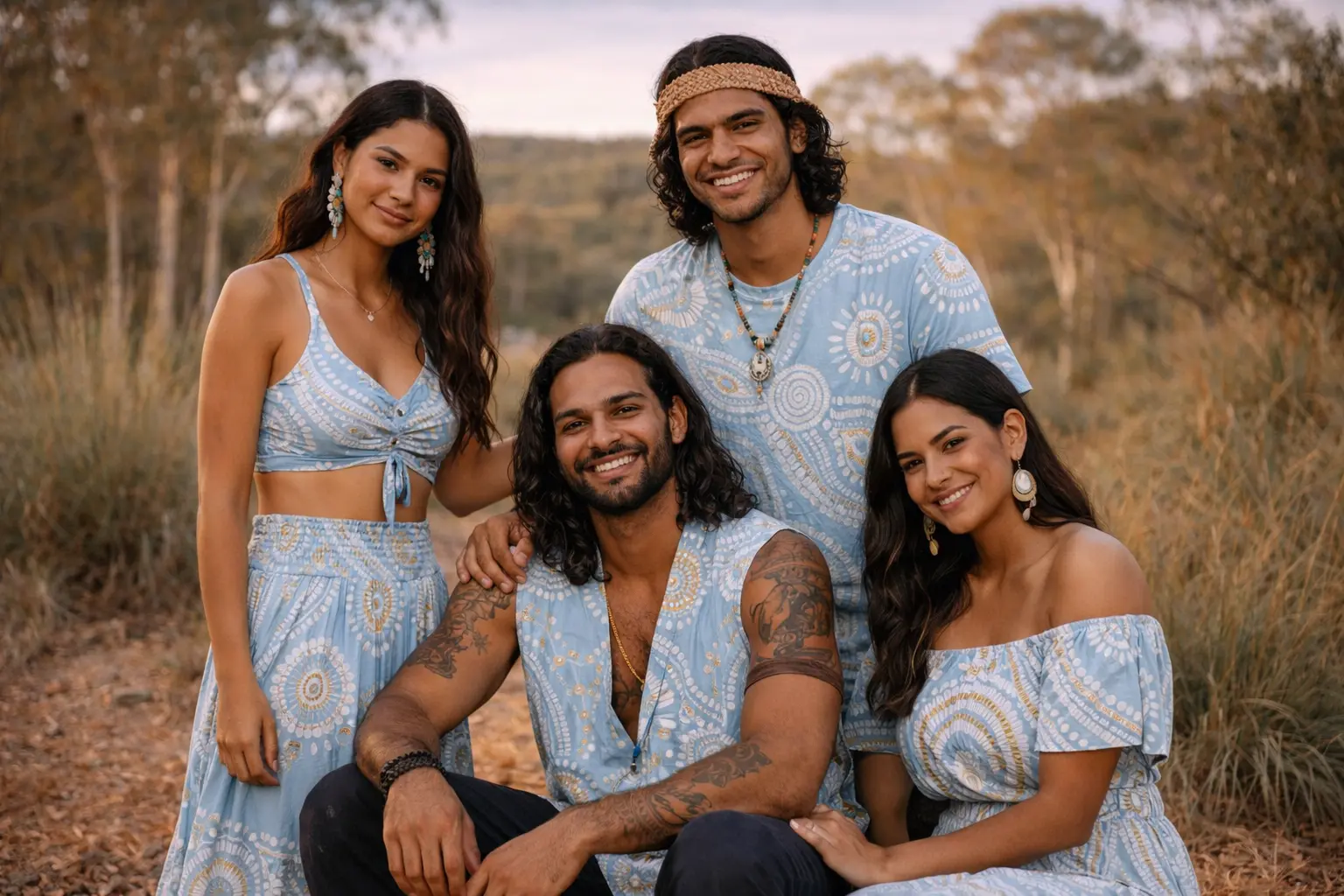
A Dreaming story is not a pattern you pick because it looks good. It is a piece of Country, ancestry and law, held and passed down by the people it belongs to. Aboriginal dreamtime story clothing puts one of those stories onto a shirt or a hoodie, which means that when you wear it you are carrying someone’s story on your body. That is a generous thing to be part of, and it asks for a little care.
What it means to wear a Dreaming story
A Dreaming story explains how Country, animals, people and law came to be, and it stays alive through art, song and dance. When an artist paints that story and it is printed onto cloth, the garment becomes a way of carrying the story into everyday life. If the idea is new to you, our explainer on what a Dreaming story is in Aboriginal culture sets out the basics. The short version is that these stories are living, they belong to particular nations, and they are meant to be told by the right people.
So a Dreaming story tee is never just decoration. The design holds meaning the artist chose to share, from saltwater Country to desert waterholes, and that meaning travels with the shirt wherever it goes.
From possum-skin cloaks to printed cotton
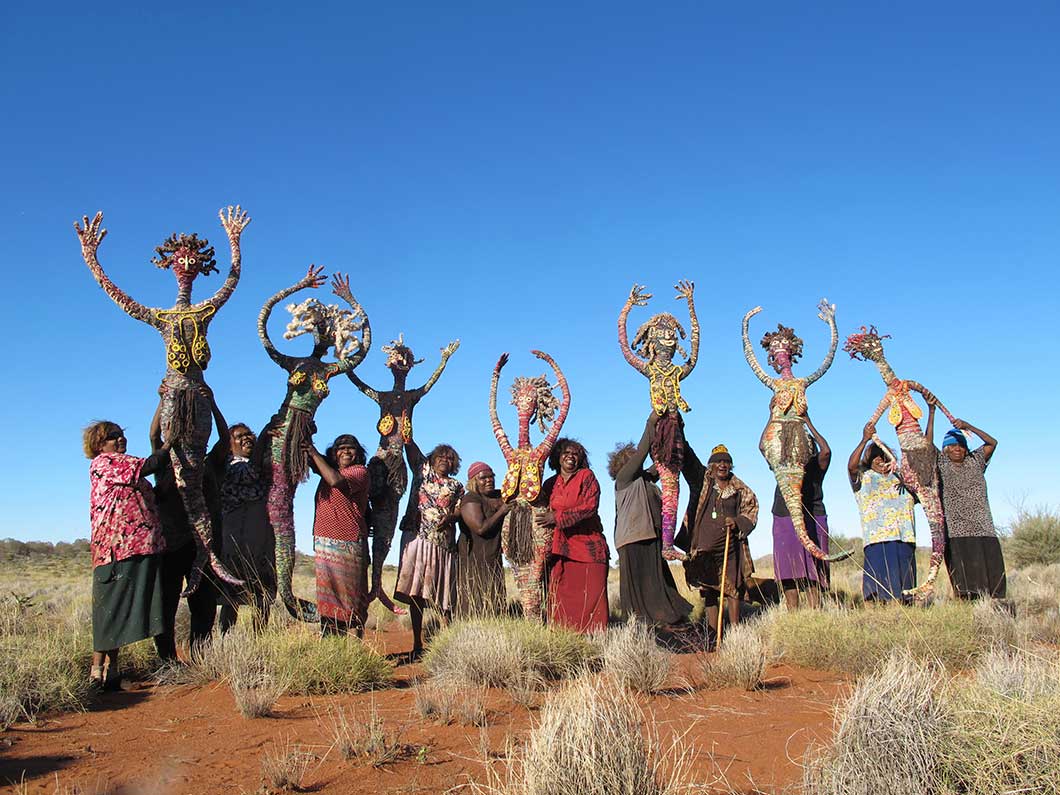
Long before printed tees, clothing already carried story. Traditional possum-skin cloaks did more than keep people warm. They were marked with inscribed symbols that mapped ancestral journeys and a person’s own identity, so the cloak itself told you who someone was and where they belonged.
Today the same instinct shows up in contemporary clothing. Aboriginal dreamtime story clothing now spans cotton tees, hoodies and polos, with pieces for every generation from babies to adults, alongside traditional dot paintings and contemporary takes on old stories. The garment changed, the habit of wearing your story did not.
The story belongs to someone
Here is the part that matters most. A Dreaming story is owned. It belongs to a nation, a clan, sometimes a single family, and not every story is open for anyone to paint or wear. The art is how many of these stories are shared in public, and learning how Aboriginal art tells Dreamtime stories makes it easier to see why a design is never just a graphic.
It also means two shirts that look alike can carry very different stories. A saltwater nation’s turtle Dreaming says something different from a desert story, which is why pieces like turtle clothing stay tied so closely to a particular place. Respecting the story starts with accepting that it is not yours to alter, only to carry well.
Can you wear it if you are not Aboriginal?
Yes, in most cases, and First Nations makers actively want their work shared. The clearest guidance comes from First Nations-owned social enterprises that label their designs so you never have to guess. They sort pieces into two groups:
- Ally Friendly designs: made to be worn by anyone who wants to support and celebrate First Nations culture.
- Mob Only designs: held for Aboriginal and Torres Strait Islander people, usually because the design carries identity or community meaning.
When a label spells this out, wearing the piece is simple. When it does not, the safe rule is to choose a design openly offered to everyone and made by a named artist.
How to spot a genuine piece
The difference between a genuine Dreaming story piece and a cheap copy is whether a real artist is behind it and paid for it. A few quick checks help:
- Look for a named artist and their nation, not a vague “Aboriginal-inspired” tag.
- Check that the maker sources designs directly from Aboriginal artists rather than copying them.
- Favour First Nations-owned labels, and ones accredited by Ethical Clothing Australia.
- Read the product story; genuine sellers explain who made the art and what it means.
For a fuller walk-through, our guide to authentic Indigenous shirts covers what to look for on the label and the swing tag.
Buy from people who hold the story
Buying direct from First Nations artists and First Nations-owned stores is what keeps the story in the right hands. When you buy a genuine piece, the artist who holds the story is paid, and the meaning stays attached to the design instead of being stripped off for a quick print. Plenty of people wear these designs during NAIDOC Week to celebrate community, and our NAIDOC Week collection gathers pieces made for it, though the best ones feel right any other day of the year too.
To see a set of Dreaming story designs gathered in one place, browse the Dreaming story collection and read the meaning behind each one before you choose. Pick the story that speaks to you, learn whose it is, and wear it with respect.
Letting the story travel well
Aboriginal dreamtime story clothing is at its best when the story stays intact: bought from the people it belongs to, and worn by someone who knows a little of what it means. Do that, and a printed tee becomes a small act of respect that carries a living story out into the world. That is worth far more than a pattern that only looks good.
Questions about Dreaming story clothing
What is the most famous Aboriginal Dreamtime story?
There is no single most famous one. Dreaming stories belong to particular nations and Countries, so the best-known story in one region may be unheard of in another. Rather than ranking them, it is better to learn the story behind the specific design you are looking at.
Is it okay to wear an Aboriginal art t-shirt if I am not Aboriginal?
Yes, when the design is openly offered and made by a named First Nations artist. Many makers label pieces as “ally friendly” for exactly this reason. Buying a genuine, artist-credited piece is the respectful way to wear one.
What clothing did Aboriginal people traditionally wear?
In cooler regions, possum-skin cloaks were common, often inscribed with symbols that recorded ancestral journeys and personal identity. Clothing has always been a place to carry story, which is why printed designs feel like a natural continuation today.
How do I know a Dreaming story design is authentic?
Look for a named artist and their nation, an explanation of the story, and a maker that sources designs directly from First Nations artists. First Nations-owned and Ethical Clothing Australia accredited labels are a good sign the artist is properly credited and paid.