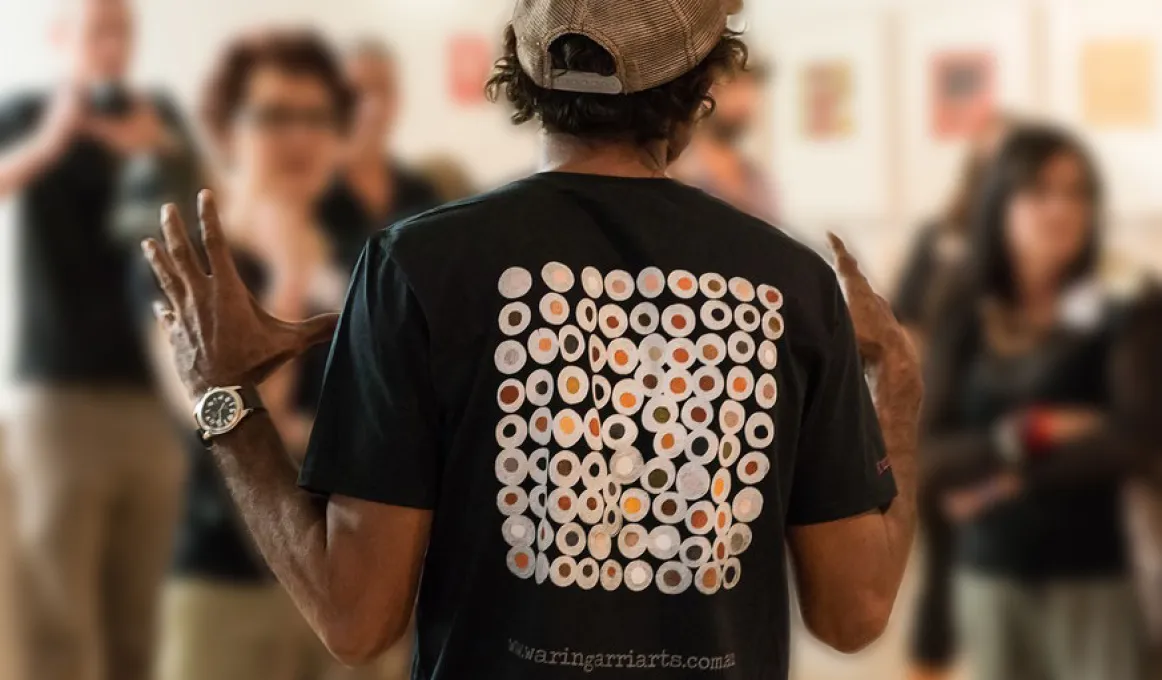
A shirt printed with Aboriginal art carries someone’s Country, family and Dreaming. That is why how you buy it matters as much as what you buy. Get it right and your money reaches the artist and their community. Get it wrong and you may be funding a copy that pays the artist nothing. This guide walks through how to buy indigenous shirts that are genuine, made fairly, and worn with respect, the same care you would give to any piece of wearable Aboriginal art.
What counts as an authentic Indigenous shirt?
An authentic Indigenous shirt starts with a real artist and a fair agreement. The best labels source their designs from First Nations artists, art centres or manufacturers who hold licence agreements with the artist, so the person who painted the work is named and paid. Aboriginal art is rarely anonymous. A trustworthy shirt will tell you who created the design, which language group or Country they come from, and often the story behind the pattern. Art centres are Aboriginal-owned and managed organisations that exist to produce and distribute work ethically, so a design that traces back to one is a strong sign you are buying the real thing. If a seller cannot tell you who made the artwork or how the artist was involved, treat that silence as your answer.
Where to buy: Indigenous-owned shops and verified platforms
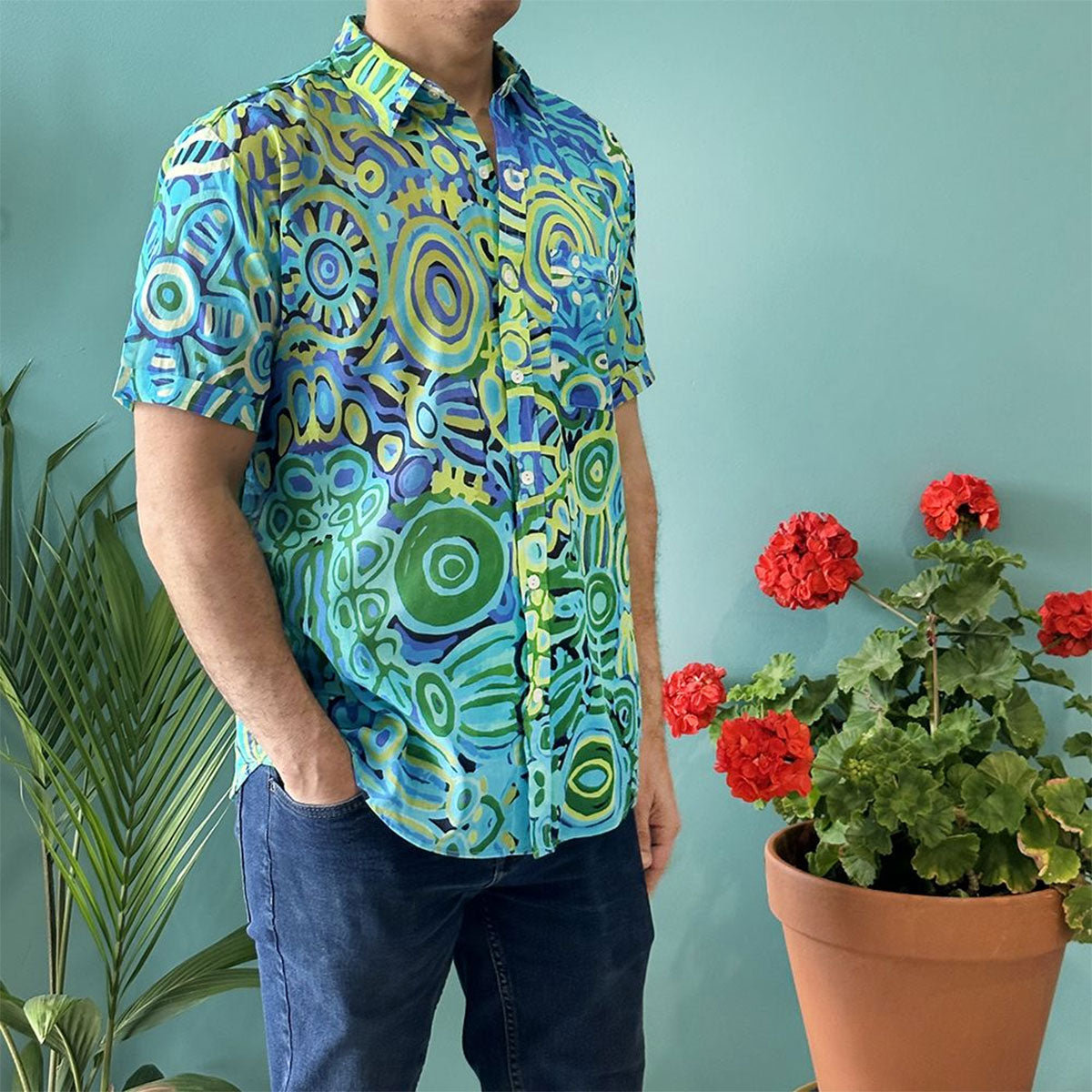
The safest place to start is with Indigenous-owned businesses and verified platforms, because the money stays close to the community. Look for retailers registered with Supply Nation or certified by Social Traders, two badges that confirm a business is Indigenous owned or a genuine social enterprise. Brands featured in our roundup of Aboriginal art clothing brands make their sourcing and accreditation easy to find. You can also browse a dedicated range of Aboriginal t-shirts designed in partnership with First Nations artists. Wherever you shop, the principle is the same: buy from people who can show their connection to the artists, not just their stock.
Three questions to ask before you buy
Before you add a shirt to your cart, the Aboriginal art sector points to three simple questions worth asking the seller:
- Who made the design, and which artist or art centre does it come from?
- What does the artwork mean, and is its story shared with permission?
- Was the artist paid a fair and equitable amount for their work?
A seller who handles itself ethically will answer all three without hesitation. Vague replies, a refusal to name the artist, or pressure to buy quickly are the clearest warning signs you will get.
Choosing your shirt: design, colour and fit
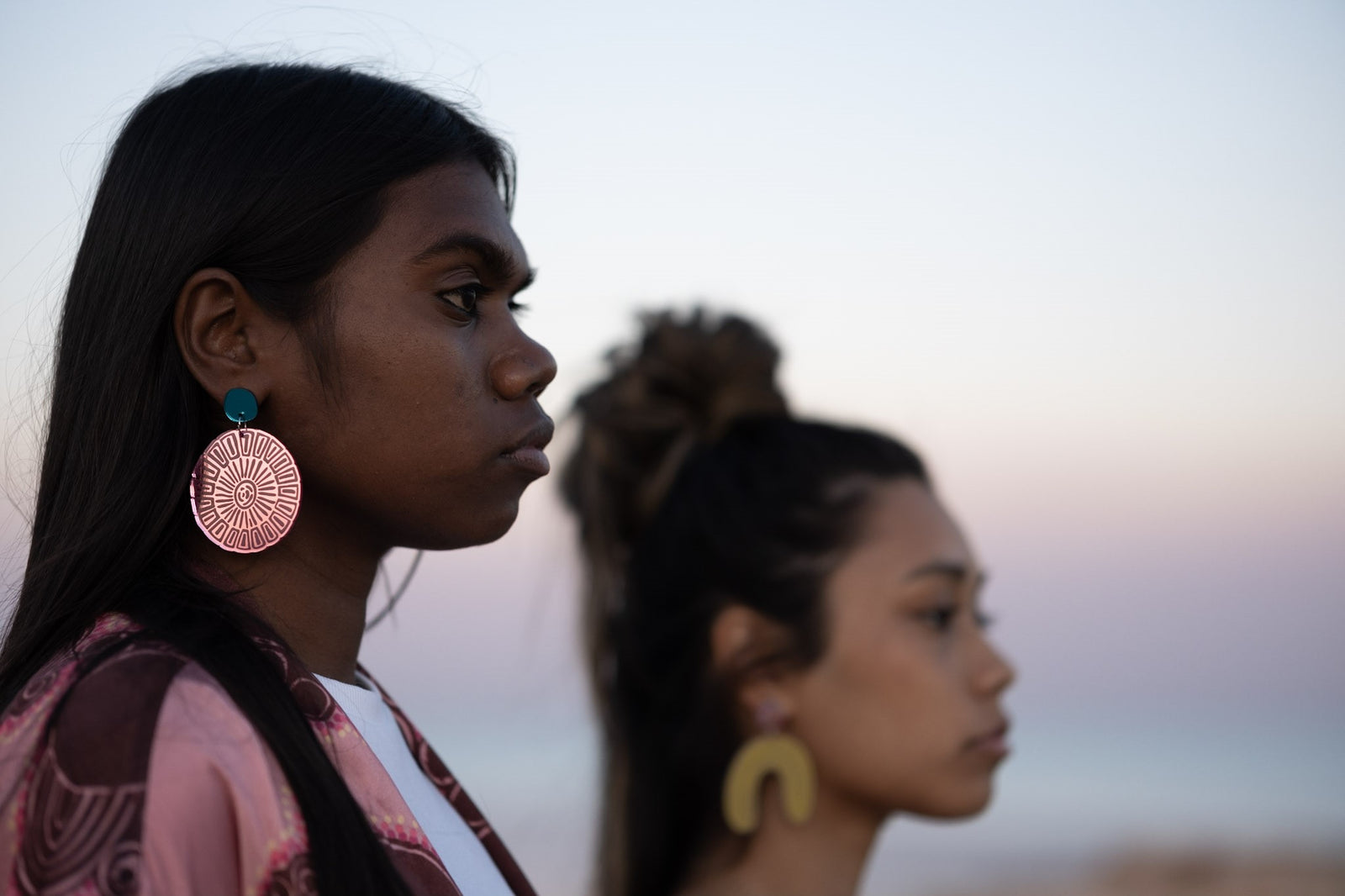
Once you trust the source, the enjoyable part begins. Designs often feature traditional symbols alongside Australian animals like the kangaroo, emu and platypus, each carrying its own meaning, so choose a motif that speaks to you and learn what it represents. Colour ranges run from earthy ochres to contemporary tones such as sunset pink and ocean blue, which lets you match a shirt to your wardrobe without losing the artwork’s character. Good Indigenous labels also size inclusively, often from XS to 7XL, so the same design fits the whole family. If you are buying for a baby or choosing a gift, check the fabric and care details the way you would with any quality garment.
Can you wear it if you’re not Aboriginal?
Yes, in most cases. Non-Indigenous people are welcome to wear Aboriginal art shirts that are designed for everyone, and doing so supports the artists and celebrates the culture. The line to watch is appreciation versus appropriation. Some First Nations brands label their designs clearly: an Ally Friendly piece is made for anyone to wear, while a Mob Only design is intended for Aboriginal and Torres Strait Islander people. Respecting that distinction is part of buying well. Sacred symbols and community-specific stories are not yours to claim, but a licensed, openly sold design is meant to be shared. If you want to go deeper, our guide on how to wear it respectfully covers the etiquette in more detail.
Red flags to watch for
A few warning signs separate ethical sellers from the rest:
- Steep discounts of 30, 40 or even 80 percent off, which often mean the work was over-priced or the artist was underpaid.
- No information about the artist, the art centre, or how the design was licensed.
- Sellers known as carpet-baggers, who undercut artists and answer to no body that ensures fair practice, such as the Indigenous Art Code.
- Designs sold through auction sites or marketplaces with no provenance, since genuine art centres do not trade that way.
When in doubt, slow down and ask questions. A reputable seller treats your curiosity as a good thing.
Wearing the story with respect
Buying an Indigenous shirt is a small act with a real impact. When you choose a licensed design from an Indigenous-owned label, you help an artist keep painting, keep teaching, and keep their stories alive on something people wear every day. Take a moment to learn the meaning behind your design, keep the product details that name the artist, and wear it knowing where it came from. If you want to read further, advocacy groups for First Nations artists such as ANKAAA publish a detailed ethical buying guide. From there you can explore a full range of Aboriginal clothing and find a piece whose story is worth wearing.
Before You Buy: Quick Answers
Is it okay to buy Aboriginal art if I’m not Indigenous?
Yes. Buying authentic, licensed work from Indigenous-owned businesses or art centres directly supports First Nations artists and communities. The key is making sure the artist is named and was paid fairly.
Where can I buy authentic Indigenous shirts online?
Shop with Indigenous-owned labels and platforms that are registered with Supply Nation or certified as social enterprises, and that name the artist behind each design. Avoid auction sites and marketplaces that offer no provenance.
Is Yarn Marketplace Aboriginal owned?
Yarn Marketplace describes itself as an Indigenous art store that partners with First Nations artists. Before trusting any retailer’s claim, check for Supply Nation registration or Social Traders certification, which independently verify Indigenous ownership.