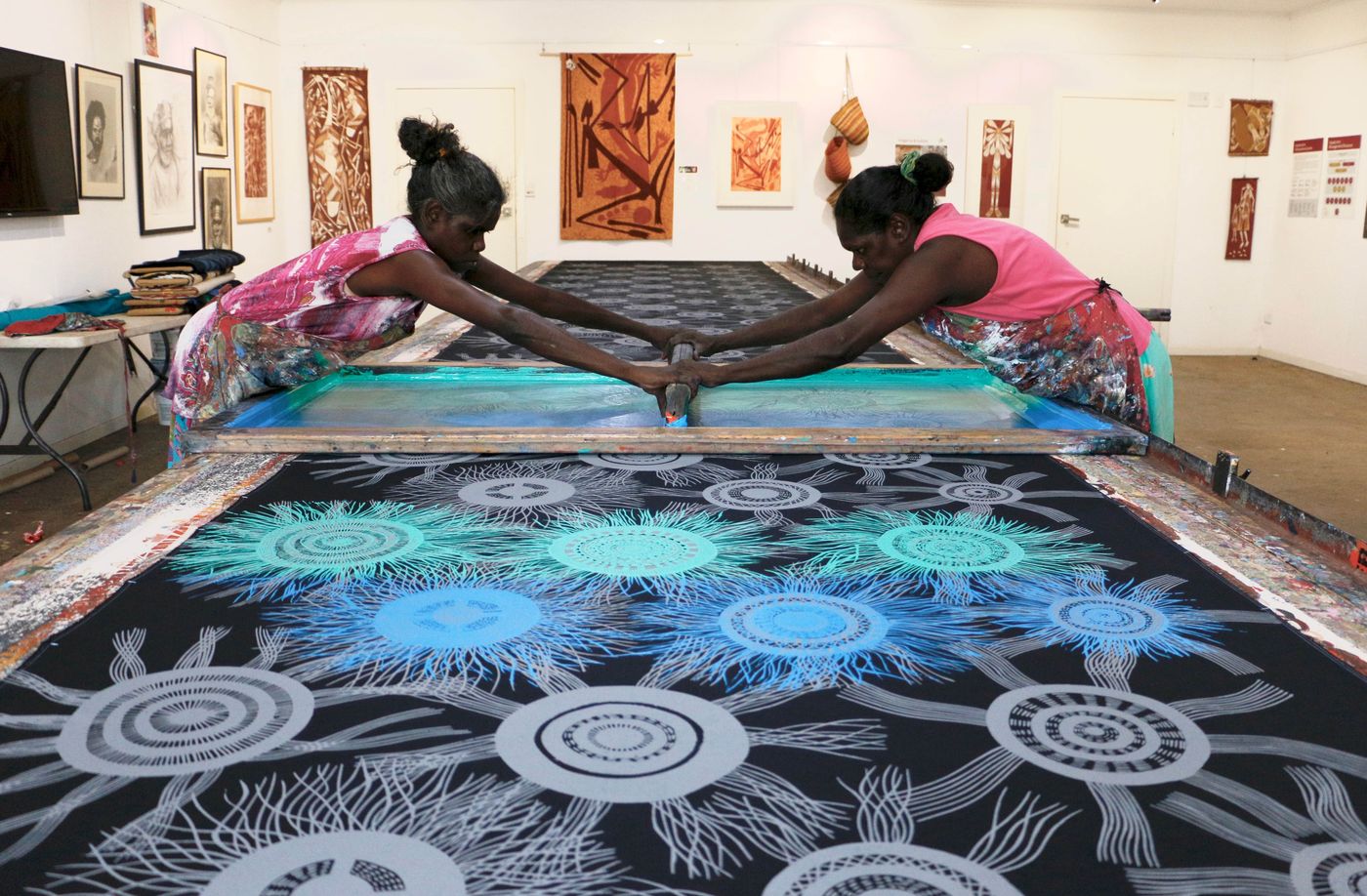
Aboriginal art centres are the engine room of the Indigenous Australian art sector, and for most non-Indigenous buyers they are the part of the industry that nobody quite understands. The painting on a gallery wall in Sydney almost certainly came from one of them. The artist who painted it almost certainly paid for materials, food and family expenses out of the centre’s books. The certificate on the back was probably issued by the centre too.
This is how art centres in remote Australia actually work: who owns them, how money flows through them, what they do beyond selling art, and how to make sure your purchase ends up where it should.
What an art centre actually is
An Aboriginal art centre is a not-for-profit organisation that an Aboriginal community owns and runs collectively. Each centre is its own incorporated entity, with members who are the resident artists, and a governing board elected from those members. The board hires staff, typically a manager and one or more arts workers, sometimes a finance person and a marketing coordinator, and the staff handle everything around the painting that the artist does not: studio space, materials, archives, contracts, licensing, freight, exhibitions and sales.
Most art centres sit in regional or remote parts of Australia, with roughly a quarter of all centres located in Western Australia. The community usually owns the building, the artists own the work, and the centre is the bridge that takes the work from the studio floor to a gallery, a buyer, or a touring exhibition.
How artists get paid
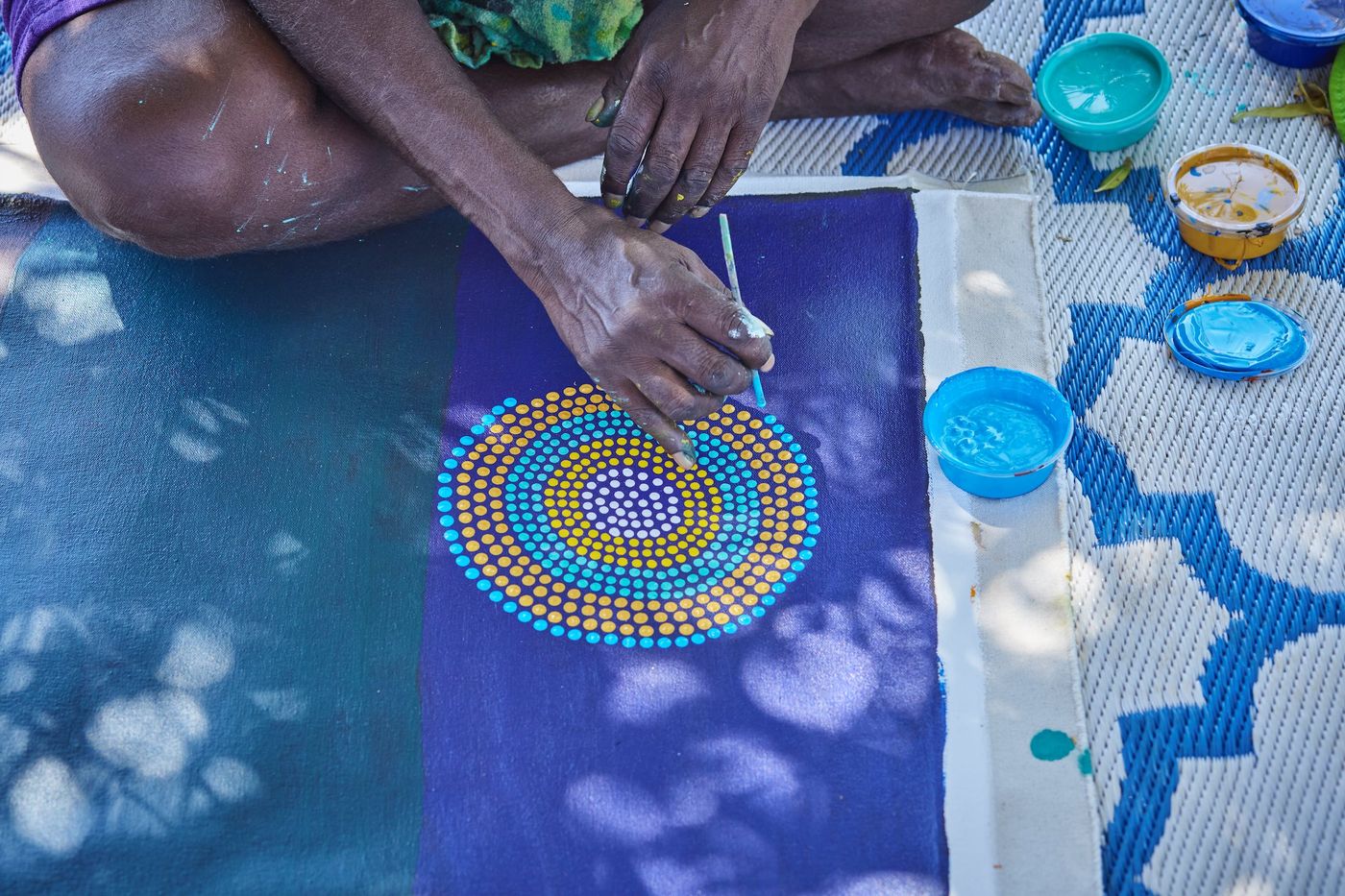
For each artwork sold through an art centre, the sale price is split between the artist and the centre. The artist’s percentage is the bulk of the payment and is what the painter actually walks away with. The remaining percentage goes to the centre to cover the costs of running the studio: freight, the manager’s salary, the certificate of authenticity, exhibition logistics and everything else that turns a painting in the desert into a transaction in a city gallery.
The split varies between centres, and the actual percentage is one of the questions a careful buyer should ask before paying. What does not vary is the principle. The artist’s name goes on the receipt and on the certificate, and the artist gets a meaningful share of the sale price rather than a flat fee paid up front.
What centres do beyond selling art
Selling paintings is the visible part. The less visible part is that art centres are usually the largest employer of Aboriginal people in their region, often the only externally generated source of income for a remote community, and a community hub in their own right.
Centres run training, mentorship and career-pathway programs for younger artists. They support artists and their families with assistance around health and medical care, aged care services, family business, education, legal needs, transport and financial management. They double as archives, holding decades of artwork and source material that informs new work. For many communities, the art centre is the only place where language, ceremony and contemporary practice meet in the same room every day.
The economics of the sector
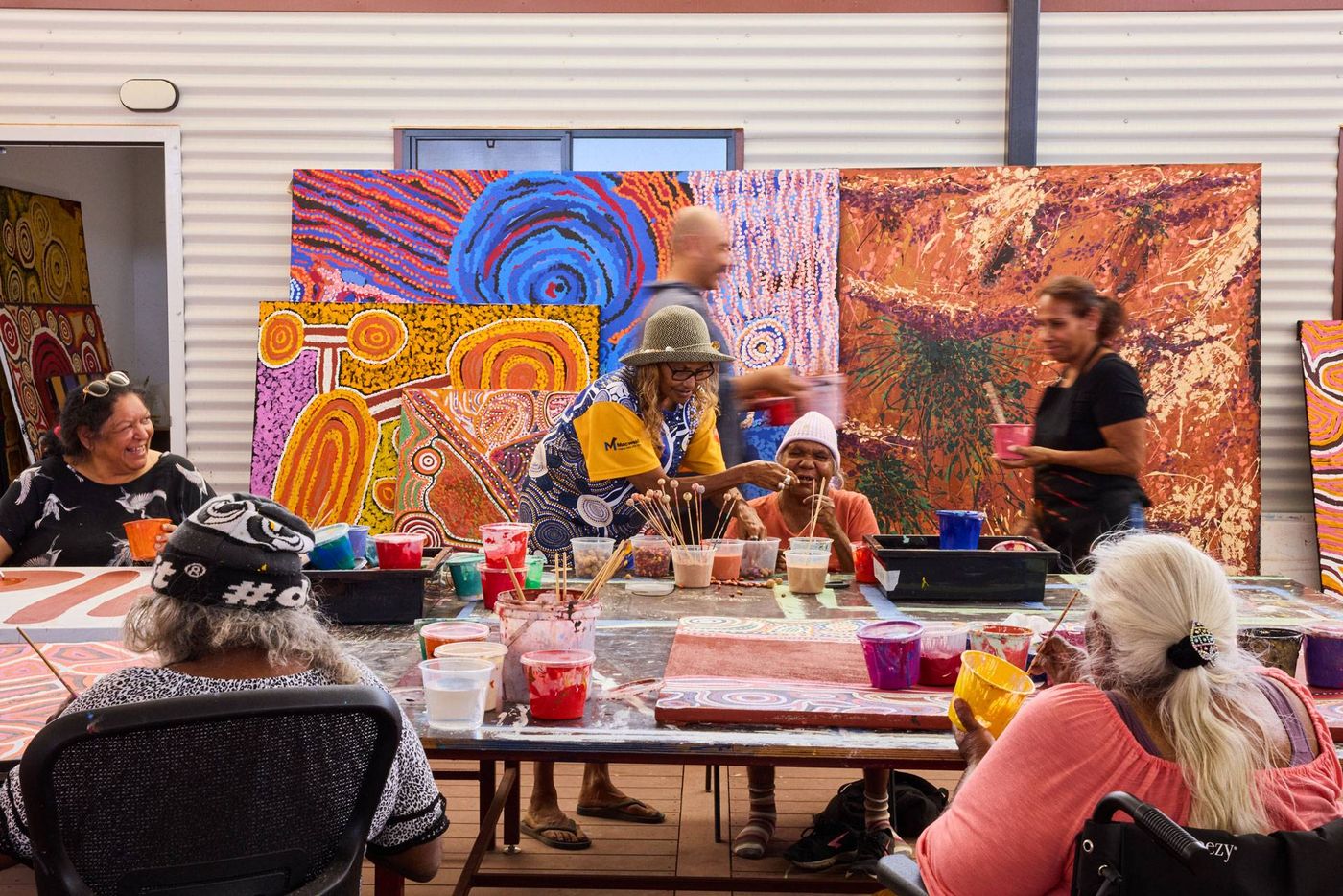
When the Indigenous art market peaked in 2007, government estimates put its annual value at A$400 to 500 million, supporting around 110 art centres and roughly 5,000 art workers across the country. Around 90 of those centres sit in places the Australian Bureau of Statistics classifies as very remote, meaning more than four hours’ drive from a full range of services. Indigenous women make up about 70 percent of the working artists.
The market has not held that 2007 peak. Average painting prices have almost halved since then, partly because of the global financial crisis and partly because of widely publicised quality-control disputes around fake and unattributed work. The sector has been rebuilding since, but it still generates the majority of non-government income flowing into remote Indigenous Australia, which is why the structure of art centres matters well beyond the art market itself.
Who runs them
Each centre’s artist members elect their own board. The board normally hires a non-Indigenous manager, partly because of limited commercial experience among the artist members and partly because the art market is volatile and runs on one-to-one relationships with city galleries that the manager has to maintain. Most managers are young women with fine-arts degrees from urban backgrounds, and most stay for around two to three years before leaving.
The high turnover is one of the sector’s structural weaknesses. Some peak bodies have started addressing it. Desart, the peak body for Central Australian centres in Alice Springs, runs the Aboriginal Arts Worker Program with the Batchelor Institute, blending four weeks per year of accredited training with on-site workshops, with the aim of building a pipeline of Indigenous artists who can step into administrative and management roles inside their own centres.
How to buy ethically from an art centre
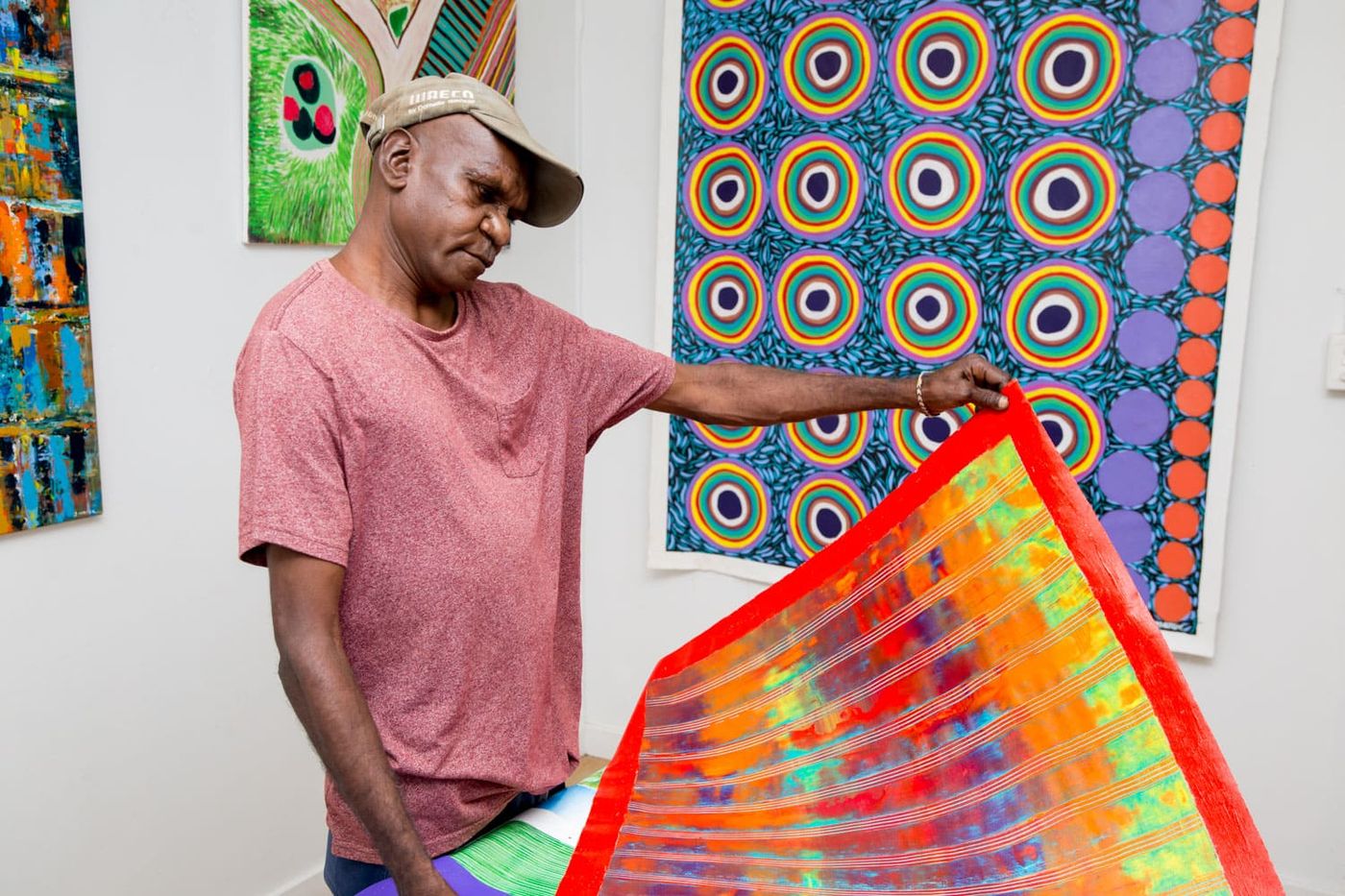
The Indigenous Art Code is a voluntary industry code of conduct that sets best-practice standards for fair, transparent and ethical trade with Aboriginal and Torres Strait Islander artists. Signatory businesses (both Indigenous and non-Indigenous owned) commit to those standards and renew the commitment annually. The Code’s website at indigenousartcode.org lets a buyer check whether a seller is currently a signatory.
The buyer-side checklist for any Aboriginal artwork over a few hundred dollars is short:
- The artist is acknowledged on the receipt, packaging and certificate.
- The seller can answer where the work came from and how it travelled to its current location.
- The seller can answer how the artist gets paid and what percentage of the sale they receive.
- The seller is a current Indigenous Art Code signatory.
- For works over AUD$250, a certificate of authenticity is supplied. It should list the artist name(s), the artwork name, when and where it was made, the dimensions and medium, and the identifying organisation’s name, location and contact details.
Why this structure matters
Art centres in remote Australia are how Indigenous painting reaches the rest of the world without going through middlemen who take the artist’s share. They are how a Pintupi painter in the Gibson Desert ends up with work in the National Gallery, how the dot painting artists most collectors recognise built international reputations, and how the art communities you can name on a map keep producing decade after decade. The centres are also why so much of the Aboriginal art you can buy with confidence carries the same kind of provenance trail as anything in a major museum collection. The structure is uneven and unfinished, but it is the only structure that has ever paid Indigenous artists their share at scale.