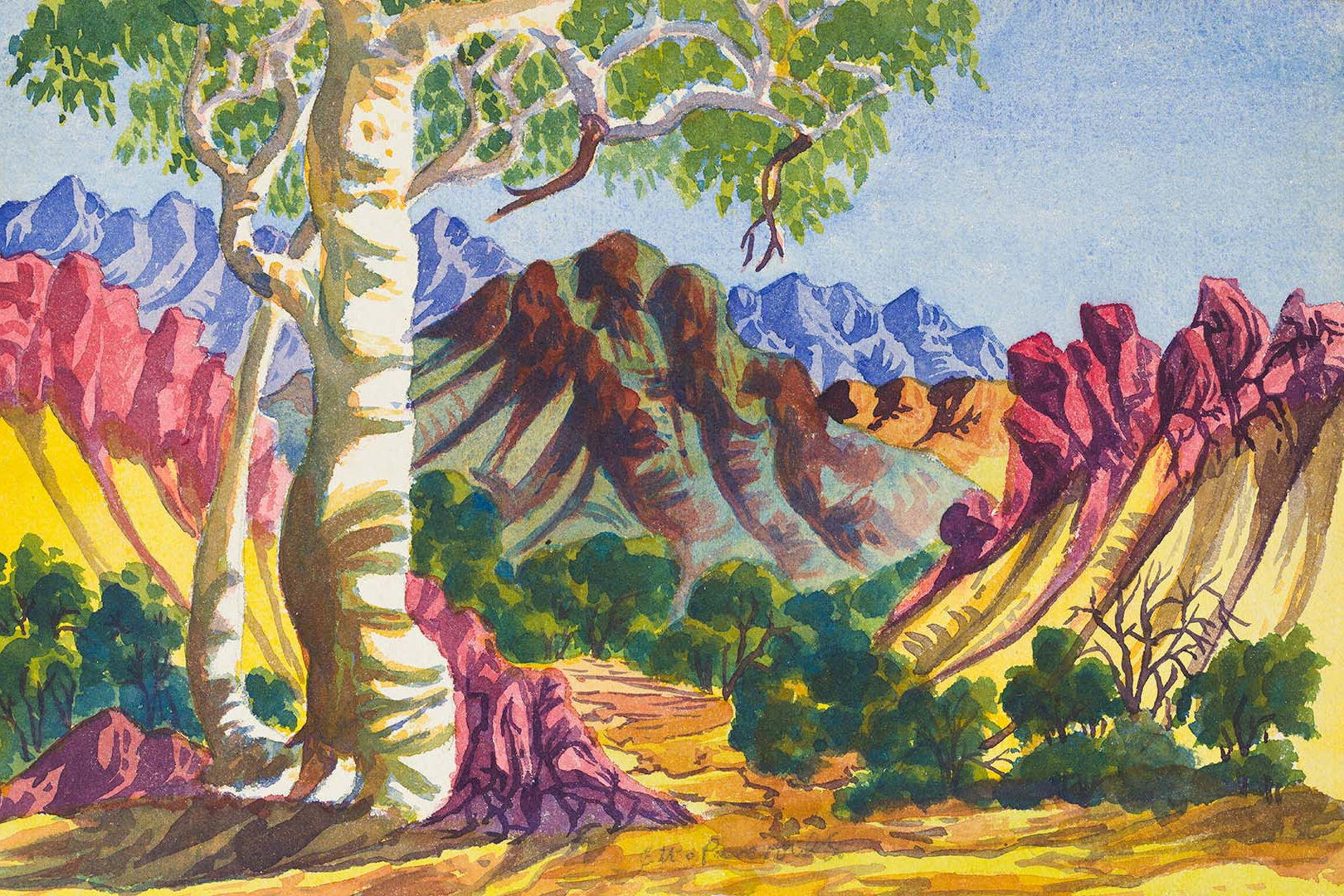
The Aboriginal art of Central Australia is one of the most internationally recognised expressions of First Nations culture, anchored in the dot painting of the desert and in a much older record of rock art and ground design. It is also one of the most carefully governed: the same symbol can carry very different meanings depending on who is reading it.
What Central Australia means in art
“Central Australia” as an art region is usually understood as the country around Alice Springs, the MacDonnell Ranges, and the surrounding desert communities. It overlaps closely with the Western Desert art movement but extends further east and north, taking in communities such as Alice Springs, Ampilatwatja, the APY Lands, Balgo Hills, Haasts Bluff (Ikuntji), Hermannsburg (Ntaria), Papunya, and Utopia. Each community carries its own visual tradition and senior Aboriginal artists.
A tradition tens of thousands of years deep
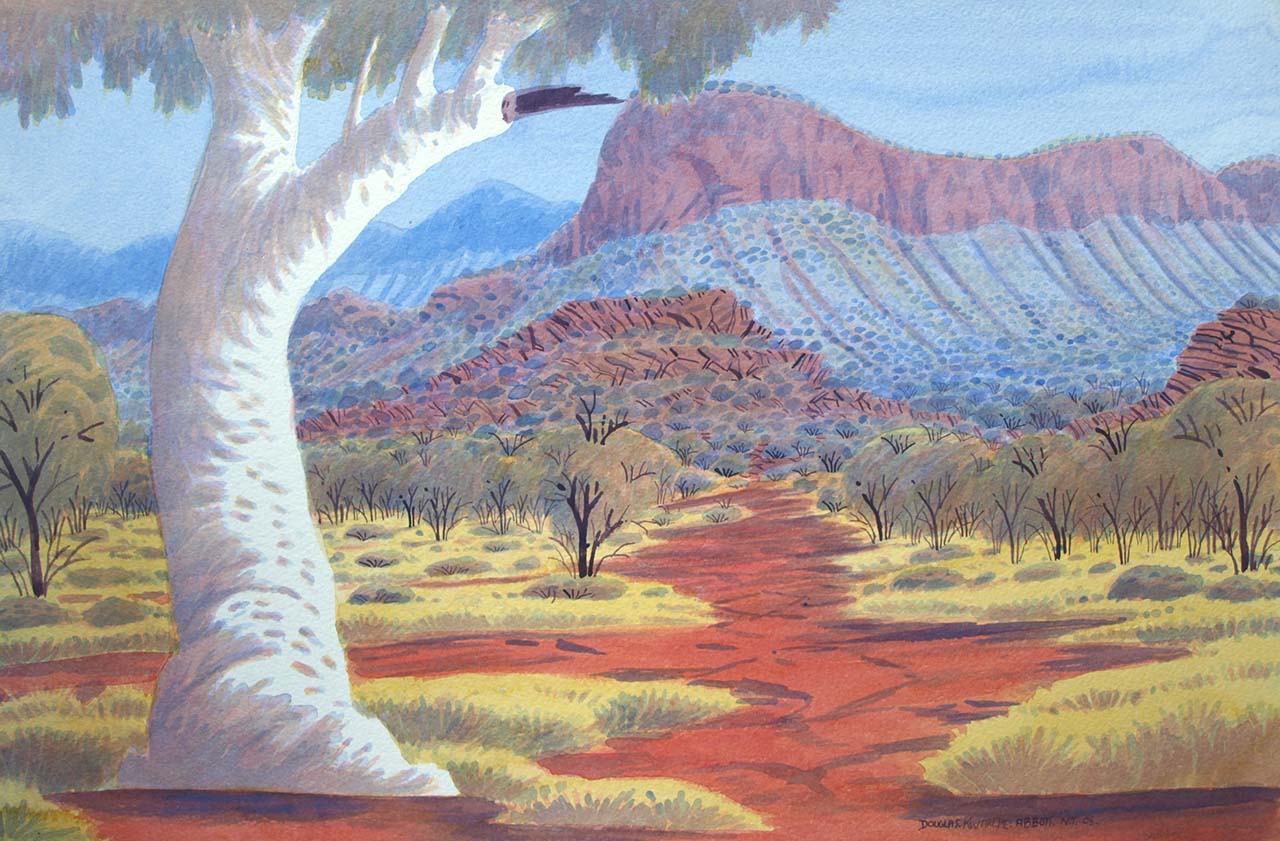
The tradition of art in Central Australia stretches back tens of thousands of years and serves as a continuous record of cultural history. N’Dhala Gorge in the East MacDonnell Ranges alone contains roughly 6,000 ancient carvings believed to be more than 10,000 years old. Contemporary Aboriginal artists maintain those ancient stylistic techniques and symbolism in modern works, so the move from rock face to canvas does not break the line.
The symbolic language of dots, circles, and lines
Central Australian Aboriginal art operates within a sophisticated symbolic language. Concentric circles can represent a camp-fire, home, cave, rock-hole, clay-pan, spring, tree, or mountain. Sinuous lines can represent snakes, water, lightning, or natural fibres. The multiplicity of meaning is one reason outsiders cannot grasp the full significance of a work from the surface alone.
Designs are not limited to canvas. The same shapes appear across ground mosaics, cave paintings, rock engravings, and ceremonial objects. Ground paintings, for example, depict actual mythological sites across Central Australia, particularly in Warlpiri Country.
Layered meaning and the right to interpret
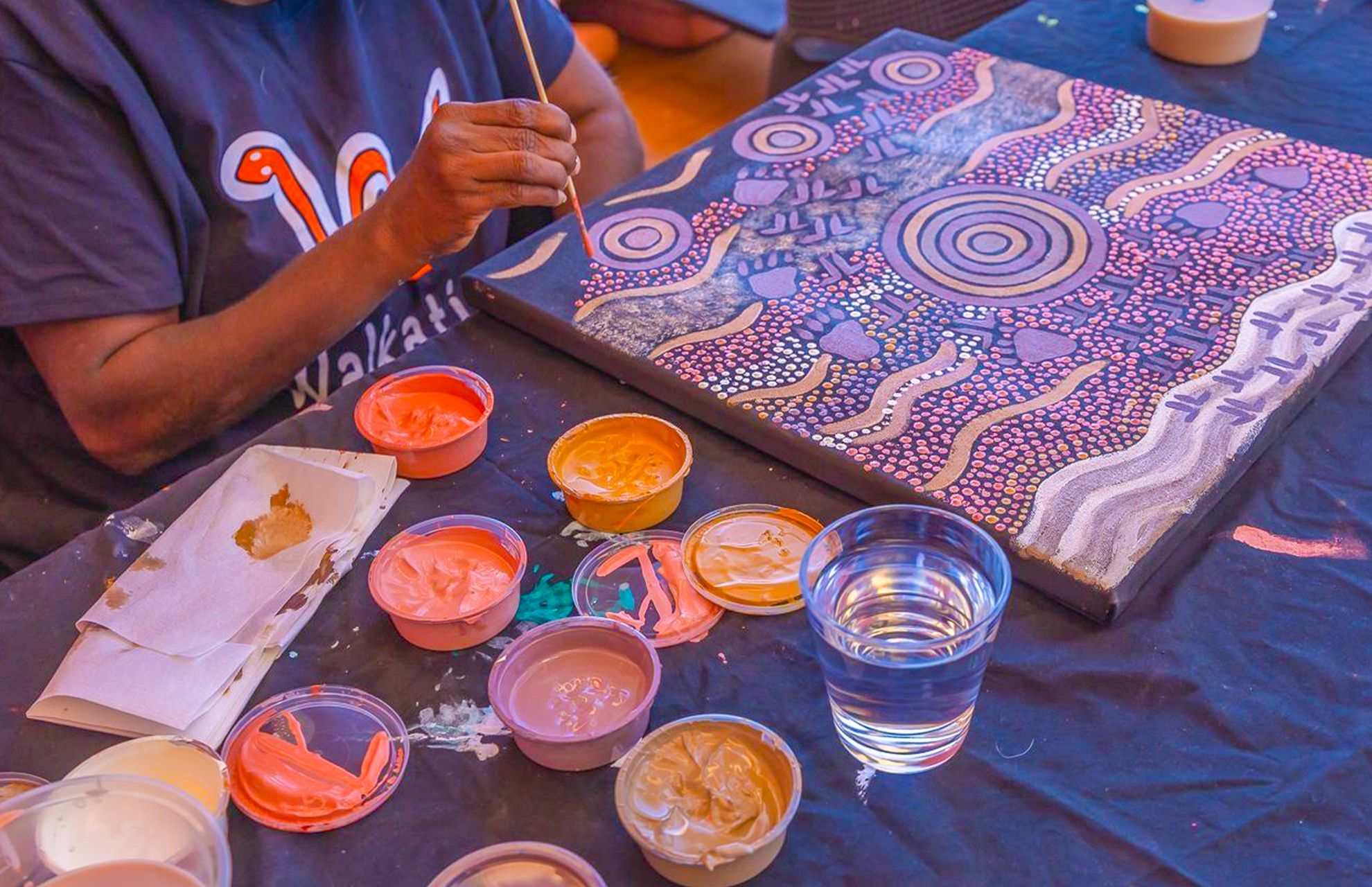
The knowledge system behind the imagery operates hierarchically. The same design element carries different meanings depending on the viewer’s stage of initiation. Elders reveal deeper meanings progressively, only when younger men demonstrate comprehension of earlier teachings, songs, and ceremonies. In its strictest form, only Aboriginal men of Central Australian origin may understand the ultimate meanings of certain works, and only the original ground painting creators can authorise definitive interpretations. Art therefore does more than decorate; it enforces social controls, determines roles, and transmits cultural knowledge from generation to generation.
The main art communities
Central Australian Aboriginal art is rarely the work of an individual studio. It is produced through a network of community-based art centres in remote desert towns. Alice Springs is the urban anchor, but the major creative engines are remote: Papunya and Hermannsburg (Ntaria), whose Papunya Tula and Western Aranda watercolour traditions are covered in Western Desert art; Utopia, famous for batik and later acrylic on canvas; Haasts Bluff (Ikuntji), the first art centre established by women in the desert art movement; Ampilatwatja, known for bush medicine and desert landscapes; the APY Lands across the South Australian border; and Balgo Hills. Each carries a distinct visual identity that ties back to its own country and senior artists.
Galleries and the Desart network
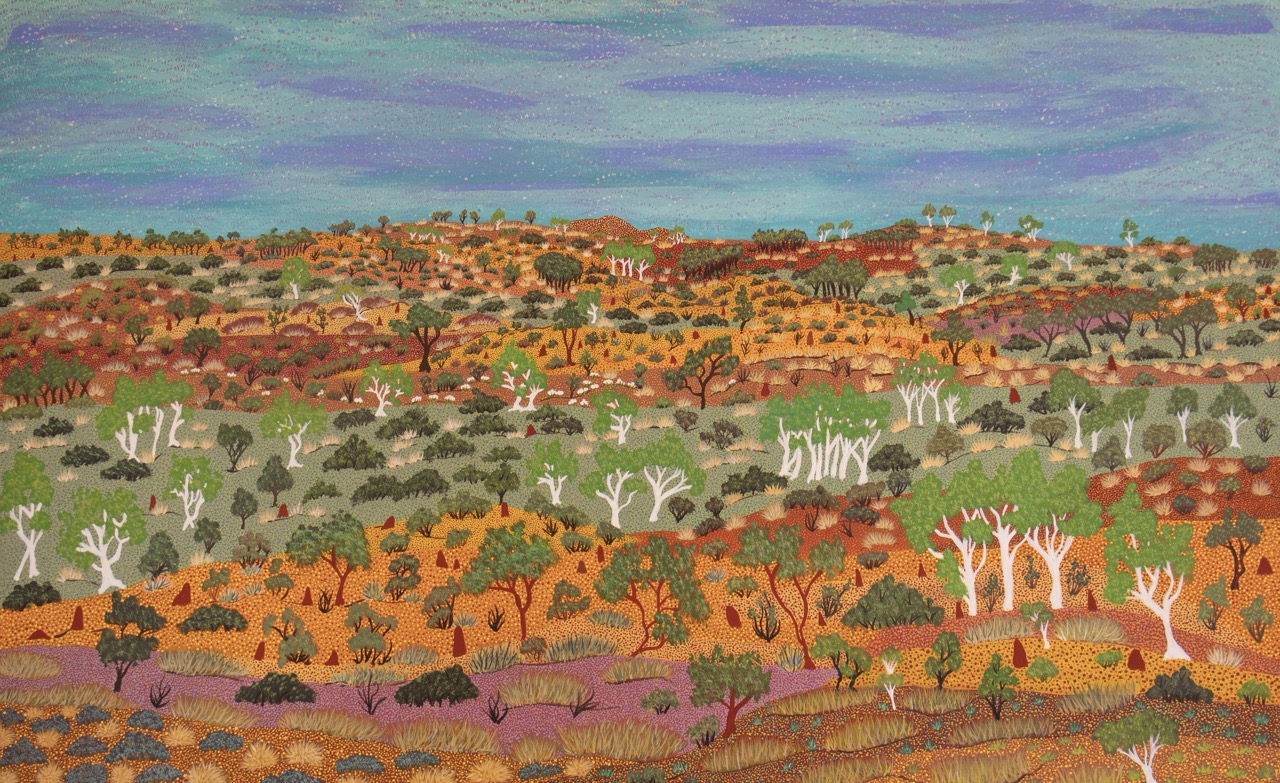
The peak body for the region is Desart, which supports more than 30 member art centres across Central Australia. Member centres are community-controlled enterprises owned and governed by Aboriginal people, providing economic, social, and cultural benefits to their communities. Desart’s annual events, including Desert Mob and the Desart Photography Prize, anchor the year’s calendar for both artists and collectors.
Visitors and buyers can engage with the work in person at several keeping places. The Araluen Arts Centre in Alice Springs holds one of the country’s most significant Central Desert collections, while the Gallery of Central Australia (GoCA) at Yulara represents more than 350 works by Indigenous artists of the Central and Western Desert. Other key spaces include Iltja Ntjarra (Many Hands) Art Centre, which continues the Hermannsburg watercolour tradition, and Yubu Napa Gallery and Studio. Multiple venues also offer workshops where visitors can join traditional painting classes and learn about Dreamtime stories.
Central Australian art today
Of all the threads in the continent’s First Nations art, the Central Australian tradition is the one a first-time viewer is most likely to recognise, and the one most carefully governed by the people who make it. The visual language has moved from sand and rock onto canvas and paper without losing what it carries, and the network of community-controlled art centres has kept the artists themselves in charge of how the work travels into the world.