Walk into any serious gallery of Australian Aboriginal art and you will likely encounter both rarrk and x-ray art. They can look different at first glance, but they share something deeper: both come primarily from Arnhem Land, both appear on bark paintings, and both carry cultural knowledge that goes well beyond surface decoration. What distinguishes them is how that knowledge is expressed and what each tradition is designed to do.
One Region, Two Different Jobs
Rarrk is a technique. It is the fine cross-hatched line work used in western Arnhem Land, applied with brushes of human hair or reed fibre, that builds up a shimmering surface and carries clan identity. X-ray art is a representational style. It is the figurative tradition, common across the same region, in which animals and ancestral beings are shown with their internal anatomy visible alongside their external form. Holding those two definitions in mind is enough to read most of the difference.
In north-east Arnhem Land a related but distinct tradition exists in miny’tji, the sacred clan designs of the Yolŋu people. Miny’tji is the named geometric pattern that identifies clan authority, while rarrk in western Arnhem Land is the technique that creates the shimmering surface. Both involve cross-hatched fine lines and can look similar from a distance, but they belong to different peoples with different protocols, and the dot painting versus rarrk comparison picks up that thread in more detail.
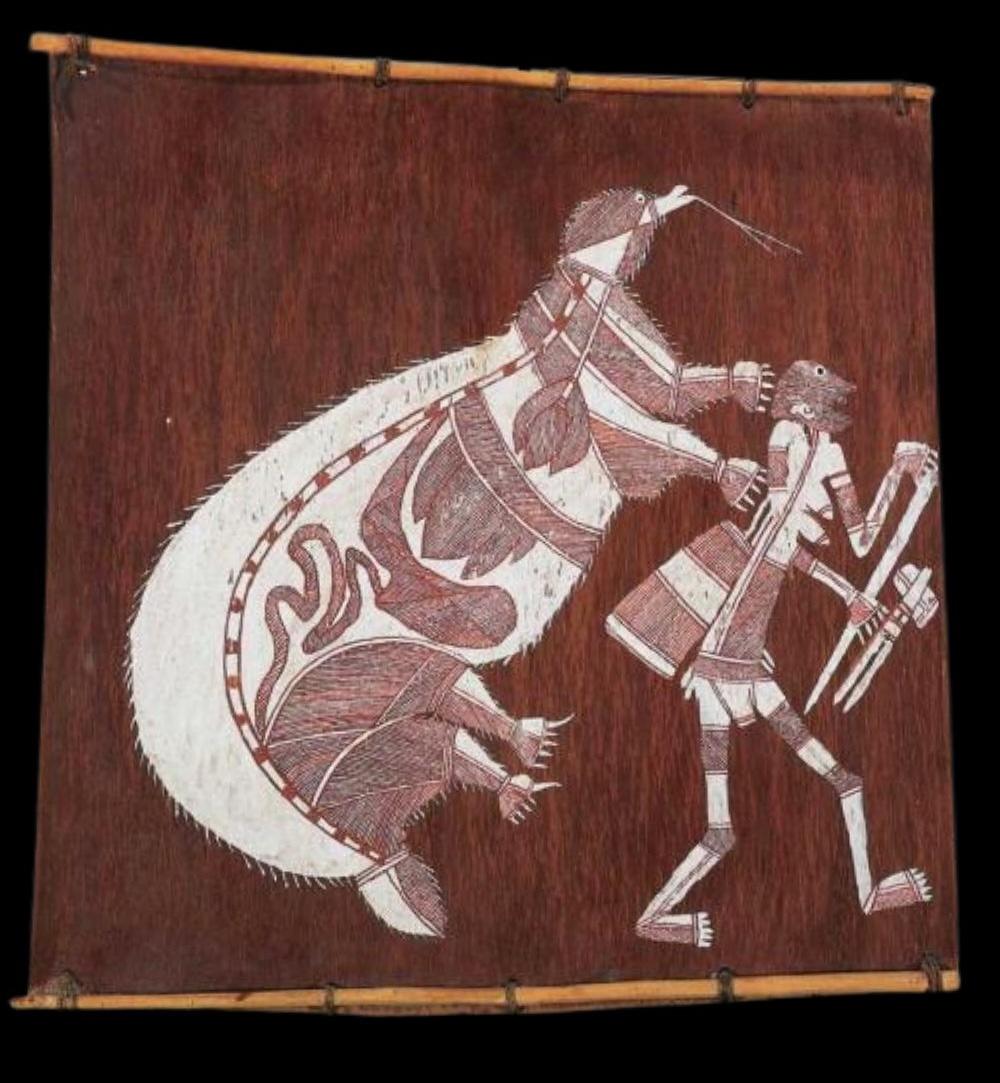
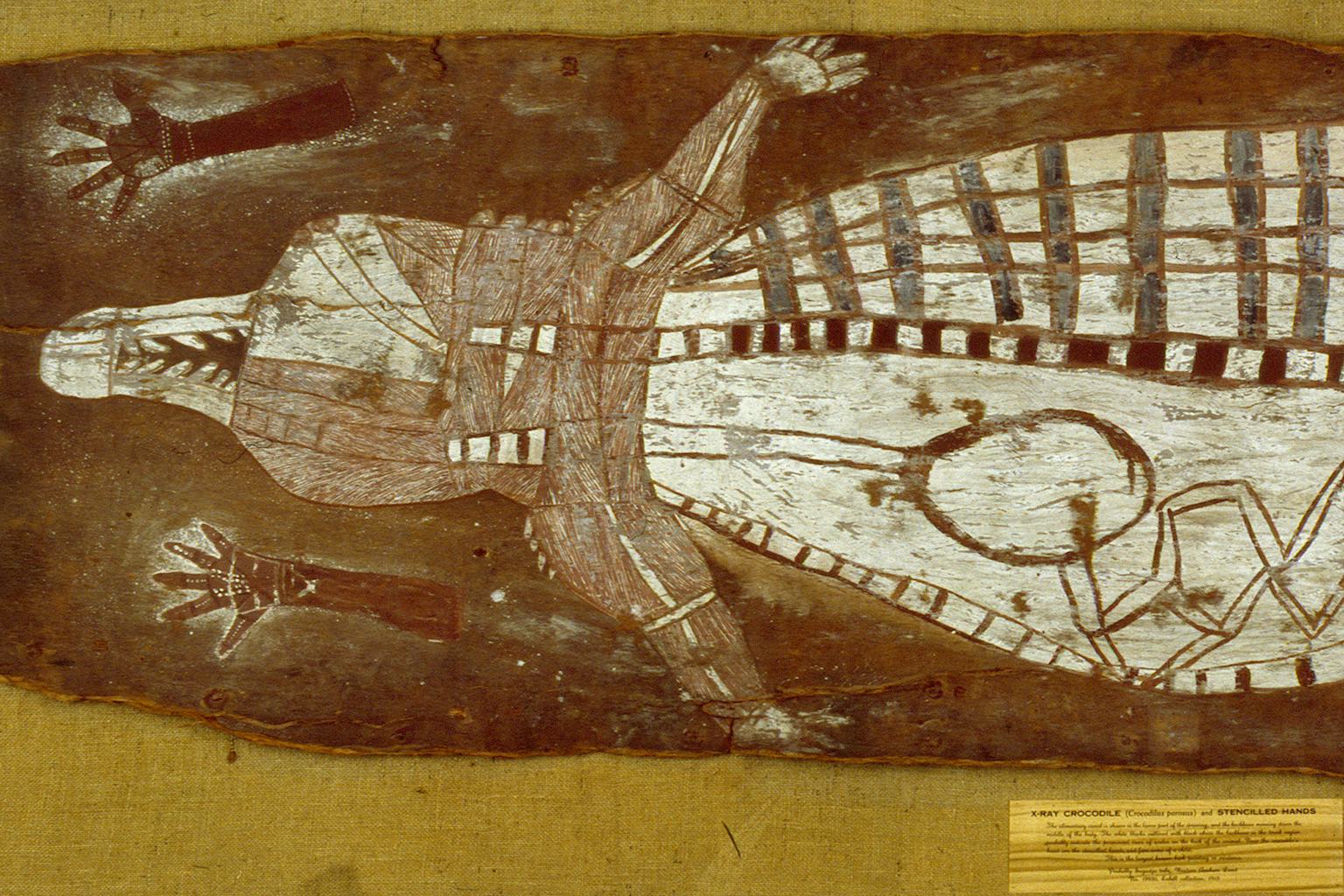
Rarrk vs X-Ray Art: Key Differences
Both traditions belong to Arnhem Land, but they function in very different ways and are not interchangeable in terms of what they do.
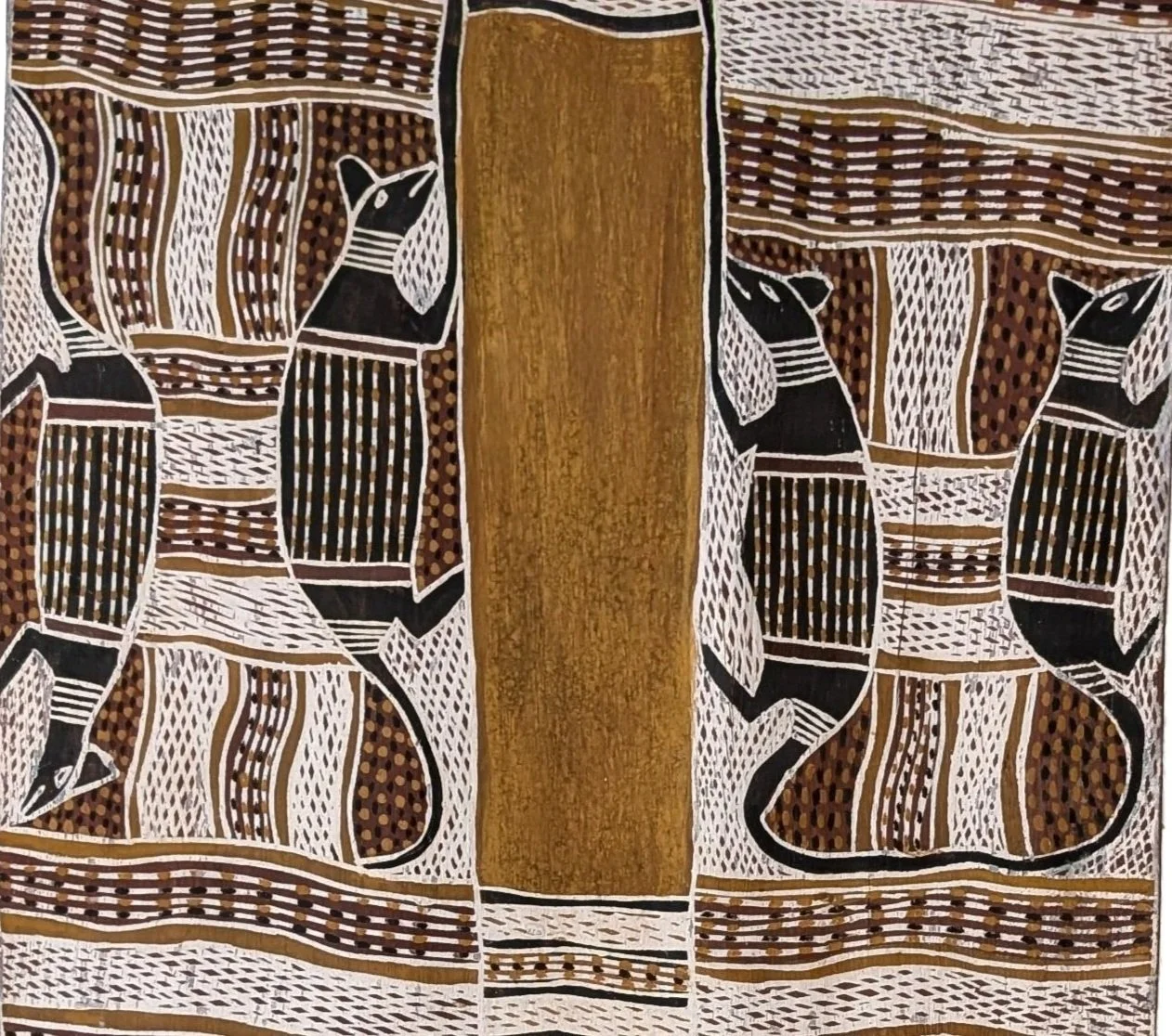
| Rarrk | X-Ray Art | |
|---|---|---|
| Primary region | Western Arnhem Land | Northern Australia, especially Arnhem Land |
| Visual method | Fine parallel lines in cross-hatched patterns built up in layers | Figurative depiction of animals or beings with internal anatomy visible |
| Subject matter | Applied across figures, backgrounds, and ceremonial designs | Animals, fish, and ancestral beings (barramundi, turtles, crocodiles) |
| Cultural function | Carries clan identity, authority, and ancestral connections | Expresses the relationship between artist, Country, and the creatures of that Country |
| Origin context | Ceremonial painting, extended to bark and contemporary surfaces | Linked to rock art traditions that predate canvas or bark painting |
| Common medium | Bark painting, body painting, ceremonial objects | Bark painting, rock art |
| Key cultural association | Kunwinjku artists of western Arnhem Land | Arnhem Land broadly; linked to rock art at sites across the Top End |
Technique and Representation on the Same Surface
The clearest way to understand the difference is that rarrk is a technique and x-ray art is a representational style. Rarrk describes how something is painted: the fine, layered cross-hatching that gives a work its characteristic shimmering surface. X-ray art describes what is painted: figures that show both exterior form and internal structure. A single bark painting can include both. An artist might depict a barramundi in x-ray style while applying rarrk patterning across the fish’s body. In that case, the two are not alternatives but complements, each adding a different layer of meaning to the same surface.
This overlap appears frequently in Arnhem Land bark paintings, which is part of why the two styles are often discussed together. But they are not the same tradition, and treating rarrk as a subset of x-ray art, or vice versa, misses what each one is actually doing. One is about how lines and patterns convey clan authority. The other is about how a figure can carry knowledge of an animal’s interior life alongside its exterior form.
Reading Arnhem Land Bark More Carefully
Rarrk and x-ray art are both deeply embedded in the cultural life of Arnhem Land, and both continue as living traditions. Understanding that rarrk describes a painting method while x-ray art describes a representational approach is one of the most useful distinctions to carry forward. It opens up a more careful way of looking at bark paintings and other works from Arnhem Land. The broader map of how these traditions sit next to dot painting and other regional styles is set out in the guide to Aboriginal art techniques.